De Profundis is Latin for ‘from the depths’, and at the heart of this new release from British pianist Charles Owen stand two great musical edifices – Franz Liszt’s ‘Weinen, Klagen, Sorgen, Zagen’ and César Franck’s ‘Prélude, choral and fugue’. These pieces have a powerful emotional pull and take listener and pianist on spiritual journeys into the realms of grief, doubt and despair before ending in a blaze of redemption and hope.
The two towering figures of Liszt and Franck shared the greatest admiration for each other despite possessing widely differing personalities. Liszt, a legendary piano virtuoso and man of unbridled Romanticism contrasted with Franck, a more restrained soul usually found tucked away in a dusty organ loft or conservatoire corridor. Their important connecting strand was a shared Catholic faith, from which both men drew comfort, succour and musical inspiration.– Charles Owen
Contrasting these profound utterances are the sounds of nature. Liszt’s Deux Legendes open this compelling new release, two great religious works composed in 1863, which depict the miracles of St Francis of Assisi and St Francis of Paul.
In the first, Liszt vividly brings to life the delicate fluttering of birds and their song in filigree figures in the treble before St Francis’ sermon begins, a simple hymn-like melody which grows increasingly triumphant. In the second Legende, Liszt brilliantly portrays the sea (the Straits of Messina) over which St Francis of Paul is said to have walked, with intense tremolos in the bass to represent the rolling waves. Darker harmonies and textures suggest the uncertainty and danger of the saint’s passage, but as he progresses, the music moves towards a triumphant religioso climax. In both works, Liszt creates a powerful spiritual and visual narrative, to which Charles Owen responds with nuanced phrasing and a clear sense of forward motion, allowing the music’s narrative to unfold naturally, its drama just held in check until the glorious messages of these pieces breaks forth. Here, we see Liszt as a composer of impressionistic music, conjuring striking images from musical colours and textures which Owen handles with restrained virtuosity and sparkling articulation.
Liszt’s ‘Weinen, Klagen, Sorgen, Zagen’, variations on the bass line of the first movement of Bach’s Cantata No. 12, ‘Weeping, Wailing, Mourning, Trembling’, was composed following the death of Liszt’s eldest daughter Blandine in 1862. A period of intense composition served as a way to comfort his grief, and the result is a deeply personal expression of sorrow conveyed through a passacaglia-like set of variations.
Owen sensitively shapes the music to evoke both unease and yearning, particularly in the quieter sections where a single line draws the listener in closer, hinting at solitude and reflection. As in the Legendes, Owen’s clear understanding of the music’s overall structure enables him to build tension and release, transitioning from the sombre, emotional opening through increasingly complex, virtuosic, and contrapuntal writing. The piece concludes with a powerful, affirmative chorale, Was Gott thut, das ist wohlgetan (What God does, that is well done), indicating a transformation from sorrow to acceptance.
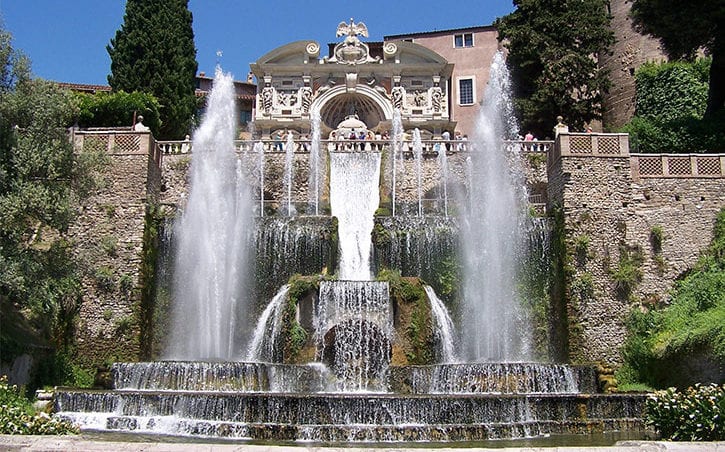
A sense of lightness is regained in Les Jeux d’eaux à la Villa d’Este (No. 4 from Années de pèlerinage III). Composed in 1877, it vividly depicts the play of water at the foundation of the Villa d’Este, an estate outside Rome where Liszt increasingly spent time seeking spiritual retreat after he took minor holy orders in 1862.
Like the Legendes, this is an evocative, impressionistic work, the magical sparkle of water contrasting with the dark splendour of cypress trees. Federico Busoni commented that the piece became ‘the model for all musical fountains which have flowed’, and there is no doubting it found its successor in Ravel’s Jeux d’eau. Owen highlights the dancing spray and splash of the fountains, while adding a sense of joyous playfulness.
Cesar Franck’s magisterial Prélude, Choral et Fugue concludes this fine recording. Organised in three parts, the music combines the rigour and order of Bach, especially in the Choral, with Romantic sensibility to create music of great intensity and expression that oscillates between spirituality and virtuosity. The work features two main motifs – a falling, chromatic appoggiatura (associated with Bach’s Weinen, Klagen…) and a motif in fourths that resembles the “bell motif” from Wagner’s Parsifal.
Owen skillfully navigates the work’s emotional shifts and contrasts, from profound sadness at the opening through mysticism and loftiness to the most beautiful, uplifting chorale at the end – an expression of unrestrained triumph and hope.
This is a deeply satisfying album of music very personal to Charles Owen. The piano sound has warmth and clarity, allowing Owen’s nuanced dynamics and tonal palette to shine without exaggeration while Owen’s thoughtful programming and considered playing create an atmosphere that moves between reflection, meditation, melancholy and triumph. If you value playing of poetry, intelligence and quiet authority, this recording is both moving and memorable
De Profundis is available on CD and streaming on the Orchid Classics label
FW
Discover more from ARTMUSELONDON
Subscribe to get the latest posts sent to your email.
 ARTMUSELONDON