by Michael Johnson
Public feuds among eminent authors have produced some of our most entertaining – if pitiful – personal prose. A real feud pulls no punches, and these players have the verbal skills, the chops, to let rip.
Ernest Hemingway and F. Scott Fitzgerald competed with their diametrically opposing prose styles. Hemingway likened Fitzgerald’s descriptives to “Christmas tree tinsel”. Another classic of the genre, the falling out of novelists V.S. Naipaul and Paul Theroux, resulted in Theroux’s book Sir Vidia’s Shadow. Written in Theroux’s reportorial style, he paints Naipaul as a deeply flawed man — neurotic, cheap, misogynistic, horribly rude and often outrageously offensive — if a brilliant writer and enthralling companion.
Platonic friendships among men are in vogue today but were less so sixty years ago when Vladimir Nabokov and the leading American critic Edmund Wilson connected, then erupted, in the New England academic world. As Author Alex Beam put it in his most recent book Feud, their friendship “fed on the oxygen of intellectual discourse”. Sadly, their mutual admiration soured in 1965 when Wilson dared to criticize Nabokov’s views on the 5,523-line Pushkin poetic masterpiece “Eugene Onegin”. Nabokov had a “vengeful nature,” Beam writes, “and avenge himself he did.” Wilson’s long critique was “a salvo of ill will splattered across the pages of the New York Review of Books”.
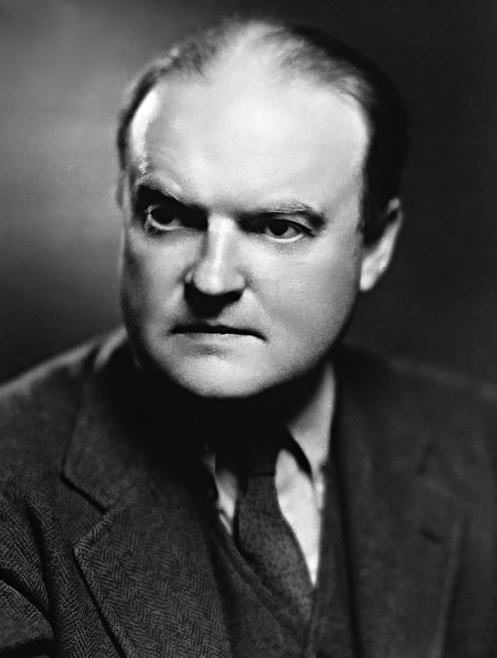
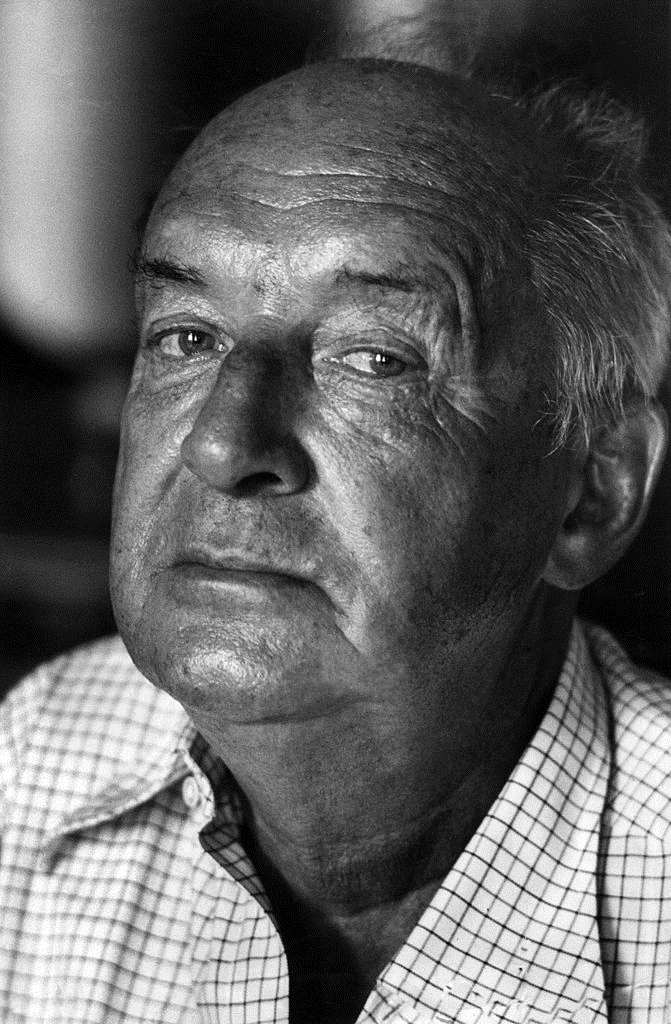
Beam tells the Wilson-Nabokov story in a passionate yet dispassionate way. He declares his own contrasting colours. “Onegin is some of the most beautiful Russian poetry ever written. Its organisation is chaotic. It is all very Russian… Being Russian, it is not only beautiful and raggedly assembled, it is also mysterious.” The device employed by Pushkin was the iambic tetrameter, a form that lends itself to recitation, producing a da-DUM da-DUM rhythm in the original Russian. Translators sometimes struggle to replicate the cadence.
Besides “being Russian”, Wilson objected to Nabokov’s use of “crackpot vocabulary”, dubbed by Beam as a tiresome battle of dictionaries– “dit for ditty, loden for laden, and curvate for curved”. And diplomat-translator Charles Johnston faults Nabokov for other quirkish usages: prerecognizing, devourment, dolcitude, juventude and dolent, to name just a few. Wilson wrote in his collection A Window on Russia, that he found the Nabokov translation to be “uneven and sometimes banal… and addicted to rare and unfamiliar words” He challenged Nabokov to apply idiomatic and recognisable English. His favourites included rememorating, producemen, habitude, rummers, familistic, gloam, shippon and scrab – all listed in the Oxford English Dictionary (OED) but only as archaic or obsolete.
Nabokov brought their literary ping-pong game to the British journal Encounter, in which he denounced Wilson’s “ludicrous display of pseudo scholarship” and “old-fashioned, naïve, and musty method of human-interest criticism”.
Most English-language readers were unaware of Onegin until the 1960s, when Nabokov published his tirade against Walter Arndt, then a professor of Russian at Dartmouth College. Nabokov’s demolition of Arndt’s work was all the more poisonous for the fact that it beat Nabokov’s massive work on Onegin into print by a few months, stealing the exclusivity he had planned to enjoy. Worse, Arndt won the prestigious Bollingen Poetry Prize for translation and Nabokov did not. In a stinging barb aimed at the Bollingen jury, Nabokov accused Arndt of “inadequate Russian” and questioned the jury’s competence to judge Russian works.
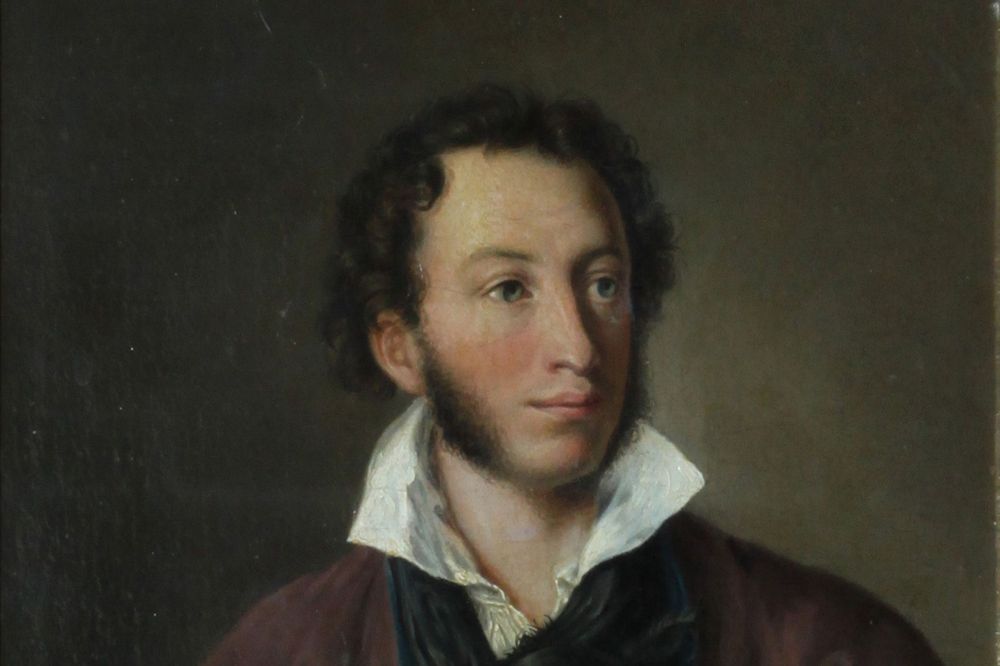
Pushkin was no globe-trotter. He yearned to travel abroad but was never granted permission. His 2000-volume library, extensive for the times, served as his window on the West. Scholars periodically analyse his readings for clues to his influences. Nabokov, and Andrew Kahn, author of Pushkin in the Cambridge Companion series, and others have read through the list of books Pushkin is believed to have studied. It is evident that he read mostly in French – either books by French authors or other foreign works translated into French. Among his favourite writers, they have deduced, were Dante, Shakespeare, Diderot, Voltaire, Heine, Sir Walter Scott, Lord Byron, Alfred de Musset, Stendhal and Prosper Mérimée. But he quickly evolved into his own man.
One leading Pushkin authority agrees with the past trivialization of most Pushkin poetry in English. The magic is lost, one professor told me in a long Skype chat, leaving us with “something like a pretty good Victorian poet.”
But it took a Russian-born academic in Britain to nail the translators. Evgeny Dobrenko of Sheffield University laments the loss of Pushkin’s genius in foreign tongues. Speaking of the historical translation problems, he said, “If it’s not in Russian, it is just words, words, words.”
In working out the truest translations, purists argue for fidelity to the original; romantics set out to achieve an effect similar to the original through poetic license. The clashes come in that space between the literal and the liberated. Yet even foreigners who fall under Pushkin’s spell are beguiled by the offshoots — novelettes, literary criticism, historical studies, translations, children’s folk tales, epigrams and personal letters. Edmund Wilson wrote that the Russians “are in the habit of comparing him to Mozart, and this is perhaps the nearest we can come to a simple comparison…. One is amazed at the variety of his range.”
I became so swept up by the confusion that I returned to my Columbia University Russian language studies after decades of neglect. I hired a friend, Igor, to help me tackle Eugene Onegin, Pushkin’s best-known work, in the original. I told Igor I wanted to feel what Russians seemed to be raving about, to hear the music. Igor obliged, and over several weeks, we waded through parts of Onegin, Igor declaiming in Russian-style dramatic tones while I wracked my brain to retrieve vocabulary and tongue-twisting pronunciation. Always uncompromising, Igor told me that anyone who misses the Pushkin music must be tone-deaf. “A bear has stepped on your ear,” (Medved na ukho nastupil) he once scolded me, quoting a Russian proverb.
But Igor encouraged me to persevere, promising that the full magic of Pushkin’s original Russian would be worth the effort. And he was right. Discovering the hidden jewels of Pushkin’s wordplay and irony can bring excitement to the normally sterile act of language learning.
I chose Onegin for this refresher course because I knew that Russians and Russophiles remain drawn to it. Try saying “Evgeny Onegin” to any Russian and you will trigger the first stanza or two of this great novel in verse. Some enthusiasts cannot be stopped for several more stanzas. I recently tried this on random Russians on the streets of Boston, including an émigré gas station attendant, a Bank of America clerk and a group of Russian tourists riding the tram. My opening gambit to them, without warning, was Pushkin’s first line, “Moi dyadya samykh chestnykh pravil.” (“My uncle was a man of most honest principles…”) and without missing a beat they took it from there, smiling proudly.
Admittedly, Pushkin’s verses are stored up in memory from exposure to his children’s folk tales and from school days. High school students are taught to memorise him at length. Russian is a rhyme-rich language, adding to the facility. Even today, teenagers are obliged to learn the Onegin passage known as Tatiana’s letter, and the ball scene from the 5,541-line poem. Documentary maker Michael Beckelheimer, writer and director of Pushkin is Our Everything, discovered this with his wandering camera in private homes in Moscow.
Eugenia Ginzburg, an 18-year survivor of Stalin’s prison camps, recalls in her memoir Journey into the Whirlwind how she won grudging admiration from her prison guards by reciting from memory the entire work.
Poets and scholars have long tangled and wrangled over how best to handle Onegin in English, leading to one of the bitterest literary brawls of the 20th century. The haughty, aristocratic Nabokov rejected accurate translation of all poetry – especially Russian poetry — as simply impossible. He compared four Onegin translations by English and American academics. scattering judgements such as “idiotic ejaculations”, “vulgar”, “preposterous”, “impossible”, “disastrous”, “clumsy” “crippled clichés”, mongrel idioms” and “English doggerel.”
Indeed, it is not enough to “rig up fourteen lines with alternate beats and affix them to seven jingle rhymes starting with pleasure-love leisure-dove,” he wrote in a landmark essay on Onegin translations. As Nabokov’s biographer Brian Boyd put it, Nabokov was saying that “no ukulele can replace a Stradivarius.”
Then came the public feud between Nabokov and Edmund Wilson. Beam called it “the end of a beautiful friendship”. Their exchanges over Onegin rank among the great intellectual feuds of the 20th century. Wilson took Arndt’s side and answered a long list of Nabokov’s complaints, reserving his heavy artillery for what he believed to be Nabokov’s “most serious failure”– his misguided portrayal of Onegin as hating his friend Lensky, who died in a duel. This attack hit Nabokov directly in the ego – his credentials as a scholarly interpreter of Pushkin – and he was up to the task of defending himself. He dismissed Wilson’s charge as wrong-headed in an 8,000-word defence, saying it was Wilson who misunderstood Onegin, not he.
Wilson pointed out that Nabokov had the bad habit of rejecting the serious work of others in Russia-related areas, subjects that Nabokov liked to call “my field.” In sarcastic tones, Wilson wrote that readers must accept that Nabokov is “unique and incomparable and that everybody else who attempted Onegin is an oaf and an ignoramus, incompetent as a linguist and scholar, implying that he is also a low-class person and a ridiculous personality.” The clash brought to an abrupt end nearly 30 years of close – Beam’s “oxygen of intellectual discourse” — friendship between the two men.
Wilson made peace overtures, but Nabokov remained distant. They eventually traded Christmas cards, but they never got together in person and their minds most definitely never met again.
At least the feud brought Onegin to the attention of a wider audience. Over the years, I have collected seven translations, including the most recent, by English novelist D. M. Thomas, to marvel at the many inventions that attempt to replicate Pushkin’s magical music. Some passages read as if sourced from different works when poetic license gets out of hand… Determined readers have made a mind-game of comparing the efforts. Douglas Hofstadter and his wife Carol used to lie in bed and read Pushkin stanzas to each other from contrasting English translations.
Critics question the relevance of Onegin, which describes life in the privileged elite, a tiny microcosm in the broadly illiterate Russian society of his day. Author Beam acknowledges, “It’s hard to explain what Eugene Onegin is about.” Russian critic Andrei Sinyavsky asserts it is a “novel about nothing”. Pushkin, he writes, loses the thread of his narration, wanders off, marks time, beats around the bush …” Pushkin friend and literary critic Vissarion Belinsky considered it an “encyclopedia” of early 19th century Russian society. Partially, perhaps. But the reality of the period was far grimmer than those soirées that kept the popinjay Onegin busy after dark. To get to the heart of old Russia, it would be better to read such gritty Pushkin tales as Dubrovsky, a detailed portrait of serfs and their masters in Russia of old. Those are real.
Cambridge author Andrew Khan feels no conflict. Pushkin, he writes, preferred play to didactism… the hallmarks of a free mind.” His poetry and prose “mark a quantum leap in Russian literature”.
Whither Pushkin today in the West? The director of the Pushkin Museum in St. Petersburg, Sergei Nekrasov, is despondent. He tells me by email that his visitors today are mainly Asians, with some British, a few Germans and a few French, but virtually no Americans. A lifelong autodidact, I move among a thousand things, but none with such breadth and depth as the life and work of Alexander Pushkin. My effort to absorb his art in the original, the true path, will continue for the rest of my life.
Discover more from ARTMUSELONDON
Subscribe to get the latest posts sent to your email.

