After a few listens, this album feels like a heroically original achievement: without doubt, a jazz record, but unpredictable in ways one wouldn’t have predicted. Warm yet inscrutable; modest in approach but confident and fizzing with ideas: it’s improvised music that feels as though it’s always existed. How can something so spontaneous feel so permanent?
Rick Simpson’s previous record came loaded with context. ‘Everything All of the Time’ re-imagined Radiohead’s entire ‘Kid A’ album for a jazz quintet. Not the easiest project to tackle: ‘Kid A’ is a mighty statement in itself, but there’s also the peculiar fact that many jazz musicians have been drawn to covering Radiohead. I imagine the sophisticated arrangements and ‘tension-to-euphoria’ song structures provide infinite musical launchpads for improvisers.
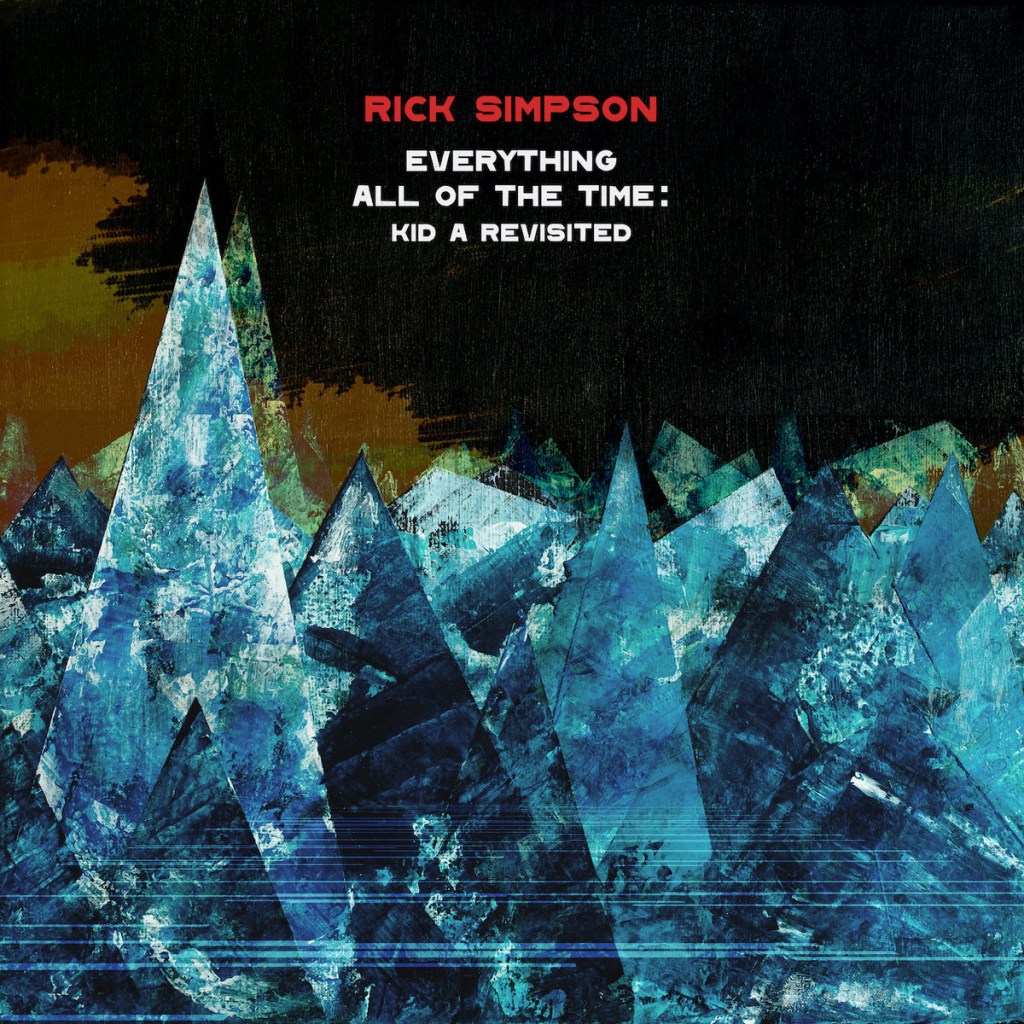
What I loved about Simpson’s approach was, to begin with, the nature of the task. ‘Kid A’ is a fraught, coiled release. Most of its tracks – still beautiful, still irresistible – don’t quite blast off in the classic Radiohead ‘slow-build anthem’ style. ‘Everything All of the Time’ breathed air into its parent record’s lungs, puncturing the claustrophobia, widescreen for the ears. I felt I could almost take for granted the melodic invention and excitement present in the actual performances.
Thinking back to that record makes ‘Twice Shaded’, Simpson’s first solo album, seem at first like an utterly perplexing move – a wilful leap into the leftfield that suggests jazz is as much attitude or approach as it is style or performance.
It’s impossible not to see the new album – at least in part – as a reaction against what came before. After a collection of masterful interpretations, this set is fully improvised or composed by Simpson. Rejecting the band format, he makes almost every sound on the record himself. And perhaps most surprising of all, he switches electronic instruments over acoustic, keeping solely to synths, keyboards, or samplers. Intriguing that, after liberating ‘Kid A’ from the mainframe, he should choose to dive headfirst into its wired soundworld for his own material.
But it’s a brave, brilliant decision. The album notes (on Simpson’s Bandcamp page) are scant, rightly allowing the music to speak for itself; but they do explain that the pieces were improvised and recorded at Simpson’s home, then edited, processed and mixed into their current form. As a result, there is a persuasive unity to the seven tracks, which clearly belong together and work best when listened to in a continuous sequence.
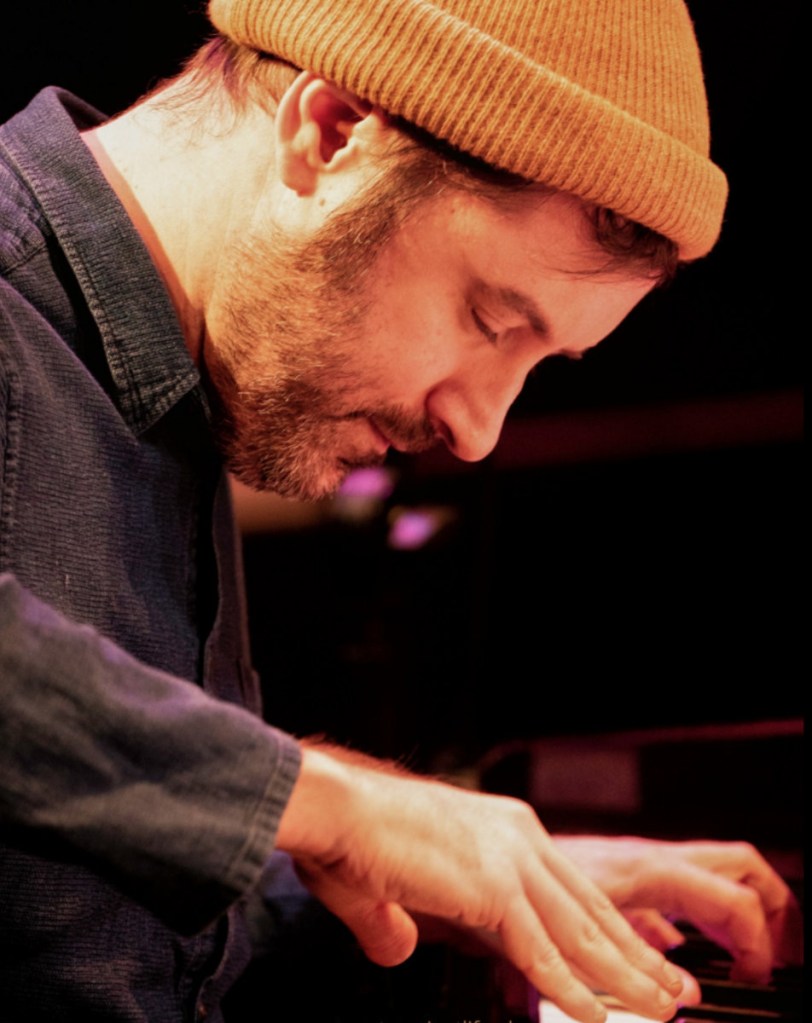
There are certain characteristics that recur across most of the album, tells and ticks – literally, in some cases. ‘Wild Stone’, the opening track, clicks like a clock with a melody, and Simpson sets out his stall: breathy chords seem to represent the album’s ambition to put the ghost back into the machine. Can playing jazz as if it’s electronica (or vice versa) humanise the artificial? Yes, according to this music, as if giving CPR to an audio nervous system.
In this first number alone, Simpson suggests all manner of human fallibility and malfunction. The agitated toy piano is at the mercy of disorientating stereo panning; one chord repeats as if the record is stuck; and carefully applied distortion blurs the line between what might be a note or an effect. All these elements seem to blend momentarily before fracturing apart again. And we’ve barely begun.
Each track finds a new way of displaying, without relying on, these techniques. ‘Bison’, as the name suggests, is more bestial than human, underpinned by a keening, lowing sound. It pulsates without resorting to actual percussion, accidentally inventing a new genre: menacing ambient. Oppressively heavy, it breaks into the next track, ‘Nenko’, which uses a propulsive beat and soaring drone to increase both suspense and exhilaration. As hi-hat chatter relieves the pressure, the drone pushes and climbs to the point of collapse. Simpson eventually bathes our ears in blissed-out fuzzy vibes and a sudden metallic echo, suggesting a breakthrough, a respite.
‘Dlither’ follows through on this moment of release, as the only band track on the album. Featuring Michael Chillingworth on alto sax and Dave Smith on drums, the piece begins with the gentlest of chimes, until the guest musicians explode onto the scene like Earthmen landing on an alien planet. It’s up to the listener to decide whether the hyperactive acoustic elements relieve or ratchet up the tension, as Simpson’s glacial synths first provide a grounding for these new sounds before drowning them in a euphoric outro.
The album moves to a close, maintaining its expert mood control. ‘Too Bright’ starts for all the world like a comedown from its predecessor’s climax, but it coalesces into a considered, delicate piano melody – crucially, the only ‘composed’ (rather than improvised) section of the set – suggesting a temporary period of calm. Uncertainty returns, however, in the shape of ‘First Everything’, a bold, almost brassy conclusion that assails its apparent resolve with manipulated noise.

Commonly – though not exclusively – electronic music offers security and regularity: techno beats, looping bass lines. Artists moving away from this template – Aphex Twin, Shackleton – seem drawn more towards the alien. But throughout ‘Twice Shaded’, it seems to me, Simpson seeks to bring what we perhaps value most about jazz – its humanity, unpredictability, its thrill-ride fragility – to this new sonic space. One thing I love about the production is that you can hear taps of fingers or feet on keys and pedals, a kind of tactility, that reminds you there’s a person in there. The machines are only making these kinds of off-kilter, unusual patterns because a human is queering their pitch. (If you want some out-there reference points, you could do worse than the eco-aware found-sound collages of Daniel Bachman, or even the involuntary groans of Keith Jarrett in full improvisatory flight.)
This brings me to a number I haven’t yet mentioned, the 10-minute epic ‘Plastic Sky’. I’ve left discussing it to the end because I think it’s one of the most perfectly-realised tracks of its kind. The duality between real / artificial or human / machine that feels present through the whole album is immediately summed up in this piece’s title. However, the phrase comes from a poem by Anne Sexton called ‘You, Doctor Martin’: Sexton’s reading of the work – an unflinching, if cryptic, depiction of her treatment for mental illness, rendered in a fascinatingly self-assured, percussive tone – is sampled in full at the start of the piece as a glacial, wavering note gradually increases in volume. A nervous twitch of a piano line appears over a determined heartbeat: a perfect musical evocation of a mind that can’t settle, a person on the edge searching for the will power just to keep going. As the song enters its final few minutes, the melody breaks up and the heartbeat keeps stopping, before reviving again. It’s shattering, honouring Sexton’s eloquence and trauma by capturing the alienation and isolation suggested by the electronic sounds, alongside Simpson’s ability to channel and convey emotion in his unscripted musicality.
‘Twice Shaded’; warmly recommended.
AA
‘Twice Shaded’ is available digitally from the artist’s Bandcamp page.
Discover more from ARTMUSELONDON
Subscribe to get the latest posts sent to your email.
 ARTMUSELONDON