To paraphrase Bob Dylan, one of her heroes and creative touchstones, Barb Jungr contains multitudes. Anyone familiar with her work will know what a versatile talent she is. She personifies what cabaret at its absolute finest can be.
She’s a consummate jazz vocalist – commanding, beguiling and arresting whether working within that genre or careering outside it. On stage, she mixes in the witty observational eye and sharp insight that suggests there are parallel universes where she’s a brilliant stand-up, or revered novelist. (No wonder she’s a startling songwriter as well – surely one of the UK’s finest lyricists.) You come away from a Barb Jungr set thinking as well as feeling, new angles explored, songs you thought you knew taken out of the drawer and examined under a completely different light.
Maybe it’s her fearlessness and self-belief as a performer; perhaps it’s depth of feeling and extraordinary levels of empathy; or her ability to bring multiple perspectives (feminist; social/political; historical) to her art. I can well believe it’s all of those. But Jungr is particularly adept at interpreting songs by men – and the word ‘interpreting’ there is inadequate for what she actually does.
Dylan, along with Leonard Cohen – surely two of the most elusive, inscrutable, and therefore revered songwriters of all time – simply lay themselves bare before her. She activates them, humanises them, reproaches them, sympathises with them. She treats them with respect, without giving in to awe. And along the way, other musical males have been fortunate enough to capture her attention – recent examples include the Beatles, Jacques Brel, and Sting.
I think the above context will only deepen your appreciation of ‘My Marquee’ – but it would stand by itself as a terrific record without it. It has a slightly unusual background story itself, which Jungr relates when performing the album live. For anyone unfamiliar with the name, the Marquee Club was a London venue, at the height of its fortunes during the 60s and 70s, legendary for hosting every great rock act that anyone’s ever heard of (and no doubt plenty they haven’t). The Marquee conjures up feverish images of seeing Zeppelin, the Stones and the Who at close quarters – a central hub of the ‘scene’.
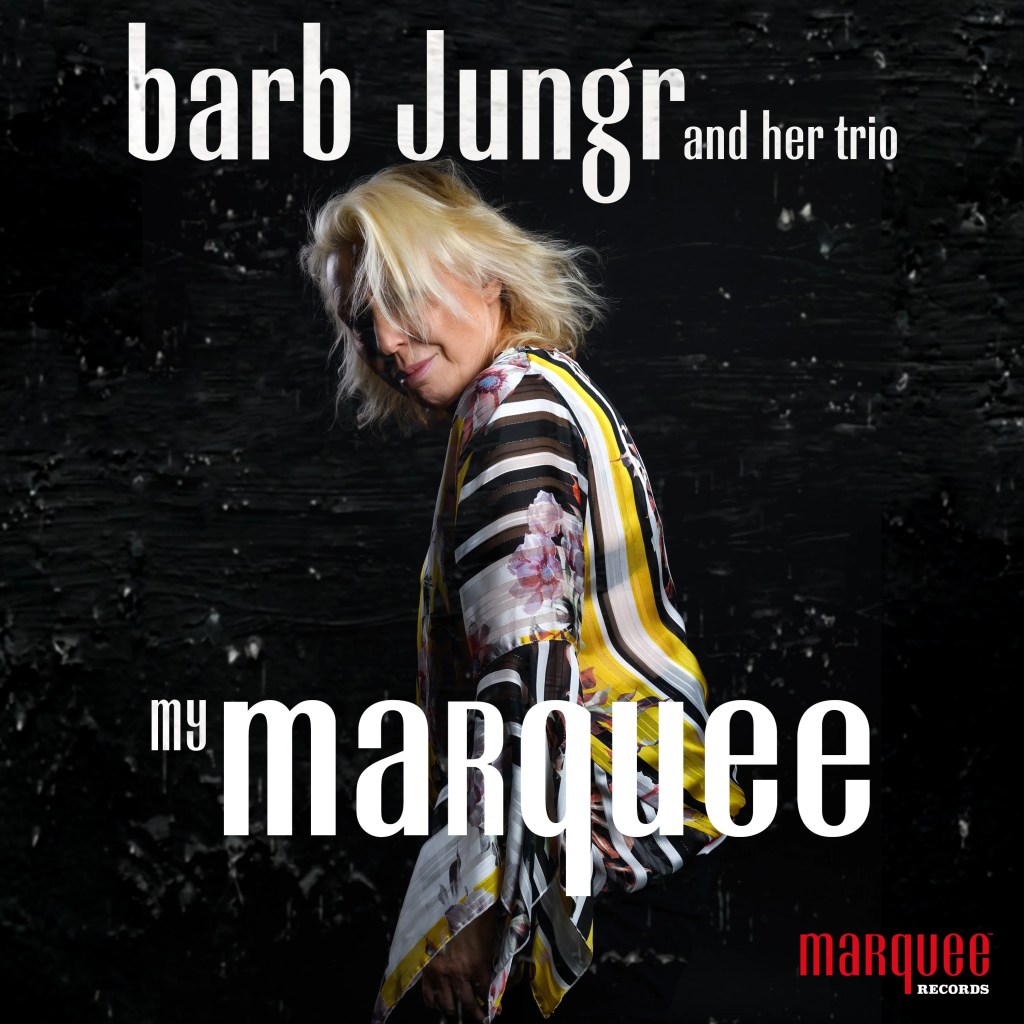
When she met the current owners of the Marquee name, Jungr speculated in conversation how good it would be for someone to take some of the great songs from that era and bring them together on an album. Displaying a heroic ability for matching person to project, they promptly suggested that she should do it, and signed her to their label.
A very wise move. To begin with, to tell even part of the Marquee story would mean taking on a lot of Bloke Songs. Take the acts I’ve already mentioned as examples: basically the sounds you’d get if testosterone could make a noise. Fortunately, Jungr is the ideal artist to harness that power and conjure something wholly original from it.
The album opens with a track that, in its original form, pounded you into submission for a little over two minutes: Led Zeppelin’s ‘Immigrant Song’. Here, it stretches out in a deliberately steady pulse, Jungr even stretching out the song’s opening sting into an extended section of vocalise. This version conquers by stealth, infused with a menacing beauty.
Immediately, two things are clear from this first number alone. One: the performances are immaculate. The Trio are Jenny Carr on piano, Dudley Philips on bass and.Jonathan Lee on drums. There isn’t a note or beat out of place, a corrective to Zeppelin’s chaotic roar. (While the make-up of the Trio is a common enough mix of instruments, I do think the removal of many of the Marquee stalwarts’ weapon of choice – the guitar – pays handsome dividends.)
Two: the production, by Michael Smith, is pristine. There is so much room to breathe in this album: you get a real sense of space between the instruments, all beautifully recorded, with just a hint of echo on Jungr’s voice. As a result, the set has both the restraint and control needed to maintain its intensity, as well as the vibe of spontaneous interplay you would normally get from a live performance.
One of the most powerful tracks must be ‘Substitute’. Again, the Who’s original is an explosion, its engine overheating, almost boiling over with rage. Here, it simmers and seethes, a controlled anger uncoiling across its catalogue of resentments.
By contrast, ‘Sparrow’ releases the early Paul Simon tune from its hyperactive protest-picking. The original’s slightly unexpected vocal arrangement (Garfunkel below Simon much of the time) is reflected by carefully placed choral harmonies which – with high notes from the bass and washes of cymbals – lift the song airborne, showing as well as telling us that the sparrow cannot land. With subtle shifts in tone and timbre, Jungr inhabits both the questing bird and harsh tones of the unforgiving nature around it.
There’s a joyous reinvention of Cream’s ‘Sunshine of Your Love’. Stripped of both its pounding, fractured beat and grinding riff, its masculine toxins evaporate. The cock’s strut is replaced by a sensuous groove, Jungr’s seductive vocals dovetailing around Carr’s ever-responsive piano. Her solo here is one of the high-points of the entire album, never showy for the sake of it, nor making it all about her – but instead serving the interpretation of the song, by turns delicate, exploratory then energised, assured.
The record is so ideas-rich that two medleys are needed. One is devoted to the Yardbirds (a band much admired by Jungr) and seamlessly merges three of their hits, honouring their consistency (despite line-up mayhem) and highlighting their seemingly effortless way with a melody.
The other medley brings the era’s psychedelia to life, blending the Move’s ‘Flowers in the Rain’, Traffic’s ‘Hole in my Shoe’ and the Small Faces’ ‘Itchycoo Park’. No longer subject to beat group conventions, in Jungr’s hands the songs blossom and stretch into blissed-out stoner anthems, the Marquee band’s minimalist accompaniments – including some welcome, woozy organ – inviting you to share the seven-minute trip.
My favourite track closes the album. No-one shines more brightly than Jungr when the arrangements are as pared back as possible, foregrounding that voice and its limitless storytelling ability. Her version of ‘No Regrets’ (a Tom Rush song made famous by the Walker Brothers) could not be further from the lush, false comfort of the original. This is spectral: Jungr’s vocal is suffused with sadness, picking its way through the emotional bubble, sometimes almost a whisper, sometimes finding the strength (again with a momentary choir cameo) to keep convincing itself to go on. Each of the Trio does only what is needed, Carr treading on eggshells around the vocalist, with the rhythm section supplying the beat of a broken heart. It’s unforgettable.
For me, where the project particularly succeeds – and takes its place alongside so much of Jungr’s other work – is that it never succumbs to nostalgia. It draws from the past to create something entirely new. An overall mood emerges; there’s a clear sonic stamp throughout – measured, focused, sensitive, emotionally true. The clue is perhaps in the title, as if the label refers more to the band than the brand: this is Jungr’s Trio, and Jungr’s ‘Marquee’. It has a different energy now.
AA
Barb Jungr and her Trio next play ‘My Marquee’ at the album launch show on 30 June, Pizza Express Jazz Club. Tickets still available here.
While the CD version arrives on 30 June, you can pre-save a digital copy here in the meantime.
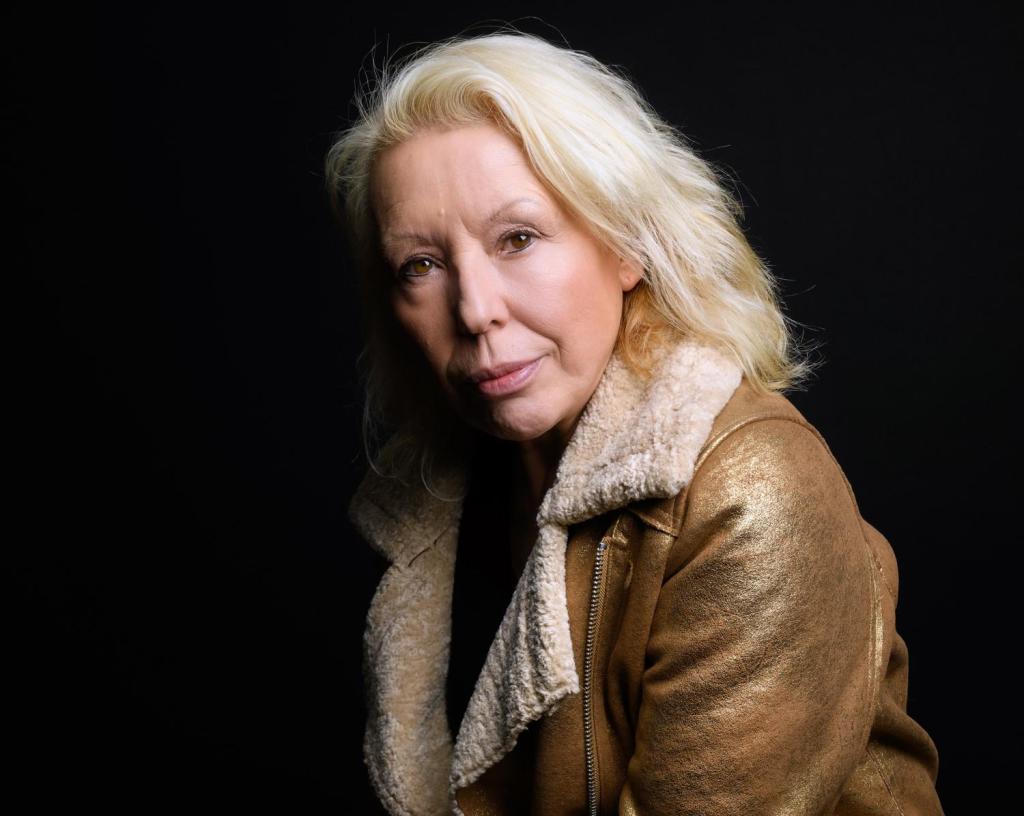
All the photos of Barb Jungr are by Steve Ullathorne.
Discover more from ARTMUSELONDON
Subscribe to get the latest posts sent to your email.
 ARTMUSELONDON