Tate Britain honours all things female in painting and photography from the 16th century to the earlier part of the 20th century. In this exhibition, expect to uncover women artists you wouldn’t have heard of, and also to revisit works by Angelica Kaufman, Artemisia Gentileschi and photographer, Julia Margaret Cameron.
At the show, things take off in the 17th century for women, at least for those who were able to seize the opportunities provided in portrait painting. Women like Mary Beale and her husband thrived in painting the rich. The terrific duo ran a successful portrait business and their sons assisted in the studio. One young son painted the drapery in the portrait of Anne Sotheby – and very good it is too!
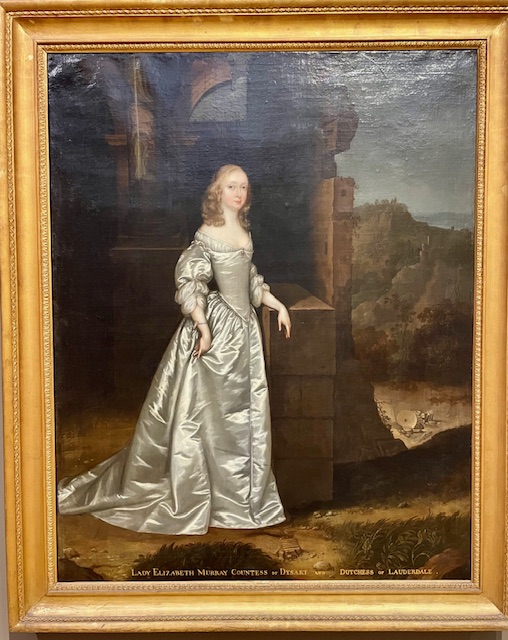
In the same room, portrait painter, Joan Carlile, made her sitters wear the same elegant white satin dress. In Portrait of an Unknown Lady, the sitter, in shiny satin, models a little shyly in front of a sombre-looking, damaged column, which seems to suggest a fall in fortune or loss! An interesting use of contrasts!
In the following room the 18th and 19th century was an empowering time for women artists who were starting to exhibit their work at the Royal Academy Summer Exhibition, the Society of Artists and the British Institution.
Angelica Kaufman is at the show, presenting her sitters as heroines from Greek mythology.
The ability to travel abroad progressively had an impact on women seeking artistic careers – those that could afford it. Katherine Read, 1723-1778, for example, went to Rome and Paris. There is a self-portrait of her with her finger pointing away from us. It is intriguing and is a reference to her teacher, French artist, Maurice-Quentin de la Tour, who had made the pose his own.
In the 19th century, social commentary creeps into the works – such as Sherry, Sir? by Jewish artist Rebecca Solomon, (1832-1886) It’s a touching portrait of a maid hovering tentatively – you cannot see her employer and you certainly feel and see her vulnerability.
Particularly appealing was Elizabeth Forbes’s work. Forbes was a leader of the artists’ community at Newlyn, Cornwall. School is out is a delight (1899) coupled with The Edge of the Woods which demonstrates her naturalistic style.

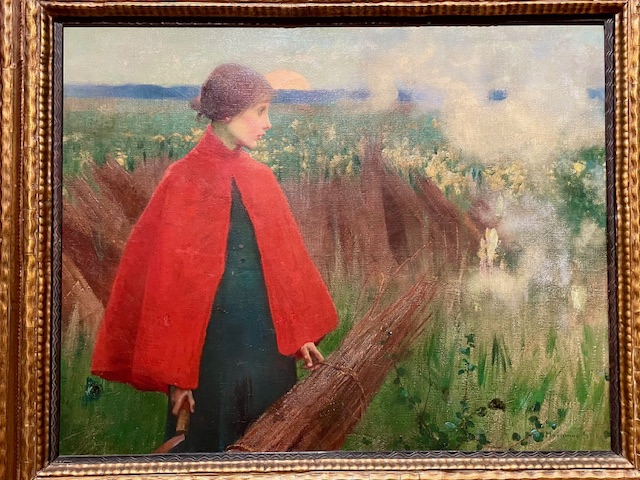
I also was drawn to Marianne Stokes’s work (see header image). The sun is setting, a young woman in a bright red cape sets off across a sunflower field, with the smoke from a steam engine which is threatening to engulf the sunflowers. The train is invisible however.
As you reach the final stages of the show, photography makes its entry. Julia Margaret Cameron’s Mountain Nymph, Sweet Liberty (Annie Keene) still packs a punch!
This exhibition felt a little over-stretched at times – but there was a lot of territory to cover. At the end of it, I felt I needed to return – which is good if you are a Tate card-holding member like myself! Go before it closes on the 13th of October 2024.
KH
Now You See Us: Women Artists in Britain 1520-1920 continues at Tate Britain until the 13th of October 2024
Discover more from ARTMUSELONDON
Subscribe to get the latest posts sent to your email.
 ARTMUSELONDON