With a lack of planning that would probably rule me out of any responsible position in the building of a future society, I have only just made it to this captivating exhibition – which has a single week left to run. Worth catching if you’re in the area, but as ever, I’ve tried to give a photographic flavour below for readers further afield.

*
I think this is only the second or third time I’ve been here in adulthood. In my childhood days, the chief objective of going to the Science Museum was, obviously, to press as many buttons as possible and find out what they activated. Nowadays (*assumes grandad position*), kids are familiar with screens, keypads and consoles that respond to the lightest touch with myriad wonders. So I was immensely cheered to find that I was still surrounded by kids falling over themselves to interact with the exhibits whenever possible. Even if this meant it wasn’t the most relaxing environment for a chap of my vintage.
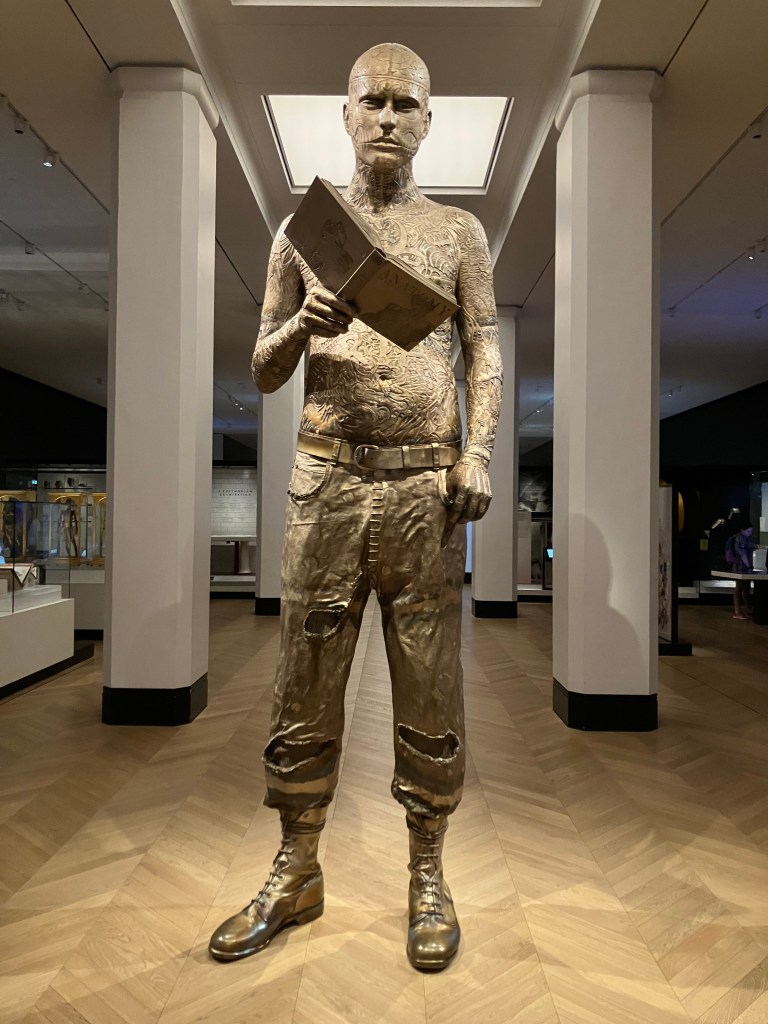
Kids and the Science Museum are an inseparable concept, co-dependent to the point where they sort of merge. So I was intrigued to see how this show – which was clearly playing the retro card to some extent – would work in practice. In the end, it rather pulled the rug from under my feet.
Again, in a neat manoeuvre that reminded me of my youthful visits, you can’t just walk into the first room – you have to enter a pod which ‘delivers’ you to the start. During this pretend transition, an ‘AI avatar’ introduces itself and outlines what turns out to be a framing device. The intelligence is carrying out research into humans to determine if they have a future, and intends to examine their imagination and curiosity. We will be walking through this survey as ‘it’ monitors our responses. And cynical old me is thinking, patronisingly, what a nice hook that is for the little ones…

And sure enough, plenty of the exhibits risk pushing the show into incoherence, at least at face value. The narrative set-up for children is a little at odds with some of the films represented, unless your offspring is a proper cinema buff (‘2001: A Space Odyssey’, ‘Metropolis’, the *original* ‘Solaris’) or has nerves of steel – we suddenly happen upon a full-size example Alien. (This was among certain exhibits we weren’t allowed to photograph, sadly, but at least I can make a ‘So – my Giger counter is at zero’ joke.)


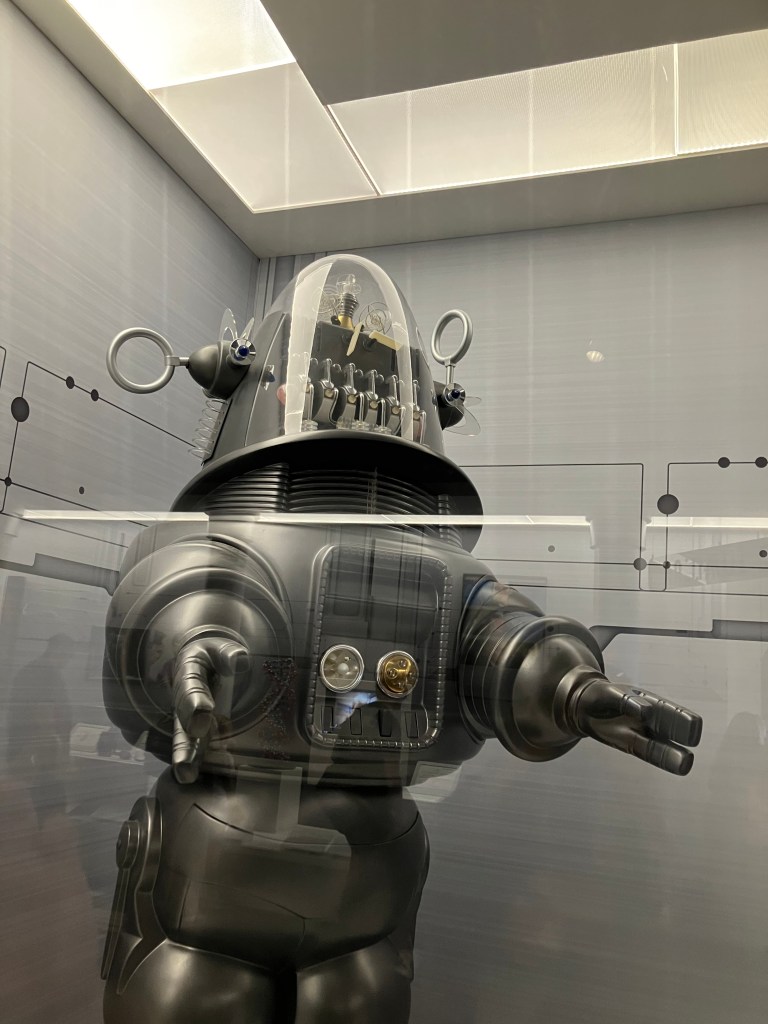
But in fact, this is the curators skilfully having their cake and eating it. As Darth Vader’s helmet snuggles up next to Iron Man’s suit, it’s clear the exhibition is aimed at children of both the past and present. Whose nostalgia circuits wouldn’t be blown at the sight of Robbie the Robot from ‘Forbidden Planet’, or the old ‘Star Trek’ tricorder?

While it does the soul good to see youngsters get as excited about an actual Dalek or a handsome model of the Enterprise as I did, the show works hard to engage them on a separate, more serious level.


Most of the time, of course, this a museum of science fact, not fiction: and the exhibition demonstrates the connections between the stuff of fantasy and speculation, and what might turn out to be real-world applications. One particularly inventive room dazzles us with motion sensitivity, as light and patterns respond to the movements made by the visitors. But elsewhere we see how science has absorbed ideas as responses to potential needs: how do we ventilate our homes on a hot planet; how would we live if the world drowned?


A copy of Rachel Carsons’ ‘Silent Spring’ reminds us that despite some 60 years of climate awareness, we are failing. The AI character’s research is inconclusive: our decisions so far indicate that we are prepared to do active harm to our own planet, but we have the mental capacity to turn things around.


I left the exhibition strangely uplifted, musing that our tradition of science fiction, however bleak or dystopian, is still shot through with hope – the examination of how humanity overcomes, or endures. I felt ashamed of my dismissive thoughts at the start: perhaps this is the ideal Science Museum exhibition: start as a child, emerge at the end, having grown.
AA
(words and pictures)
Discover more from ARTMUSELONDON
Subscribe to get the latest posts sent to your email.
 ARTMUSELONDON