I managed to see this exquisite exhibition with only a few days to spare: it closes on 2 May. If you are in the right place at the right time – Holland Park, London – I urge you to go if you can. For those of you who cannot get there, here is a brief photo-tour from my visit.
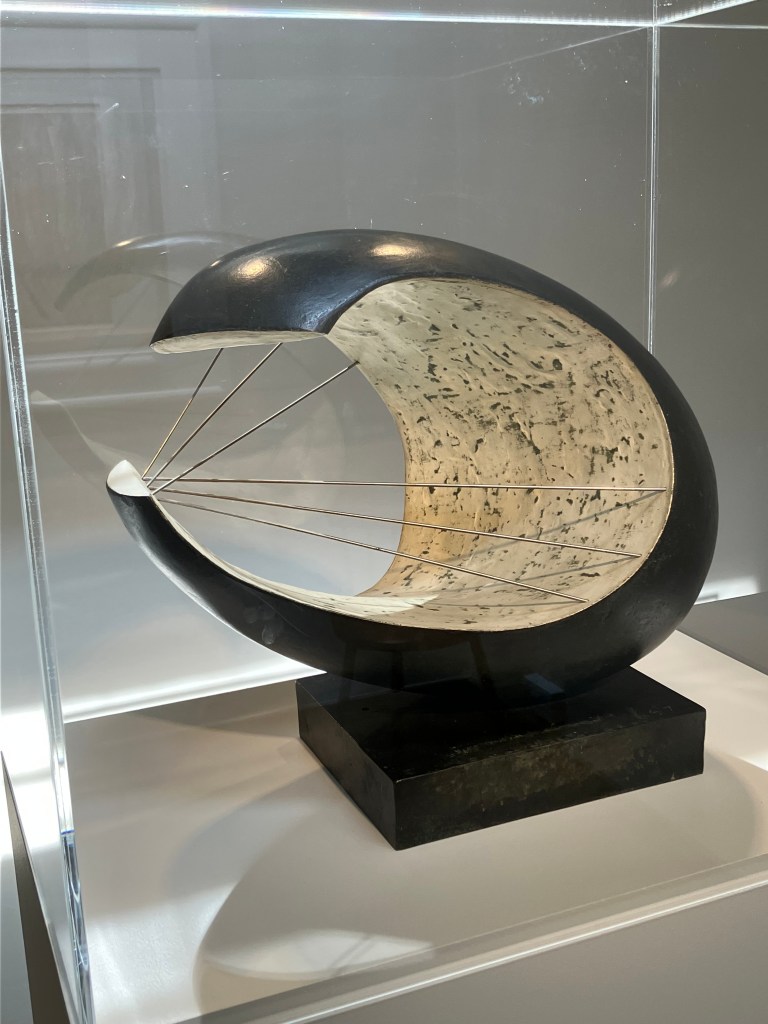
This is the first time an exhibition has focused solely on Hepworth’s ‘string’ pieces from across her career. In a masterstroke of curation, the hang brings together the sculptures with works on board or paper where Hepworth seemed to map out the geometry of what was possible.


Almost as soon as she began creating string sculptures (such as the above piece from 1939), the materials essentially became unavailable. The resulting wartime drawings seem restless, urgent to me, snapshots of vibrancy versus precision: trapped in 2D.
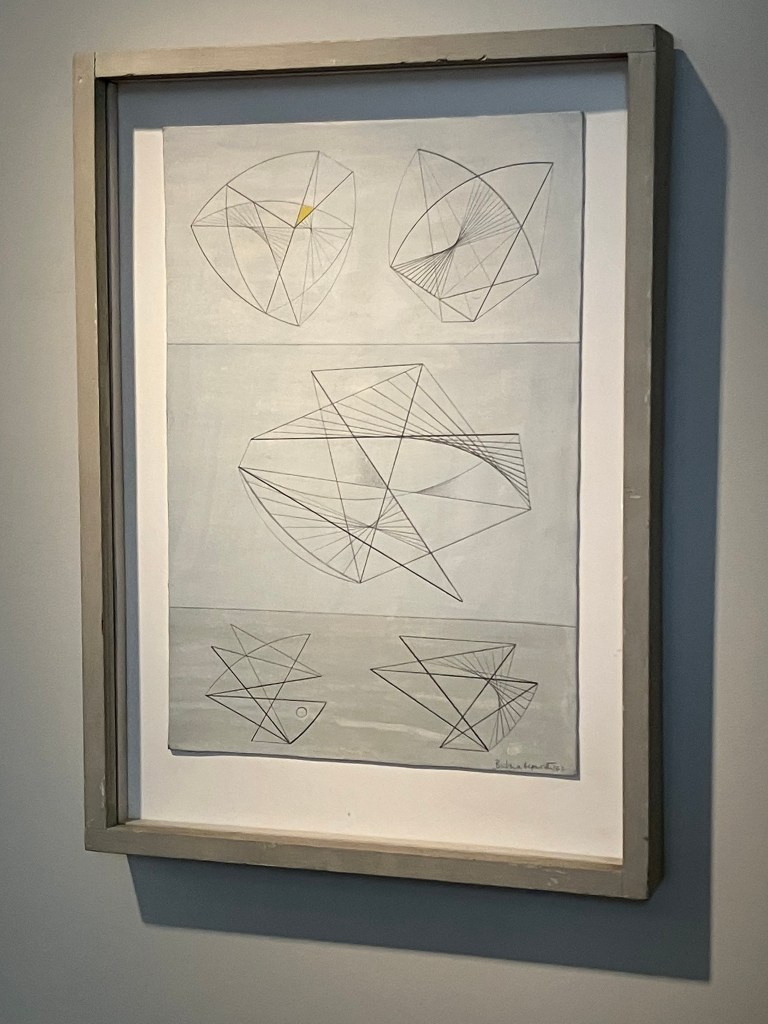
A form, perhaps, of the “tension” Hepworth felt (the gallery notes tell us) between her being and the forces of nature.

The second half of the exhibition races on in time, showing how the string motif remained a constant whatever the direction of Hepworth’s practice.

These two pieces show her ability to conceive a perfect form whatever the material. The golden sculpture is the latest in the entire exhibition, dating from 1971.


Pieces from the 50s reflect her heightened sense of ambition, the encircled closed-circuitry from before now opening up as if in bloom, firing energy out at the viewer.

We’re treated to two ‘rehearsals’ for her famous ‘Winged Figure’ on the side wall of the Oxford Street branch of John Lewis.
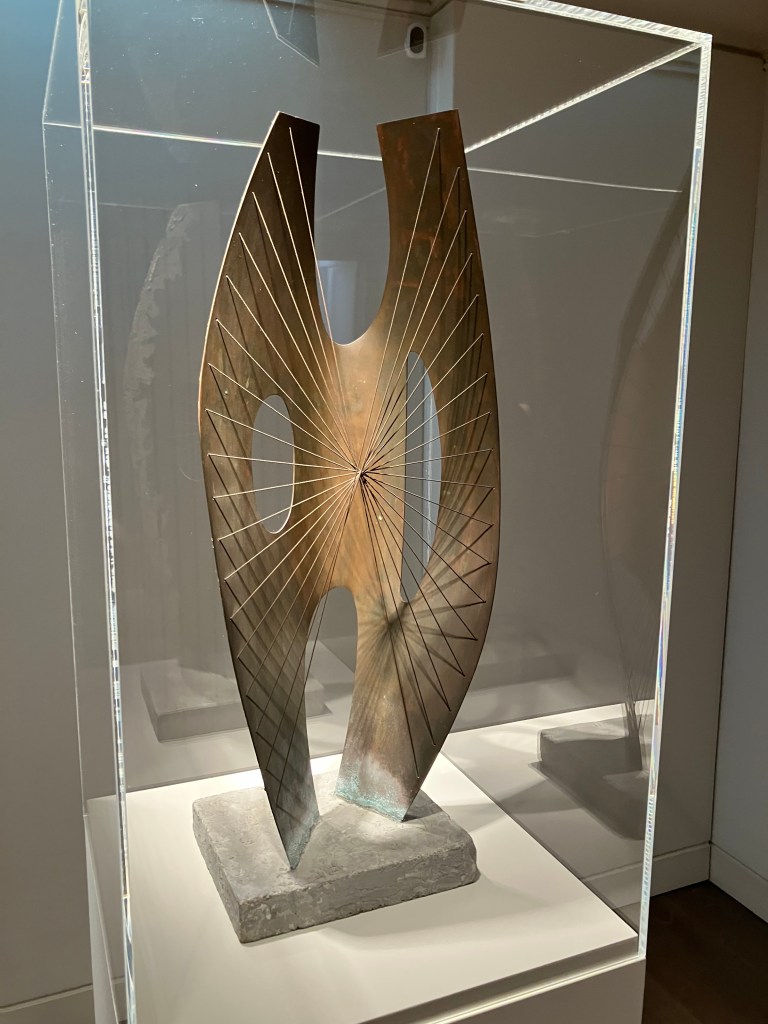

But as before, she records her ideas in two dimensions, often paintings at this time, like spatial index cards preserving the key points for future reference.


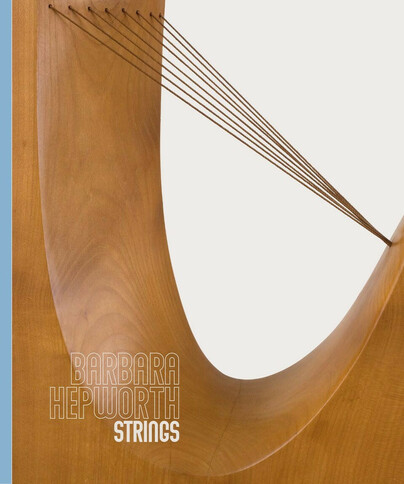
Speaking of recording ideas, there is a handsome catalogue to accompany ‘Strings’. Admittedly, the price is handsome, too: but we’re looking at a truly sumptuous volume here. The photography is outstanding (something of an improvement on my efforts!) and expert commentary abounds. If the exhibition has passed you by, you may want to treat yourself. Find out more.
AA
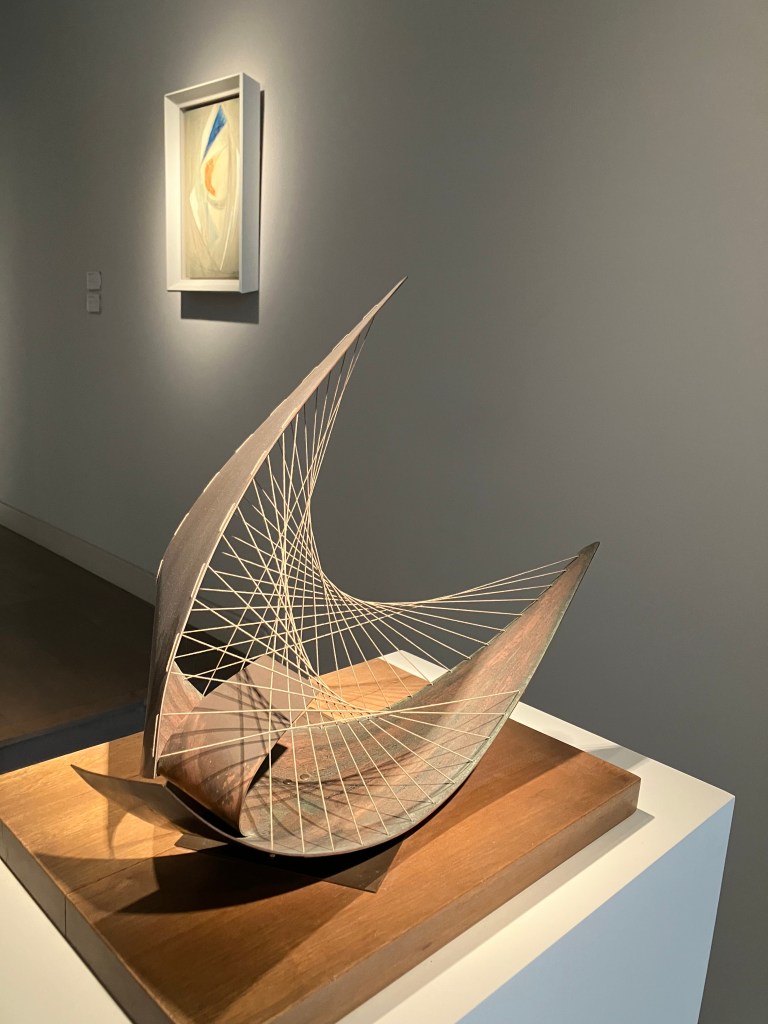
In the background: Turning form (blue), 1960
Gallery photos by AA. The main image for this post is a detail of Delphi (Stone form), 1960.
Discover more from ARTMUSELONDON
Subscribe to get the latest posts sent to your email.
 ARTMUSELONDON