Any cinema enthusiasts within visiting distance of Berlin should head to the Kulturforum (the city’s major arts complex located near Potsdamer Platz) before the end of February. Until then, it plays host to ‘The Big Screen’, a huge, wide-ranging exhibition chronicling the development of the film poster, alongside the evolution of cinema itself.


A show of this size that solely concerned itself with displaying great examples of poster art would still be, well, the stuff of movies. However, ‘The Big Screen’ raises the bar even higher with the way its themed displays and flexible interpretations illuminate our understanding of how advertising, marketing, and the way we interact with cinema itself have all evolved over the past decades.
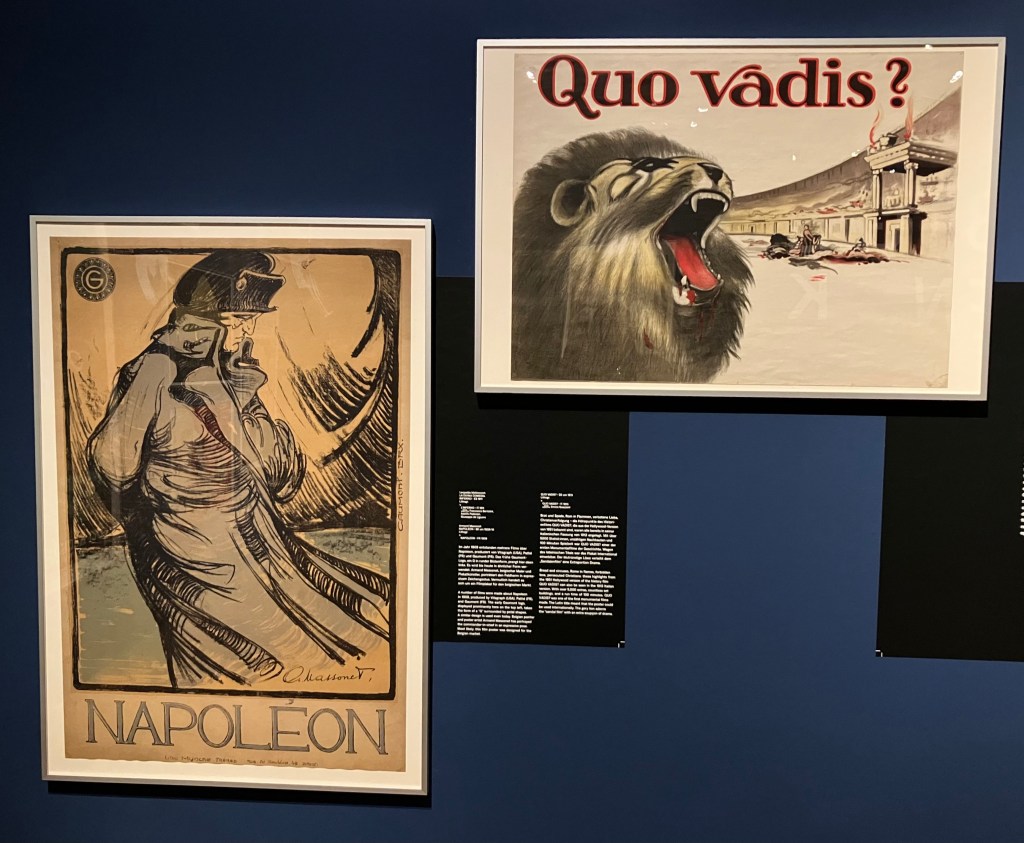


My selection of photo highlights here can, of course, only be a trailer. The hang is brilliantly thought-through, varying between caressing or assaulting your senses, depending on whether a huge masterpiece needs room to breathe, or a snapshot immersion in a riot of ideas is more the thing.


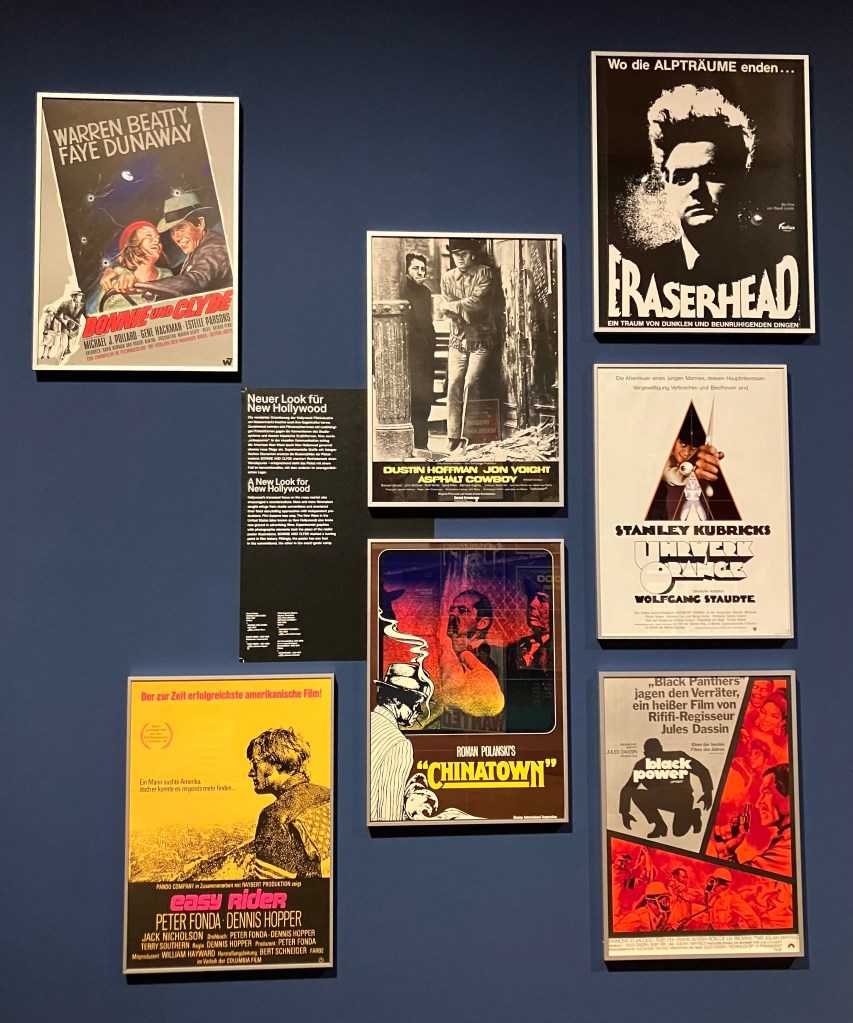
The exhibition sprawls across two floors: the space on each is one entirely open plan room, emphasising the larger pieces’ grandeur and allowing viewers plenty of wandering space so you can ‘test’ the posters for what they are: eye-catching from a distance? Appealing? Rewarding when viewed close-up?


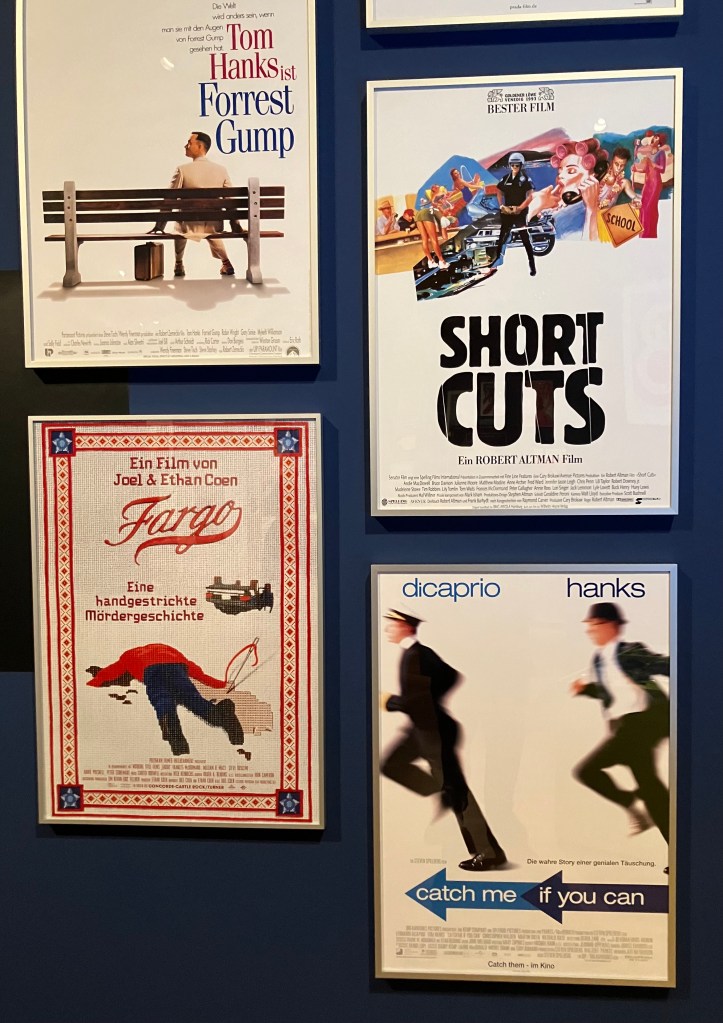
The break between the rooms is well-placed. Wandering around the earlier pieces, it feels like the art form is unstoppable, upping its game as fast as the movies themselves gather piece. In the second room, bringing us up to the present, I felt as if the script was a little different. I was intrigued to note that as the posters became more photo-realistic and tended to feature more straightforward images of the relevant stars or scenes from the films… even the ones I really liked felt somehow lacking, as if some of the energy had drained away.
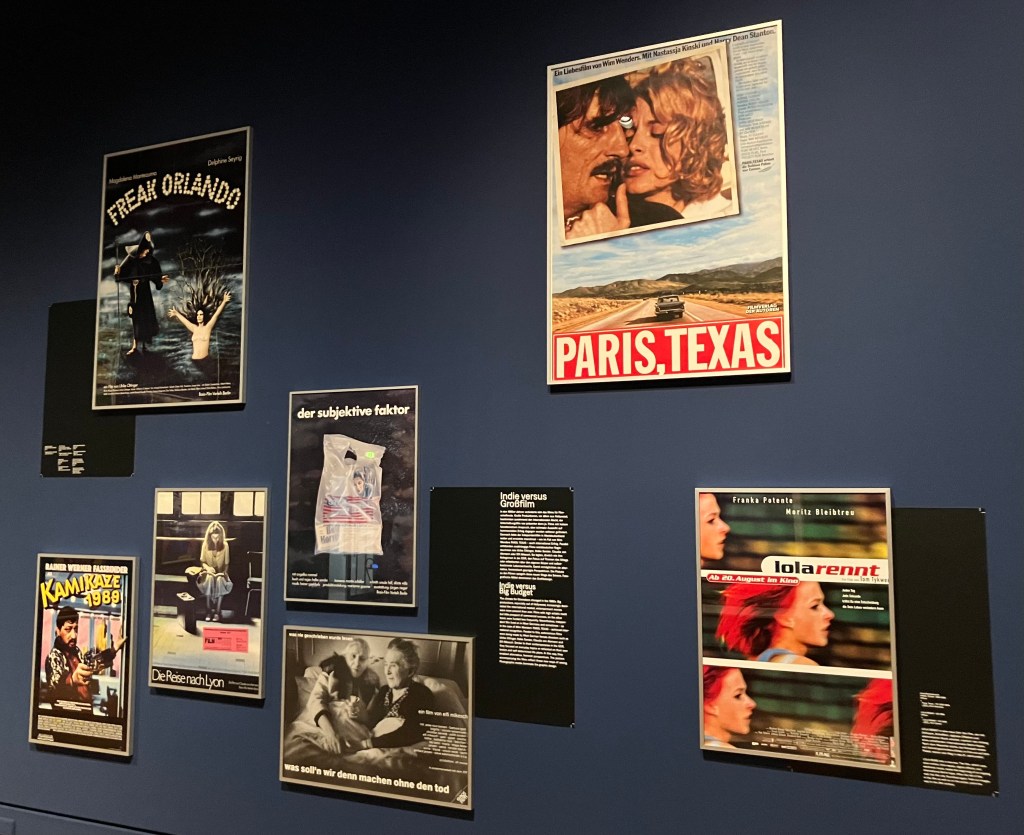
It was interesting to compare some of those with the near-electric charge of posters like these (all set in or linked to Iran), where the powerful use of non-photographic artistic techniques seemed to contribute to their subversive intent.

The exhibition seems alive to this. In particular, it explores the concurrent explosion of interest in ‘alternative’ pop culture art, with fans and professionals (often the same people) producing their own, illustrative posters as more deeply-engaged responses to the films than the more matter-of-fact originals.


Of course, artists are still inspired to create their own materials for films even if the posters were amazing first time round…
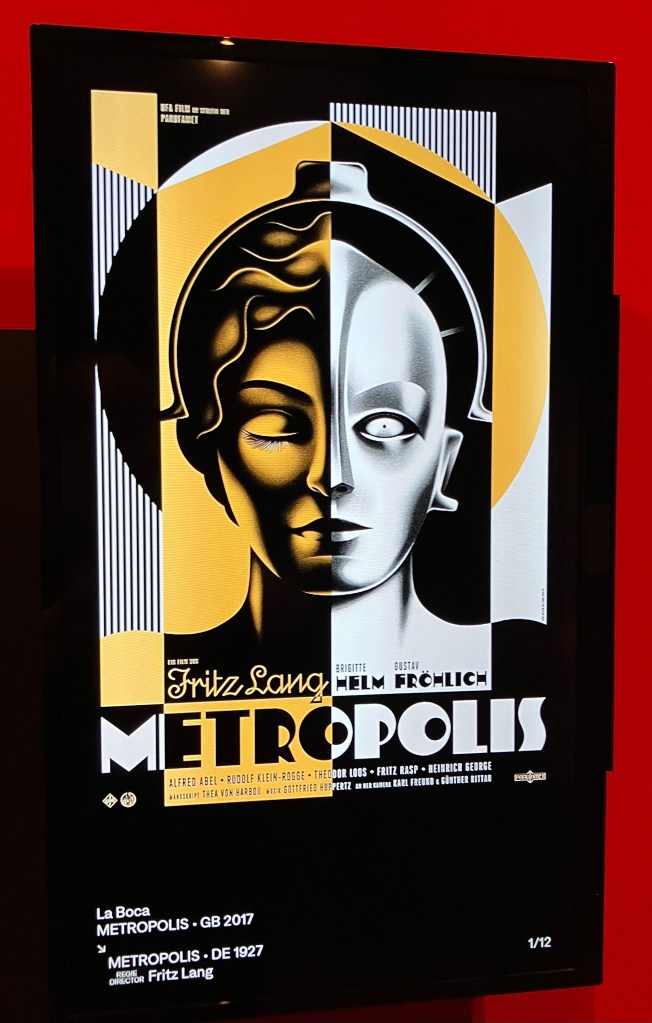

It also included some fascinating examples of opening titles, which have undergone a bizarre trajectory. Originally there to provide brief, static information, they eventually progressed to the more flamboyant extended title sequences that served to whet the appetite and build anticipation for the film proper.


Think of the genius of graphic designer Saul Bass (the flying lines and propulsive typography of ‘Psycho’, ‘The Man with the Golden Arm’, ‘North by Northwest’); the famous James Bond title sequences, almost becoming their own genre, eating themselves with self-parody until the startling ‘Casino Royale’ reboot; or the playful/sinister flamboyance of David Fincher film titles. And yet now, so often, the fear of the short attention span is such that – as the exhibition notes point out – opening credits have become more scarce again, even the most creative sequences now closing the movie instead.
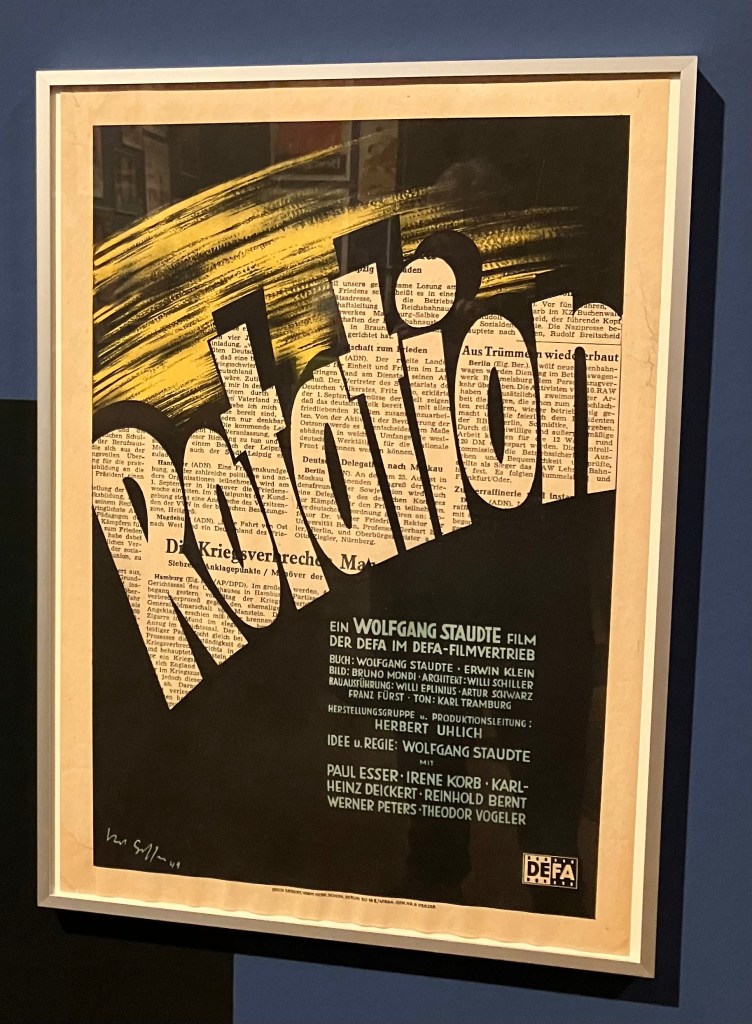
In the examples playing in the room, I thought the change over time was most starkly expressed by ‘Rotation’, where the opening titles seemed to animate its poster’s spirit, the two in perfect harmony; compared with the retro marvel of the ‘Catch Me If You Can’ credits, so full of verve and wit compared to the photographic rendering in the poster.


Film (and graphic design) buffs: get there if you can. However, if Berlin is out of reach, there is a handsome book of the same name (German text) to accompany the exhibition.
AA

Discover more from ARTMUSELONDON
Subscribe to get the latest posts sent to your email.
 ARTMUSELONDON