I came to this exhibition very late, so this is something of an ‘emergency’ post to encourage any of you with some time over the holiday season to catch it in its final fortnight.

Sugimoto’s photography is always different; always the same. The subjects change but they are all viewed, literally, through the same lens. If I felt a single theme running through all the sections of this exhibition, it would be ‘things are not always as they seem; sometimes the camera lies’.
In a world where highly advanced digital camera technology is available for anyone with a smartphone to document the minutiae of their lives – and there’s nothing wrong with that – Sugimoto remains steadfastly analogue. Using an old-school wooden camera (think head-under-a-cloth-at-one-end-of-a-concertina and you’re not far off), he produces haunting images that are by turns surreal, eerie, abstract or fantastical.

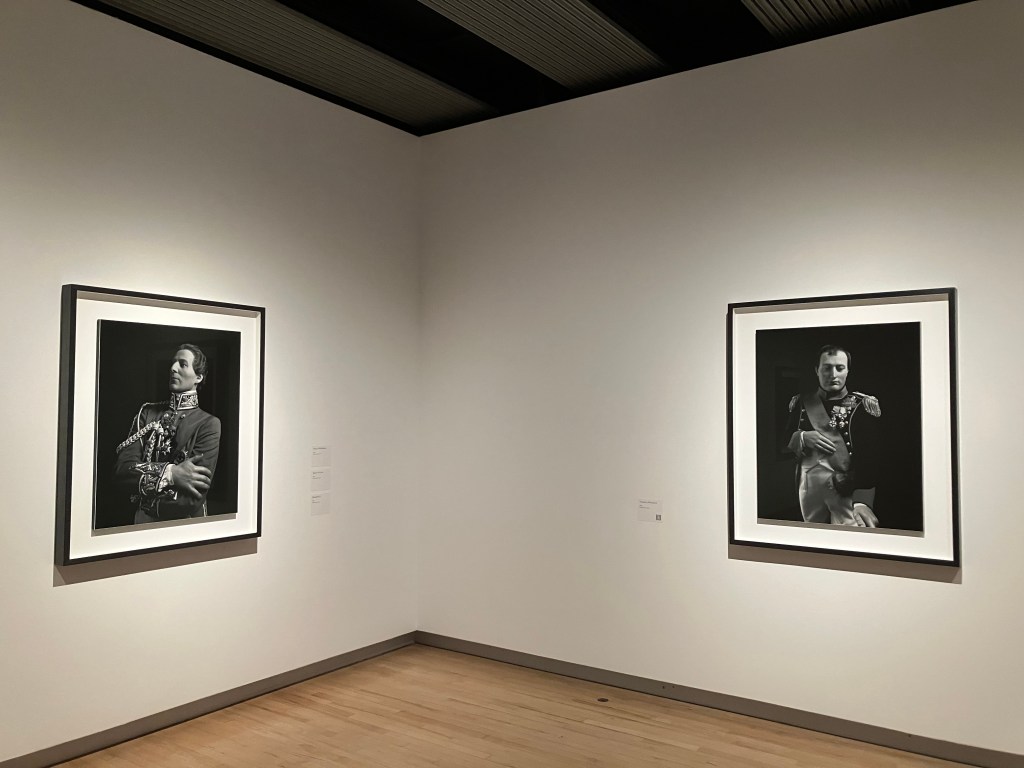
The room of portraits is perhaps the most unsettling. The photos are of waxworks (loaned from the Madame Tussauds attraction in London), rather than actual people. Sugimoto photographed them exactly as if they were real sitters, using the most sympathetic/dramatic lighting or point of view, as appropriate. The results are astonishingly lifelike.

However, it’s the consistency of this approach that disrupts the realism: because the chosen subjects range across hundreds of years, we know that some could have been photographed but others couldn’t. Also, no matter how skilled the craftsman, waxworks are not perfect renditions, and the quality varies. Sugimoto’s detail-hungry camera exposes these flaws so that some portraits look undefinably ‘wrong’ compared to others. It feels very like the ‘uncanny valley’ syndrome where a replica looks close to – but not exactly like – an original (a classic example being a robot or dummy that never seems entirely human, so apposite here).
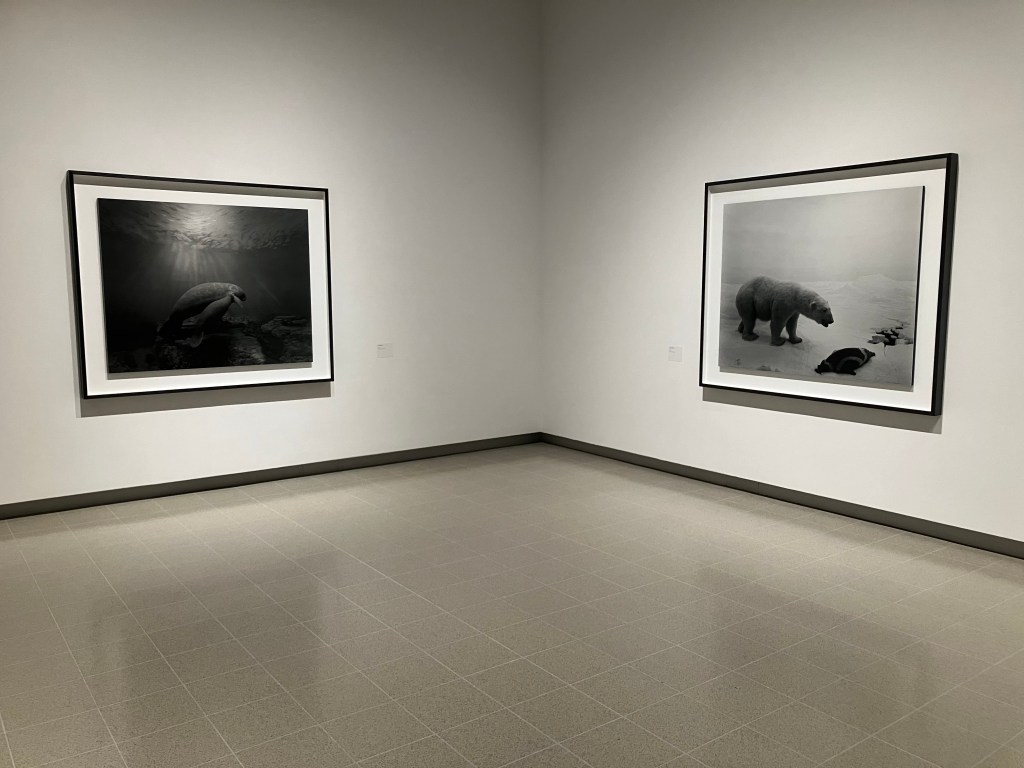
The first, huge area of the exhibition almost makes you feel like you’ve stumbled into an actual uncanny valley yourself. Sugimoto’s photos of museum dioramas – where stuffed or fake animals are displayed in cases against false, illustrated background – eliminate any evidence of glass cases, reflected lighting and so on. Just like the waxwork images, these photographs appear to re-animate something totally artificial. Even Sugimoto’s (near-universal) choice to work in black and white enhances rather than detracts from this immediacy – perhaps because we still think of black-and-white photography as the visual language of reportage and authenticity.
The seascapes demonstrate Sugimoto’s masterful control of his images. Displayed together, they give the impression of a chronological series, the same coast captured at various times of day or night. But the descriptions reveal that the photos are drawn from a range of locations, rendered with a supernatural consistency across the whole project.

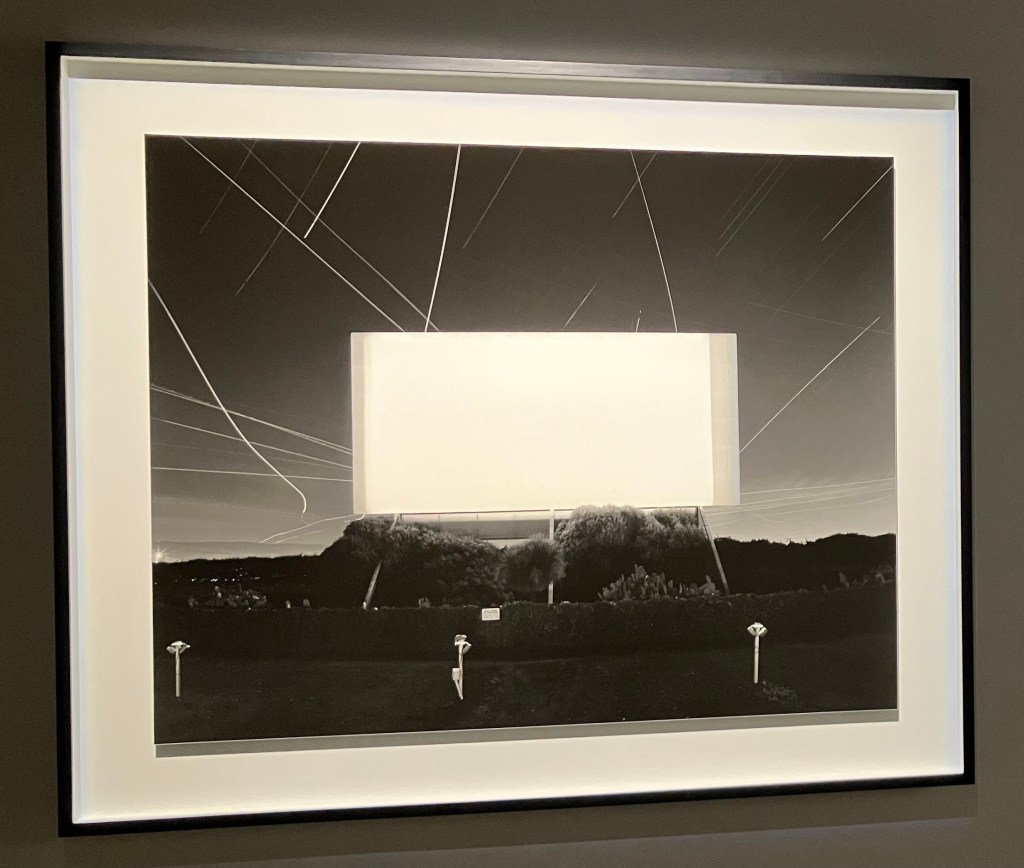
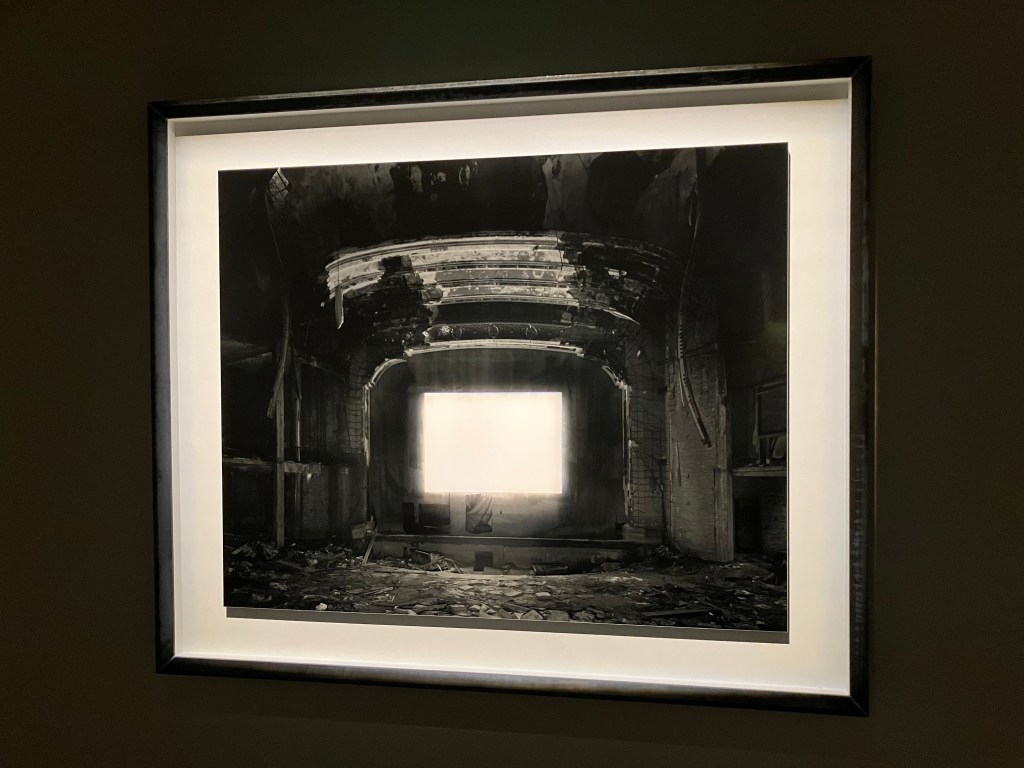
Visitors like myself who revel in cinematic photography could find themselves lost in Sugimoto’s theatres. As the interpretation explains, he ran a movie in each empty auditorium and took an exposure throughout the entire running time – so each image features a glowing white screen combining every frame of the film into nothingness. As Sugimoto takes the project into empty drive-ins and abandoned venues, he achieves the tricks of showing time both passing and standing still, and evoking art as a kind of electric presence that still gives these places a charge.
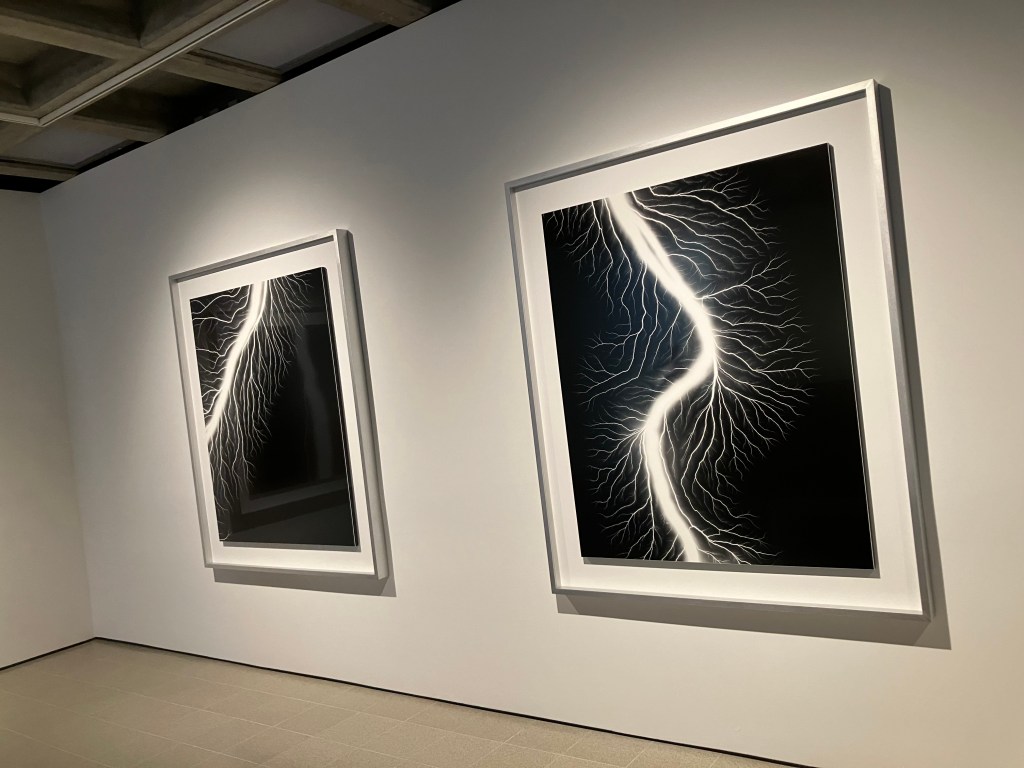
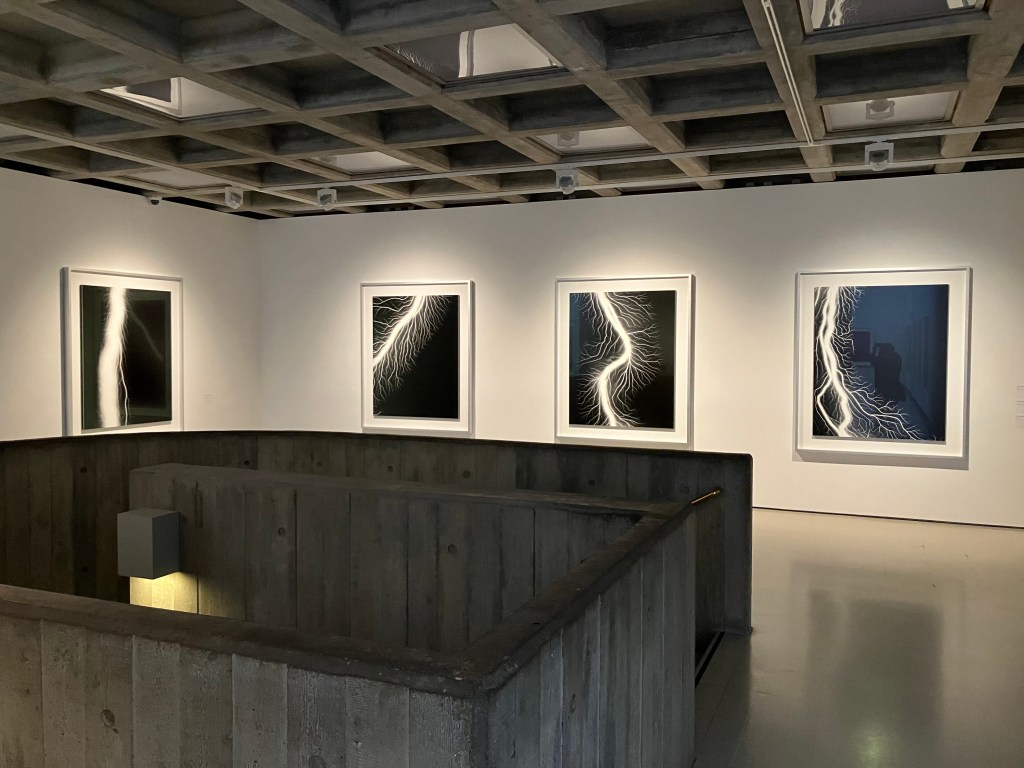
At times, Sugimoto seems to behave like a scientist who happens to carry out experiments using photography. His captivating lightning-strike photos were inspired by film damaged accidentally by sparks of electricity – accordingly, he then devised a way (camera-free!) to recreate the effect.
The architecture series is haunting, even troubling. All the images are blurred. As the artist explains, he wanted to capture a kind of early-form construction and found that the best subjects retained their power even out of focus. He then realised that he had also eroded the building’s most defined points, projecting them into a possible, faded future.

I found them profoundly moving, at times evoking how someone with failing sight might view our great architectural achievements, or more simply, how a pure form – with its function compromised – remains imposing and powerful. The image of the World Trade Center, its towers fading, of course possesses a poignancy that Sugimoto could not have predicted, its actual destruction cruelly accelerated.

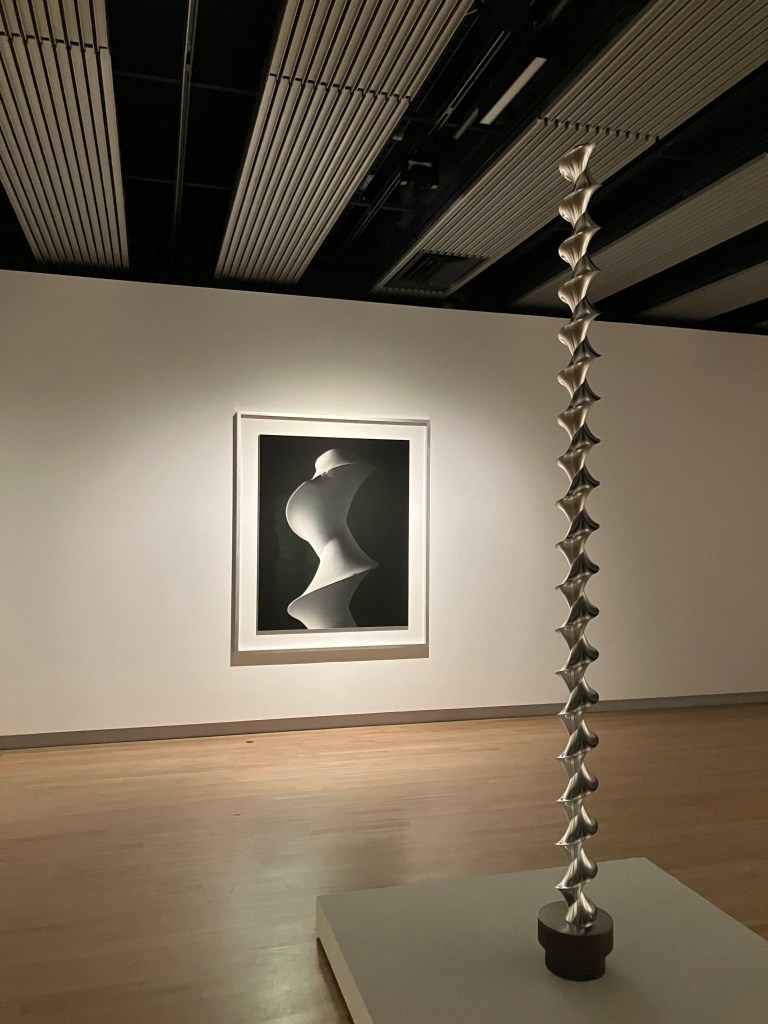
Sugimoto’s abstract objects conjure up a separate kind of futuristic architecture, with sharp accuracy replacing ghostly distortion. After photographing a series of existing mathematic sculptures, he began working with a team of metalworking experts on mathematical models of his own: buildings from an impossible city, too precise even for dreams.
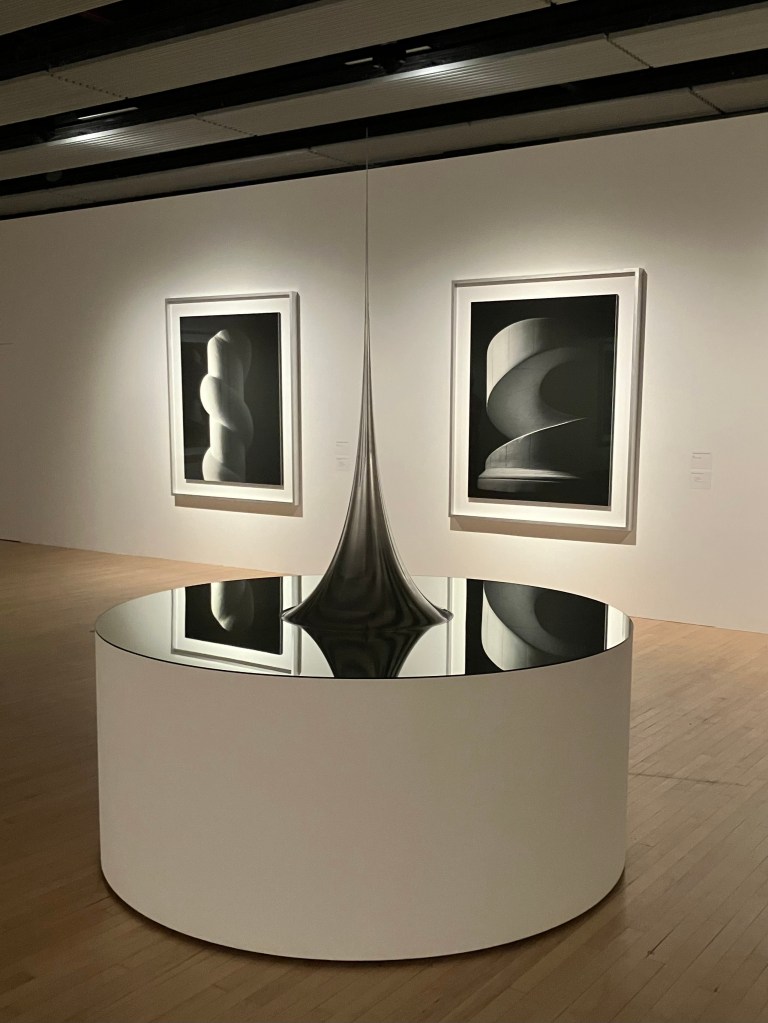
This work is partly about method, observation, science, time and perception… but the human mind, heart or soul (adjust according to your preference) behind it is inescapable. Perhaps it is the near-perfection of the images that speaks so clearly of our ambition, and our flaws – or the emotional truth that meticulous order and process can be a crucial step towards beauty and wonder. (I remember having a similar response to a Rachel Whiteread exhibition some years ago.)
Anyone who doubts the impact of this aspect of Sugimoto’s practice need only spend some time in the one section devoted to a colour project, Optics. These images used Polaroid equipment to capture various colours, and the stages between them. Viewed together, it’s almost impossible not to think of the Tate’s ‘Rothko Room’. (If you are as old as me, you may remember when the current Tate Britain was the only ‘Tate Gallery’ – Tate Modern a mere twinkle in an architect’s eye – and the Rothko paintings were in a separate enclosed space, enabling total immersion.) They have the same cumulative near-spirituality, a sense of the beyond.
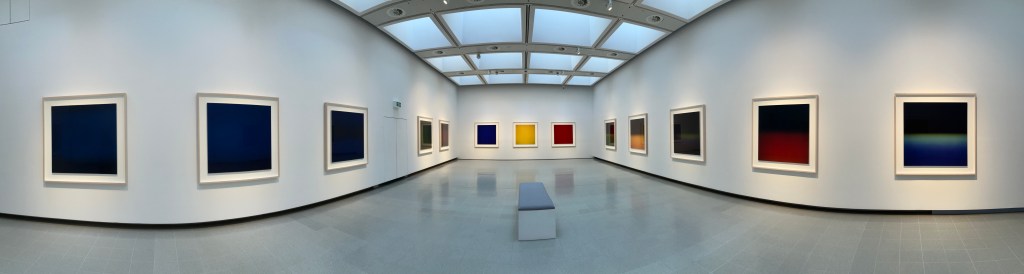
But finally, one of the reasons I wanted to post about this as quickly as possible and encourage a last-minute visit, is the overall effect of the hang. Sharing an austere, monochrome aesthetic, Sugimoto’s work and the Hayward Gallery are made for each other. I hope some of my photos demonstrate how compelling and atmospheric a space it can be, and why it’s worth seeing these pictures in this setting if you possibly can.


The exhibition finishes on 7 January 2024 (although please don’t turn up on 1 or 2 January: the Hayward is routinely closed on Mondays and Tuesdays). If you are too far from London or cannot get to the show itself, the catalogue offers a sumptuous retrospective.
AA
Discover more from ARTMUSELONDON
Subscribe to get the latest posts sent to your email.
 ARTMUSELONDON