Back in 2018, pianist Rebeca Omordia released a solo recital CD called ‘Ekele’, which showcased African art music – that is, works by African composers who had studied and were influenced by Western classical repertoire. To me – and no doubt many others who came across the album – it was an ear-opening journey into a musical universe at once strange and familiar.
Despite regarding myself as an avid listener of both ‘world’ and ‘classical’ music – whatever we take those terms to mean – before ‘Ekele’, I had never really appreciated how the two genres might connect. In Omordia’s hands, the rhythmic and stylistic hallmarks of the one simply seemed to flow naturally into the other.
That record planted a seed that has grown remarkably over the past seven years. Omordia founded the African Concert Series initiative with a fascinating series of recitals in intimate London spaces such as the October Gallery and Africa Centre, then kept the momentum going with online gigs throughout lockdown. Interest – and audiences – built to the point where funding increased and a residency with Wigmore Hall became available.

This is how, at 11.30am on Saturday 15 March, I came to take my seat among a sell-out audience for the first of three concerts on the latest African Concert Series day. The morning recital was given by Ethiopian pianist and composer Girma Yifrashewa, performing an opening pair of compositions by Emahoy Tsegué-Maryam Guébrou (often shortened to simply ‘Emahoy’), followed by five of his own pieces.
Emahoy lived an extraordinary life which I cannot cover fully here – at various times prisoner-of-war, nun and ultimately, a virtual recluse until her death in 2023, at age 99. But in her seclusion, she composed a substantial catalogue of music, with her solo piano repertoire in particular drawing considerable attention and acclaim. While she apparently considered herself very much a ‘classical’ composer, her beautiful, bravura disruptions are as likely to speak to any love the listener has for, say, Monk or Jarrett.
Yifrashewa preserves Emahoy’s private universe, the self-contained conversations between the two hands, each waiting for the other to speak. His own work suggests that he is a ‘kindred spirit’ to Emahoy, in terms of the fluidity, sensitivity and expressiveness: however, his own work does not seem to deal as much with the personal/political; instead, he surveys a broader landscape, and seeks with each piece to portray or represent an aspect of Ethiopian culture, values or society. Particular highlights for me were the prayerful ‘Sememen’ (a state between sleep and waking, the artist told us) and ‘Ambassel’ – a musical mountain pilgrimage, with astonishing rhythms from the left hand, robust and refined.

The remit of the Series extends to work by composers of African heritage who lived and worked overseas. Accordingly, the afternoon concert presented ‘Violin Music of the African Diaspora, performed by Aisha Syed-Castro with Rebeca Omordia on piano. The four works chosen by Syed-Castro demonstrated her versatility across a formidable range of styles, often in the same piece.
The first three composers were Afro-American. William Grant Still’s suite on a series of sculptures reflected both avant-garde jazz and serene balladry, the latter quality also suffusing the Florence Price single-movement ‘Adoration’. None of this prepared us for the (almost) show-stopping, completely solo ‘Fiddle Dance Suite’ by Wynton Marsalis, which somehow married the composer’s distinctive jazz/classical hybrid sensibilities with some spectrally unhinged elements of Celtic folk dance. Syed-Castro’s virtuoso display was sheer exhilaration – perhaps we needed the closing, British reserve (relatively speaking) of Coleridge-Taylor’s ‘Petite Suite’ to allow us to recover!

Tunde Jegede, in collaboration with the African Classical Music Ensemble, closed the day. A Londoner with a Nigerian father and English mother of Irish descent, Jegede grew up in a textbook melting-pot of traditions: as well as being a classically-trained cellist, he is best known for his mastery of the kora, a West African instrument which to Western eyes and ears might seem to combine elements of the harp and lute or theorbo.
The evening’s programme was expertly balanced between Jegede’s own compositions – some performed solo onstage, with only the cascading notes of the kora’s 21 strings filling the darkness of the hall like raindrops of sound – and traditional tunes or standards from Gambia and Mali. The second half built in intensity with passionate group performances, each Ensemble member making a vital contribution: Ansumana Suso’s second kora dovetailing seamlessly with Jegede; Yusupha Suso’s startling solos on the balafon (close to the Western xylophone); and Muhamadou Saho raising the temperature in the room with his impassioned vocals and charismatic moves.

There is something about this sound, its indefinable character that makes it haunting and euphoric at the same time: perhaps it is the part-access it gives me, if only for a few moments, to hear centuries of a tradition that isn’t mine; that I have the privilege through performances like this of being able to share in the appreciation of the music.
How to buy
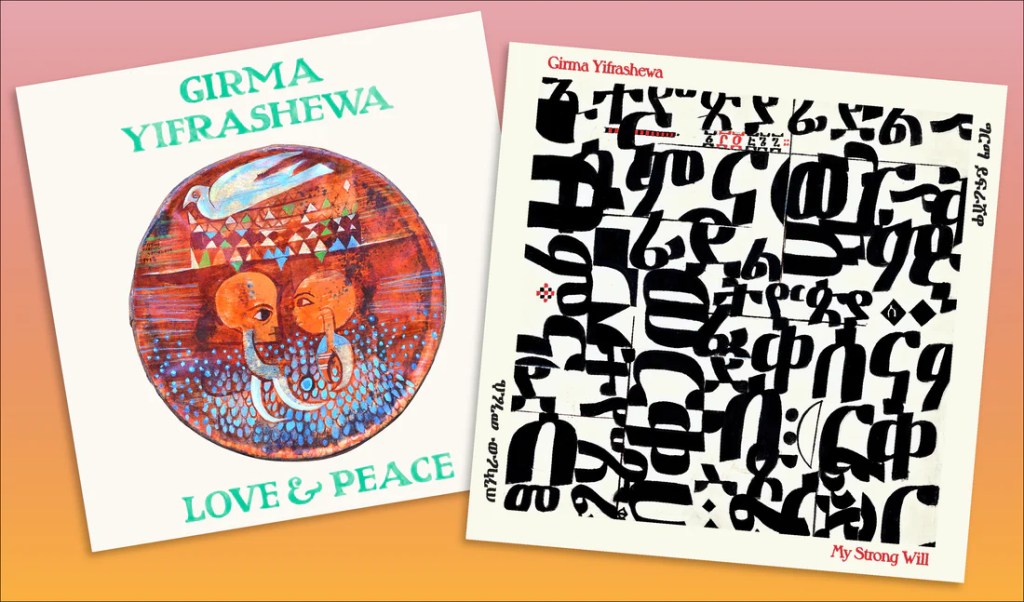
Girma Yifrashewa has two albums available on the Unseen Worlds label: ‘Love & Peace’ contains solo works and ‘My Strong Will’ chamber pieces. You can buy both as a ‘bundle’ directly from the label (or individually, if you prefer).
(By the way, Emahoy’s work is the subject of a reissue series from Mississippi Records. The titles are widely available on CD, or you could head to Bandcamp for an overview and to buy digital downloads of the albums.)
Aisha Syed-Castro’s album ‘Heritage’ (which features the William Grant Still suite and a different work by Coleridge-Taylor) is available from Presto Music.

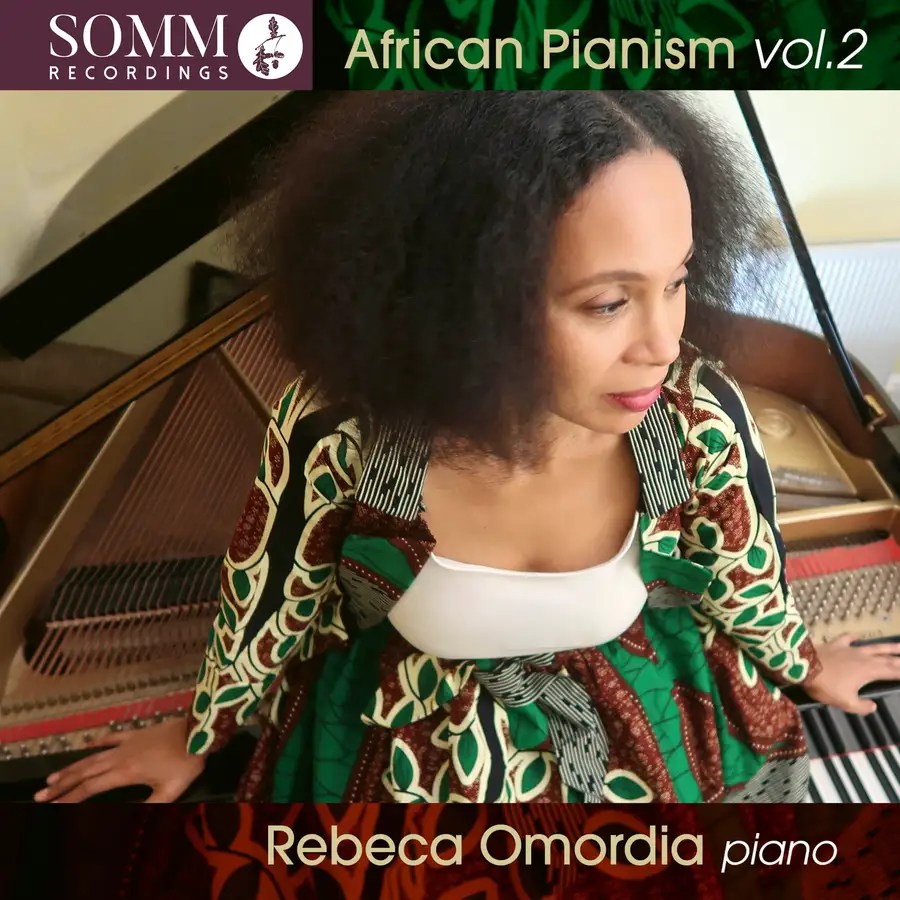
Rebeca Omordia has followed ‘Ekele’ with an acclaimed series of recordings on the SOMM label, which so far consist of ‘African Pianism’, ‘African Pianism, volume 2’ and an album of ‘African Art Song’ with Omo Bello. All of these are available from Presto. She also records with double bassist Leon Bosch for Meridian Records: head over there for titles such as ‘The South African Double Bass’ and ‘18 Negro Spirituals’.
Tunde Jegede’s albums are mostly available from the artist’s record label Xiom Music. Some older titles are out of print on CD, but the solo kora album ‘Heritage’ and the African Classical Music Ensemble disc, ‘There Was a Time’, are still available, and most closely represent the repertoire from the concert.

Coming up…
The next African Concert Series day at Wigmore Hall is on Saturday 19 July.
11.30 am – ‘Moon Waters’ – Tunde Jegede returns with a chamber ensemble of kora, flute and violin.
3.00 pm – ‘African Women’ – Pianist and composer Maria Thompson Corley with soprano Nadine Benjamin.
7.30 pm – ‘African Odyssey’ – a full band evening of continent-wide repertoire featuring Gerald Eze on ọjà flute, Rebeca Omordia on piano, the African Culture Group and the Ubuntu Ensemble.
See you there? Book now on the Wigmore Hall website.
AA
’Curtain call’ photos by AA.
Discover more from ARTMUSELONDON
Subscribe to get the latest posts sent to your email.
 ARTMUSELONDON
Great reviews & you’re making me seriously think I should move to London. Ain’t nothing like this in Australia.
Cheers
Andrew
they/m, their/s
LikeLike