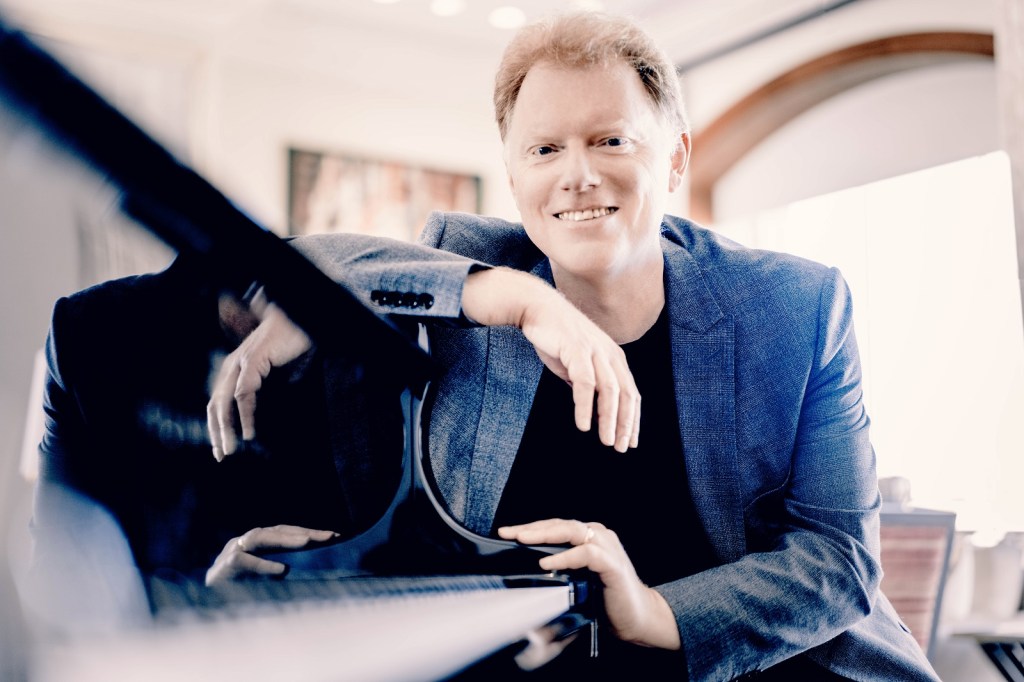
Tim Horton’s six-concert Chopin Cycle started back in 2024 and sadly the series is nearly at its end. I was thrilled to be able to catch Horton’s penultimate concert at the Wigmore on January 16th this year, where Ravel’s revolutionary waltzes were judiciously sandwiched between several late Chopin nocturnes and four Scherzos.
Throughout his Chopin series, Horton has paired Chopin with other composers – a way for Horton to present Chopin’s works in a fresh light.
Chopin’s Nocturne in C minor Op 48 and Nocturne in F sharp minor were a good place to start, the works being both cherished by Chopin fans and examples of Chopin’s late, more musically developed nocturnes. Composed in1841, these fleshed out pieces, continue to be both entrancing and intriguing.
Horton dived into the 20th century with Ravel’s Valses nobles et sentimentales, gleefully offering us Ravel’s impressions of early jazz and the frenetic dances of the music hall. The highly rhythmic and contemporary mood gave way to more lyrical, sedate passages suggesting a return to the waltz and the ballroom, Ravel’s nod to Chopin, whose music he had played at the Paris conservatoire, also an honouring of the waltz which had gripped old Europe for so long.
Chopin’s innovative Scherzos followed. Horton seemed to delight in the virtuosic play required – the frenetic runs, the keyboard leaps, dynamics from forte to pianissimo. He was exciting to watch and was able to maintain technical control as well as deliver passion and intensity.
Horton places a huge amount of emphasis on intensive preparation for a concert and it showed. Without the score in front of him, Horton gave an air of playing instinctively, as if coming to the Scherzos for the first time. A terrific performance! He received an ovation.
I caught up with Horton a few days later.
The Wigmore audience were drinking in your Chopin – how do you explain Chopin’s enduring appeal? In some respects, he is not always easy listening– I’m thinking of the highly intricate and technically demanding Scherzos you played tonight – they were magnificent by the way!
His appeal is based, fundamentally, on complexity of emotion. As with all great art, his music exists in ambiguity – there is never just one way for a phrase or piece to be interpreted or “felt.”
It might seem an odd thing to say about such a popular composer, but I think Chopin has been unfairly maligned at times. On the one hand, the fact that he has only written for piano creates an impression of some limitation. This makes little sense to me. Composers use the medium that they feel best conveys their ideas – for Berlioz and Mahler that was the orchestra, for Wagner, opera, for some composers, chamber music. Some are happy in many genres. For Chopin it was the piano. Rarely has there been a composer whose musical ideas and knowledge of a particular instrument have been so perfectly aligned.
On the other hand, he has been represented as a slightly weak character who pours forth limpid and dreamy, “romantic” music. The Hollywood of the 1930s has a lot to answer for in this regard. As you say his music is not always easy listening. In fact, it contains extraordinary strength and sometimes can verge on the violent – the first Scherzo, for example. His music is also very harmonically complex, especially in his last few years. There are many examples of pre-Wagnerian harmony that give a tantalising glimpse of what might have been had he not died so young.
How do you maintain your stamina (physical and mental) playing this sort of virtuosic repertoire.
It is a matter of patience for me. I have always been a good sight-reader which has been a blessing for learning repertoire very quickly, but it has also been a hindrance at times. It can mean that I don’t necessarily learn things as thoroughly as I might, one reason why I choose to play from memory. In the last fifteen years or so this has changed. I build up solo repertoire very slowly and carefully now with many play-throughs. I do a lot of work away from the keyboard which includes visualisation techniques – imagining that I am on the Wigmore Hall stage, for example. In short, I do a huge amount of preparation. It is not something that can be hurried.
What are the challenges and the highs of performing live? Is it more challenging, for example, performing well known repertoire?
The popularity of the repertoire doesn’t daunt me. I learn and relearn pieces carefully regardless of their popularity. I have never been sympathetic with the idea of playing pieces differently from others for the sake of being different. I see where the learning process takes me. There is no end result in this process. One learns so much from a live performance – things can go wrong that you have never imagined might be a problem, but also the music can take flight in ways you hadn’t planned. Each performance informs the next.
What aspects of your successful musical career do you enjoy the most?
Chamber music has been the most important aspect of my career, especially in the last twenty years or so. My solo career has been growing in more recent years but it couldn’t happen without the immersion in chamber playing that I have been lucky enough to have. My colleagues in Ensemble 360 are a constant source of inspiration in this regard. Exposure to other people’s ideas is essential for me to be able to let my own ideas flourish. There is also listening involved, of course. With chamber music you must listen to others and respond with such care. This corresponds directly to the process of listening that is involved in my solo preparation.
What is the best advice you received when you were building up your career in solo piano performance?
My contact with Alfred Brendel was critical for my attitude to solo playing. He instilled an attention to detail that had been lacking in my playing previously. I once asked him how he dealt with nerves before a concert and he just said, “preparation.” At that time, I didn’t realise quite what he meant in terms of the amount of careful preparation that is needed. I really do now!
You finish your Chopin Cycle at the Wigmore in June this year. What composer/s will you be focussing on next?
I am embarking on my second complete cycle of Beethoven Sonatas for Music in the Round in Sheffield in December. The last ended in 2015.
I played many of the Schubert Sonatas a few years ago and I would like to explore much more of his music soon, maybe in conjunction with Schumann. I have always found their music particularly difficult to play – it is idealistic music with little regard for the difficulties presented to the performer. With Chopin and Beethoven, for example, you know the music works pianistically because of their own instrumental prowess, but this isn’t the case with Schumann and Schubert. Their music is some of the greatest I have encountered though so I feel a strong need to play it.
Is there a dream (artistic or other) project that you haven’t had the time to fulfil yet?
I would like to play a lot more late 20th and 21st century music. There are technical difficulties in a lot of new music that you don’t find elsewhere so it really does take a lot of time, for me, at least. The result of the wide variety of styles that exist in contemporary music is that there is no unified technique that applies to all of it, each composer presents their own difficulties.
I would love to learn Bach’s Well-Tempered Klavier. I have played some of them, but it would give me such pleasure to spend six months or so doing nothing else. It doesn’t seem likely at the moment.
What do you do to relax?
I love cooking and bread-making. I’m a big fan of cinema and good television. It’s such a pleasure to introduce my children to films that mean a lot to me. Talking with friends and family is incredibly important to me.
I do spend a lot of time on YouTube watching pianists and conductors perform. If one sees Gilels, Richter, Argerich, Annie Fischer, or countless other pianists play one learns a huge amount about musical gesture as well as technical matters. The same applies to conductors. I often think that there should have been classes at school on musical gesture involving the study of videos of Carlos Kleiber conducting.
K.H.
Tim Horton plays his final concert of the Chopin Cycle at the Wigmore on Friday 12th June 2026
Discover more from ARTMUSELONDON
Subscribe to get the latest posts sent to your email.
 ARTMUSELONDON