The African Concert Series was originally founded and curated by pianist Rebeca Omordia to shine a spotlight on African art music: the diverse work of African composers who, as the series website explains, create “a bridge between Western classical music and African traditional music”.
Launched in 2019, the series has had a torrid infancy. After an initial wave of live programming, it faced the pandemic head-on, moving online to provide valuable broadcasts of short-form recitals to keep the flame alive. Since then, it’s been a joy to see the strand go from strength to strength, partnering with Wigmore Hall in London to take over the venue for several Saturdays a season, typically presenting three wide-ranging concerts throughout each mini-festival.
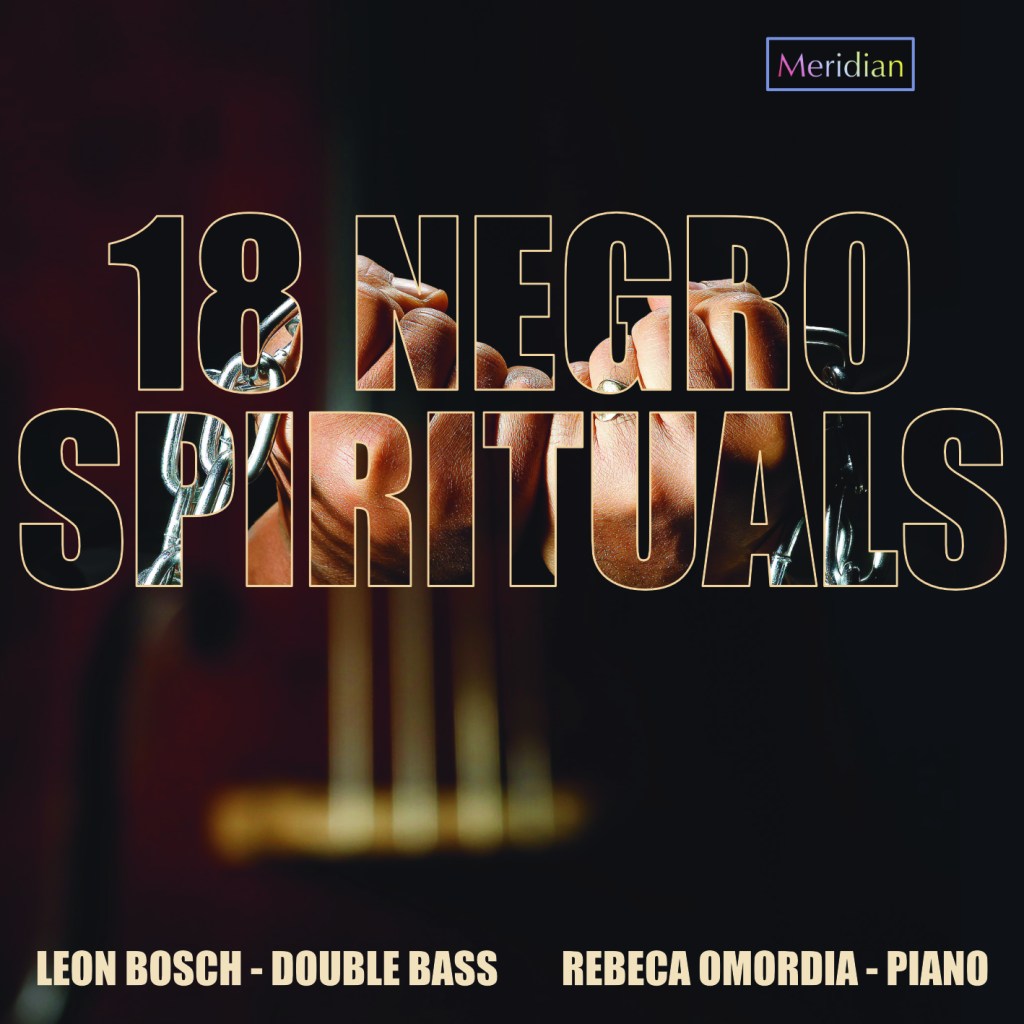
The most recent of these took place in mid-February. The afternoon concert featured Omordia herself, with double-bass virtuoso Leon Bosch. The duo were launching a new CD, ‘18 Negro Spirituals’, by playing (almost) the entire programme in sequence. Omordia introduced Bosch to a selection of spirituals after they had performed some South African folk songs together. Bosch, having grown up under apartheid, found they resonated with him deeply, and he began to gather and arrange further spirituals for double bass and piano.
Listening to these songs in this format was a humbling, transporting experience. Before the concert began, I noted that the programme included the words to all of the spirituals – yet, of course, the versions we were about to hear are instrumental. This gave the audience two options for interacting with the material: to listen only; or to read the words while hearing them ‘sung’ in their imaginations in line with the melodies played. (Programmes are free at the Wigmore, so this choice was available to everyone.)
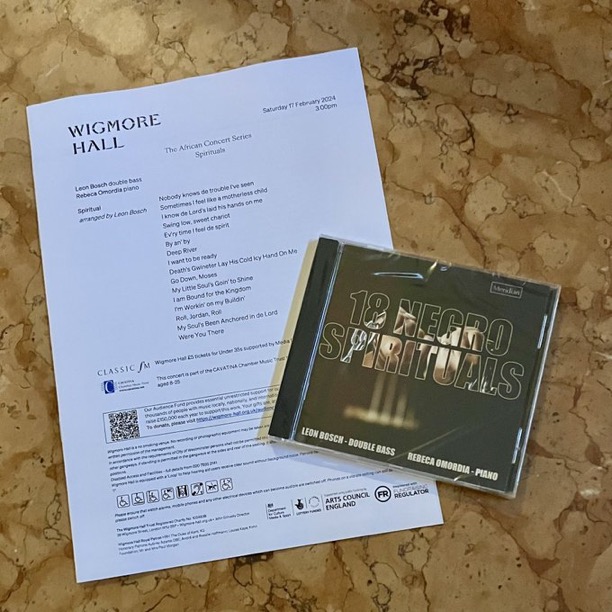
I decided to try a bit of both and, in truth, stopped reading the texts very early on, deciding to return to them later. This was partly because I wanted to watch the artists practise their craft, and tend not to follow the words even in song recitals. But it was also due to the sheer beauty of the pieces as a listening experience.
Bosch spoke from the stage about the intense pain running through the fabric of the genre. The double bass / piano versions might remove the verbal expression of this anguish, but Bosch and Omordia locate the yearning, soulful melancholy innate in the works. They introduce variations that colour any repetition, and mean the double bass is not simply an ‘imitation’ or substitute for a singer. I wonder if the spirituals struck a chord with Bosch not only because of their meaning, but because he sensed how natural a fit they would be for his instrument. In his hands, the double bass has a clear ‘voice’: sonorous but supple, capable of sorrow and resignation, leavened with moments of hope and devotion.
Both players treat the songs and their meanings with utter respect. There are no unnecessary fireworks, but Bosch and Omordia bring the blues and gospel when the mood demands it. And the deep, rich timbre of the double bass means that the piano part often seems to ‘dance’ above it, a kind of angelic counterpart to the melody line, shackled to earth.
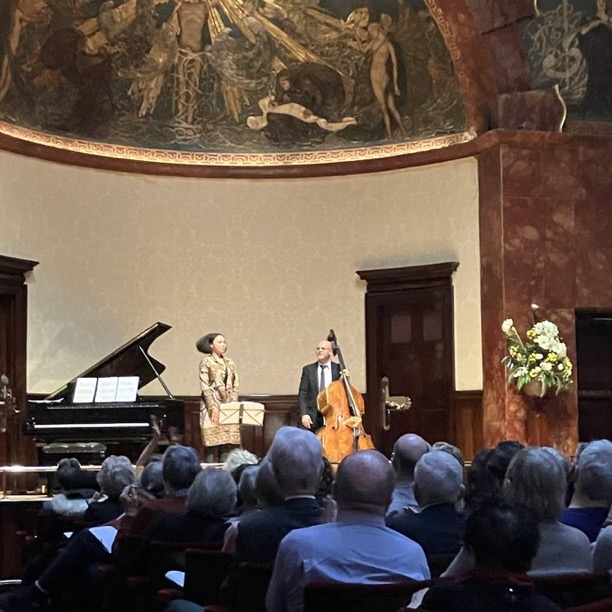
Presenting these songs in such an open, unvarnished way was occasionally (and rightly) emotional, even unsettling at times. As can happen at classical concerts, the audience dearly wanted to applaud and, hesitantly, did so – perhaps at risk of breaking the atmosphere. Would it have been better to hold all response until the end: who knows? In the event, the state of grace was maintained, thanks to the intense commitment of the artists and, I felt, the strong connection they made with us.
The disc itself mimics the concert conditions, in that the booklet also supplies the entire texts from the original songs, allowing one to ‘read along’. However, it also provides the opportunity for us to give ourselves to the music completely: as I mentioned, it has essentially the same, carefully thought-through sequence.
Beautifully recorded in a church acoustic, it has that live intimacy where you can hear some movement and room ambience. These qualities always add an extra dimension for me: it seems wholly appropriate that for all Bosch’s mastery and ease, you get occasional aural glimpses of the double bass as an instrument to be reckoned, even grappled with, a physical act. It captures perfectly the way in which Bosch and Omordia are almost channeling these songs, transforming them though their skill and dedication into something at once new and timeless.
AA
*
You can buy ‘18 Negro Spirituals’ directly from Meridian Records, or from I Musicanti Publishing.
The African Concert Series is back at Wigmore Hall on 20 July. See you there!
Discover more from ARTMUSELONDON
Subscribe to get the latest posts sent to your email.


I concur with every word. Thank you.
Antony
LikeLike