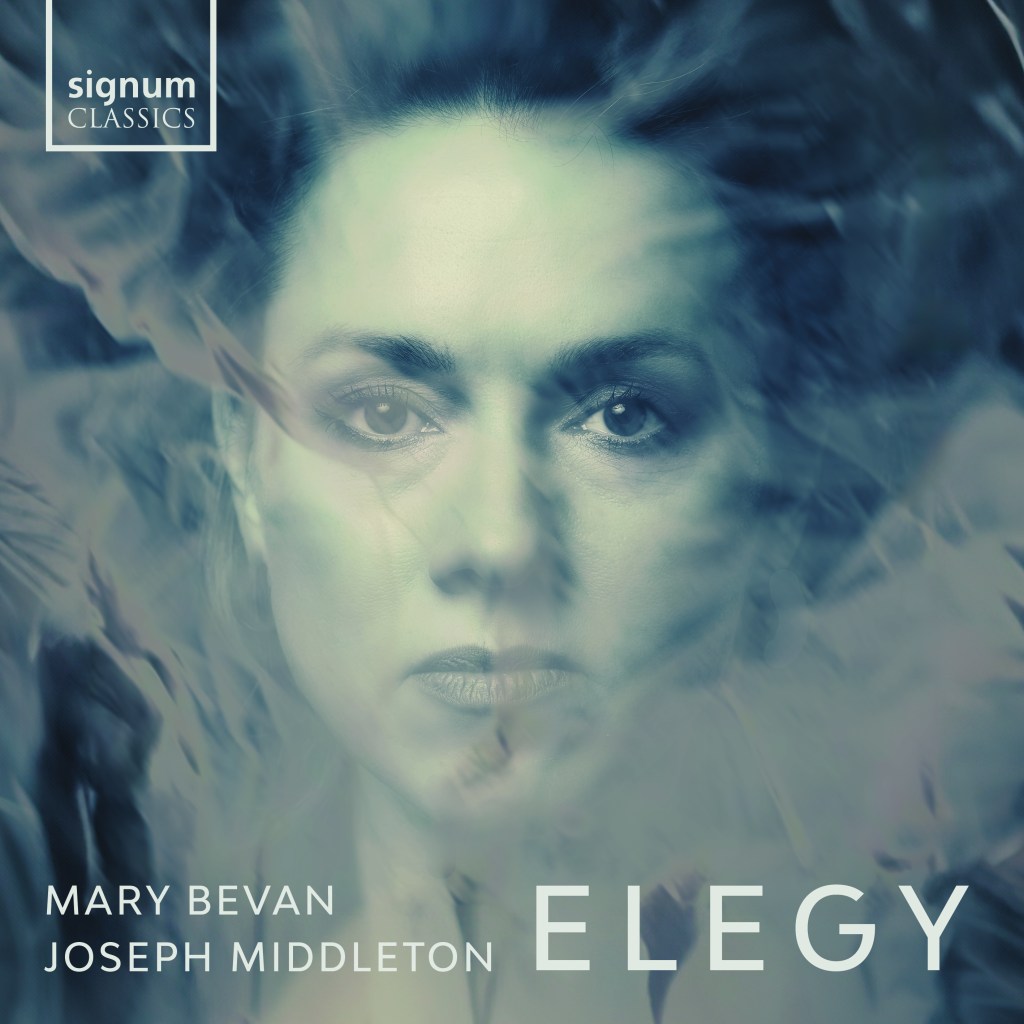
‘Elegy’ is a heartfelt, thoughtfully-programmed recital disc that – aside from being a beautiful listen – also shows us something of art’s quieter powers: that living inside music, allowing it to respond to you as much as the reverse, can summon its healing qualities.
Bevan began to assemble this collection of songs following the death of her father, the choirmaster David Bevan, and she points out in the CD booklet how the loss brought with it a sense of peace and acceptance alongside, over the ensuing months, the inevitable sorrow. Accordingly, there is mourning here – but it doesn’t dominate. ‘Elegy’ is as much about our attitude to death, and the extent to which we fear it, embrace it, even try to understand it. As such, it’s a source of comfort and strength: a profoundly uplifting musical experience.
The disc begins in hymnal fashion, but not in the way you might expect. ‘Kaddisch’, one of Ravel’s Hebrew melodies, immediately draws out some of characteristics I particularly cherish about these performers. It’s a slow-burn, asking surrender of the listener, then rewarding that devotion. Bevan’s warm timbre is able to command and caress at the same time, building in emotional intensity as the exaltation reaches greater heights. Middleton is able to bring fluidity to the most sparse, fragmented accompaniments, and the increasing heft he supplies here, whether a bass rumble or lingering sustain, is mesmerising. The opening track as indelible statement of intent.
Something similar occurs much later in the running order, in a remarkable piece by Barber, ‘The Desire for Hermitage’ (part of a sequence called ‘Hermit Songs’, based on various monastic texts in contemporary translation). Here, the narrator’s longing for peace beyond the grave is measured out by Bevan in a stately calm, keeping at bay Middleton’s spectacular accompaniment, gradually coalescing into threatening near-panic until quietened by the voice’s ongoing strength and repose.
Speaking of a forward-facing tumult towards death, any album that features ‘Auflösung’ – my favourite of Schubert’s songs and probably of all lieder – has a head start in winning my heart, and the interpretation here is majestic. Mayrhofer’s text is extraordinary in itself, a raging for the dying of the light, walking an enigmatic path between euphoria and terror, beckoning the ‘dissolution’ of the title from this world into heaven. Bevan and Middleton are in perfect balance here, her tone rich and resolute, in control atop the broiling piano accompaniment. Middleton’s tremulous rhythms crash against Bevan’s voice like waves on a storm-wracked shore, punctuating any pauses but ultimately receding, devotion overwhelming destruction.
The actual sea is evoked in ‘Lamento’, the mourning song of a bereaved fisherman, now sailing through life without his beloved, on Middleton’s lilting-lullaby waters. Composed by Pauline Viardot, this is one of a number of songs by women composers Bevan has drawn into the programme, which all stand out in their intriguing perspectives on the recital’s theme. Jeanne Landry’s ‘Mort, quand tu me viendras prendre’ almost feels like a fragment at just over a minute long, but captures an abstract, spectral moment of meditation that slips away, gliding heavenward, almost as soon as it begins. Perhaps the closest I’ve heard to a mélodie seeming to conjure up a thought out loud, as it occurs.
Like Landry, Errollyn Wallen wrote both words and music for her song included here, ‘Peace on Earth’. I’ve now heard this taken up by a number of singers, and no wonder: on the surface a Christmas song, it’s subtly drawn to have a contemplative spirituality recognisable to both Christian and secular listeners. It seems to strive for music adjacent to silence: a wind-chime of a piano part, circling behind the vocal’s observational restraint, hushed, haunting. Zero drama: absolute calm – the anti-‘Auflösung’, a cradling, not a cataclysm; delighting in, rather than rejecting, the earthly elements – sights, smells, sounds – of the season.

The programme has its fair share of lieder goliaths: Schubert is joined by Schumann, Mahler, Brahms and Strauss – the last name represented by the much-loved ‘Morgen!’, closing out the record in a spirit of rapt transcendence. (This is a good time to sing praises to the technical team – producer Raphael Mouterde, engineer Tom Lewington and recording assistant Will Good – for bringing the church acoustic to life, and placing the performers inside that holy space. As I advise so often – use headphones to listen if you can.)
However, I especially loved spending time leaning into this album’s unexpected corners. For example, the tenderness of Vaughan Williams’s ‘Tired’, with words by his wife Ursula. Just as the overall recital is tied to Bevan’s real-life experience, so this song is impossible to separate from its creators, a two-minute snapshot of their marriage, the younger Ursula’s words protective of the hesitant piano, which even falls away completely at one point, perhaps representing the composer drifting into, then out of slumber. Or the philosophical turn of Chausson’s ‘Hebe’, musing on the impossibility of immortality: the words speak of tears, but the duo give us a reading of wondrous, reflective calm.
Bevan explains in her liner notes how the act of preparing this recital (first as a live performance, then evolving into this album) helped her with the grieving process. I won’t quote or paraphrase her words here: I found her concise sincerity deeply moving, and you should discover her thoughts alongside the album. ‘Elegy’ is certainly a fine tribute to her father: what a testament to his memory that it can inspire this creative response. However, it is also remarkable for how Bevan – assisted by Middleton’s keen, supportive emotional intelligence – communicates that response and performs with such empathy and resilience that its balm becomes universal. Warmly recommended – for everyone.
AA
‘Elegy’ is released on Signum Records on 3 October 2025, available from Presto Music.
On the same evening, Mary Bevan and Joseph Middleton perform a recital based on the album at Wigmore Hall, London. If you’re close at hand, book here.
Discover more from ARTMUSELONDON
Subscribe to get the latest posts sent to your email.
 ARTMUSELONDON