2026 marks the 400th anniversary of John Dowland’s death. Although it’s an appropriately melancholy milestone, one can only rejoice if it prompts more beautiful concerts like this one throughout the year.
I confess that I’m frequently wary of the idea that the worth of music, art or literature from the past rests on its ‘relevance’ to the present day – as if its longevity isn’t validation enough, or that something alien or distant can’t engage us precisely because of its unfamiliarity.

When I hear Dowland’s music, it strikes me that his genius simply defuses the whole (non-)issue. If ever you wanted to bring forth a witness from a bygone age to show the unbroken chain of lovestruck, soulful sorrow throughout our existence – here’s your man.
Clearly, the language and instrumentation are not freshly-minted 2026 vintage. And it seems unclear whether Dowland might have set words from anonymous poets, written lyrics himself, or some combination of the two. How, then, do I feel his ghost pushing the same buttons on my emotional keypad with the same fluid ease as any of my favourite contemporary songwriters?
I think it’s that our need to express, and hear expressed, this very particular type of angst – the vulnerability of the human heart – is an eternal continuum. Those artists who are able to tap into that seam enrich our lives to a limitless degree. The vivid power of Dowland’s ‘melancholy’ overrides any impulse to place him in a different box to all the non-classical music offering the same release. Both then, and now – there’s no meaningful difference – his yearning melodies, hooks and figures are present, immediate. Especially so when channelled through Ian Bostridge.
In terms of vocal and visual presence, Bostridge remains unique. He is so unlike most other singers that I’m aware how some may interpret his delivery as mannered, even aloof. Not me, though – I’ve always found his performances riveting, textbook examples of an artist searching for something different, something entirely their own, and finding it.
His timbre has an austerity, a formality to it that makes the moments of broken vulnerability all the more harrowing. And it’s impossible to separate that tone from the slender frame that produces it – especially as physicality is such a key part of his stagecraft. I suspect Schubert would heartily approve of Bostridge’s performances, as I’ve sometimes felt, at the end of a particularly intense ‘Winterreise’, say, that someone should call him an ambulance. Like a tall but fragile tree bending in the wind, leaning on the piano for support, he can deliver the most soaring, powerful lines while seeming for all the world wracked with pain and anguish. Madness in his method.
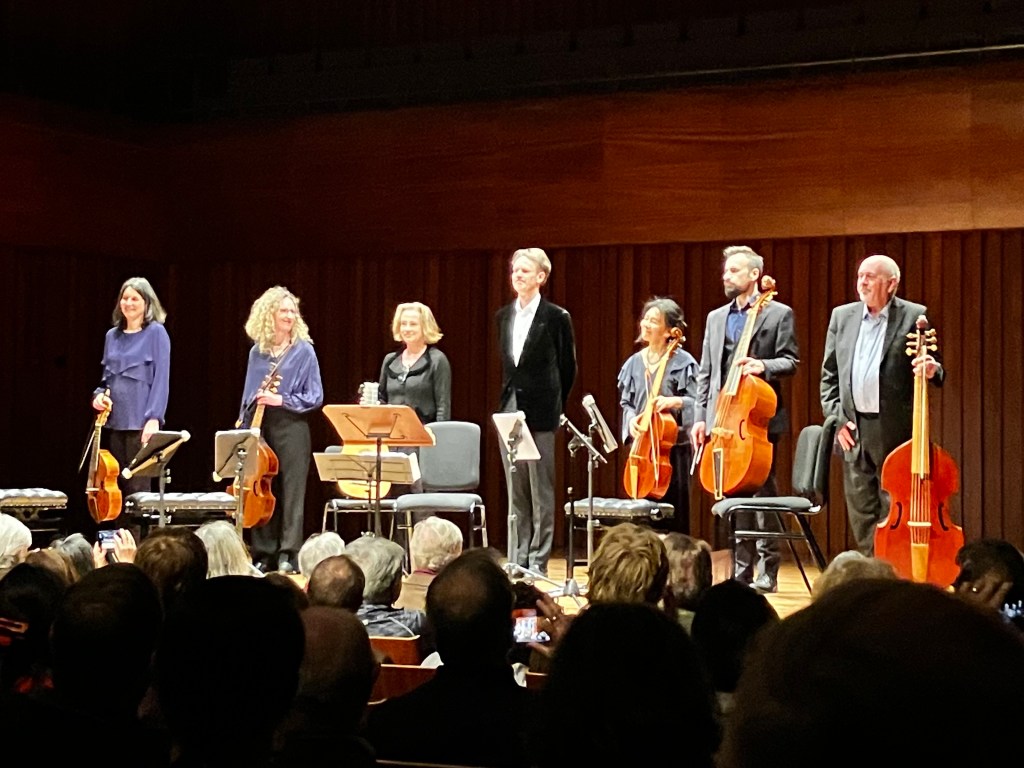
Here, he was seated in the midst of the band, a brilliant decision, placing him at the heart of the action even when silent. At first it looked like his chair was unlikely to contain him. With an apparent centre of gravity an inch or two above the seat, like a human aerial he leant out at angles, tuning in attentively to various lines or effects that caught his attention during the instrumental passages, then seamlessly picking up the cues as the group segued into the songs.
And as this concert showed, this connection Dowland makes across the centuries is as strong when lyrics are absent. The instrumental ‘Lachrimaes’ are dense, intense variations all based on a single ‘original’ – the same underlying music for the famous ‘Flow my tears’. However, their cumulative effect, their steady progress through the different versions, moved me irresistibly in a similar way to that I’d associate with certain ambient or drone recordings. This is especially evident in this programme, as it includes one instrumental not by Dowland, ‘Tears to Dreames’ by Adrian Williams. This fascinating work, a fine companion piece from 2004 written in a kind of thrall to the ‘Lacrimaes’, pushes this sense of abstract ambience to further extremes.
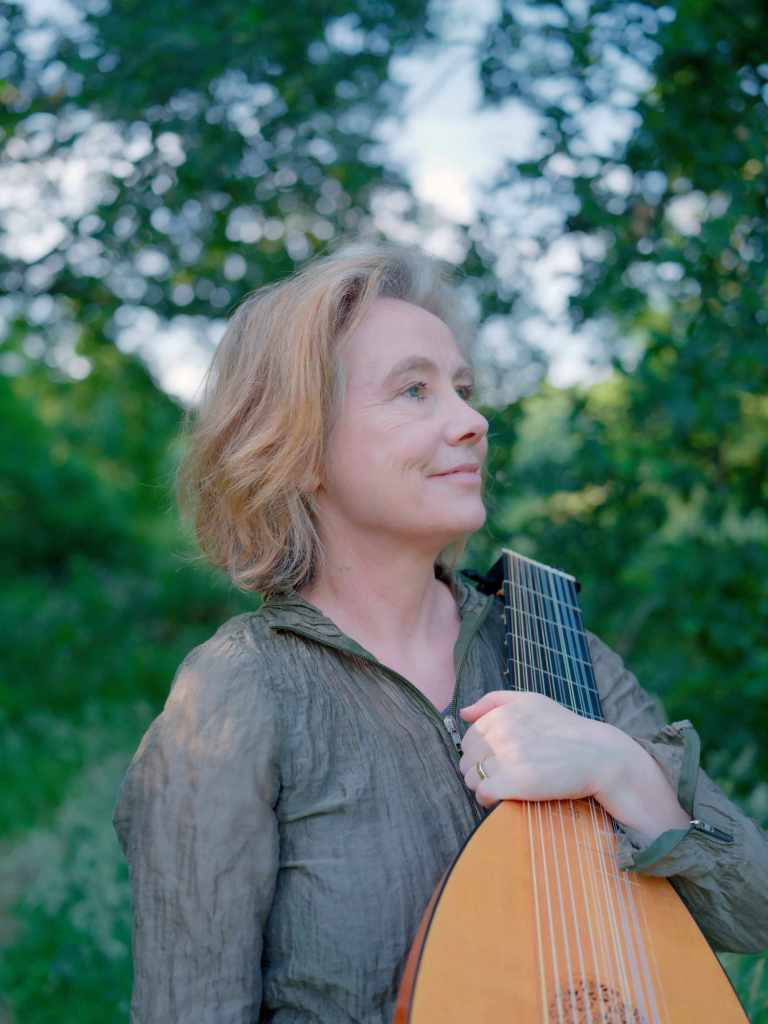
Fretwork played with customary delicacy, and in the intimate acoustic of Milton Court it was a special treat to hear Elizabeth Kenny so clearly, soloing away modestly on the lute: minimum fuss, maximum dexterity, anchoring the band with one melodious lead line after another.
AA
Image credits: Ian Bostridge by Kalpesh Lathigra; Elizabeth Kenny by Camilla Greenwell; John Dowland image shared in line with Creative Commons licence; applause photo from the event by AA (all performers less blurry in real life).
Discover more from ARTMUSELONDON
Subscribe to get the latest posts sent to your email.
 ARTMUSELONDON