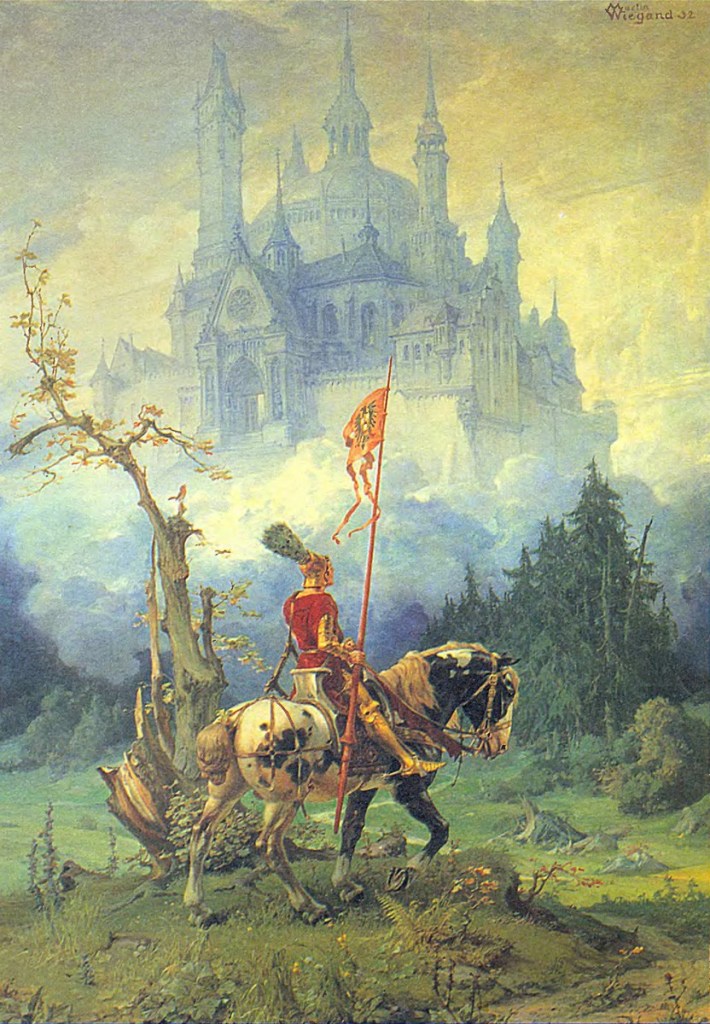
2027 is going to be a quite a year for Wagner enthusiasts and Royal Opera, which launches Wagner’s monumental Ring cycle on October 4th. Tickets will be hoovered up months in advance. The Ring Cycle, comprising of four operas: Das Rheingold, Die Walküre, Siegfried and Götterdämmerung will provide fifteen hours of glorious music, all over four sittings!
But back to more manageable opera viewing.
I was delighted to attend Parsifal at Royal Opera the other evening, thanks to a last-minute return in an otherwise full house.
I was expecting great things from Wagner’s late opera and the singer line-up looked very promising. French tenor, Stanislas de Barbeyrac, as Parsifal was of particular interest. I had seen him a few years ago in Fidelio at the Barbican and have never forgotten his stage entrance. As prisoner Floristan, he ran onto the stage almost skidded, rattled his chains and screeched like a wild animal, finally emitting a gorgeous “Gott!
On stage at ROH, de Barbeyrac stood tall, broad-chested, slightly self-conscious of his splendour. He looked every inch the ‘guileless’ but ‘pure’ Wagnerian hero of this piece. His voice transition from ignorant youth to a man of courage was judiciously handled.
Equally impressive was Ekaterina Gubanova as Kundry the shape-shifting seductress. Her sudden vanishings and reappearances on stage were deftly done. As for a singing highlight, it was Gubanova’s duet with Parsifal. She cradled him and recounted the sad tale of Parsifal’s long dead mother, and in so doing ‘became her’, drawing our hero to her breast. The strangest seduction scene I had ever witnessed in opera!
Also impressive was Brindley Sherratt as Gurnemanz, the wise knight who, as a magnificent story-teller, managing to keep the audience engaged despite a fair amount of backstory. Christian Gerhaher meanwhile, was marvellous as the long-suffering King Amfortas.
Etienne Pluss’s gloomy castle setting was the perfect backdrop for this mysterious tale of King Amfortas and his inescapable suffering. Images of torture and death abounded in this claustrophobic environment. Amfortas cannot heal from a gaping wound in his side. Day after day, the guards dab at his bloody gash.
Thankfully, peace and hope did eventually enter Wagner’s score Act 1. It was an exquisite musical interlude coupled with clever staging. The music peacefully rose and the evolving castle structure (which had been retracting and expanding) morphed into a towering temple.
Act II, darkness gave way to gaiety in Klingsor’s evil realm. Seductive silver-booted Flower-Maidens fought over Parsifal’s lap.
After the performance I wondered having seen this production of Parsifal where Wagner’s true allegiances lay – heaven or hell? Did he see himself as Kundry? She definitely has the meatiest role.
Interestingly I read in the ROH programme notes that Wagner had a particular interest in Buddhism and reincarnation over the years when he was writing Parsifal . Was Wagner debating his own mortality and reviewing his spiritual options?
Overall, this was a rewarding and thought-provoking ROH production. A few opera lulls Act III and some bizarreness of plot (of Wagner’s making) which had me puzzled, but as always with Wagner, it is his intoxicating, ever imaginative score, which holds you.
KH
There were four performances of Parsifal in October 2026 at Royal Opera, London.
Discover more from ARTMUSELONDON
Subscribe to get the latest posts sent to your email.

