Always grateful for a chance to hear guitarist Xuefei Yang play live, I was especially keen to catch this fascinating programme developed in collaboration with violinist Ning Feng. As part of Wigmore Hall’s series of hour-long Sunday morning recitals, it was compact yet wide-ranging: a perfect opportunity to escape the glue-like British humidity into the shady shimmer of the duo’s whistle-stop world tour.
Purely at surface level, this was a summer breeze of a concert, the nature of the instruments promising a certain ‘light touch’, gliding delicacy with little need of a bass thrum or percussive thump. But the depths were there too, brought out through the brilliant intricacy of the arrangements and virtuosic range of the players.
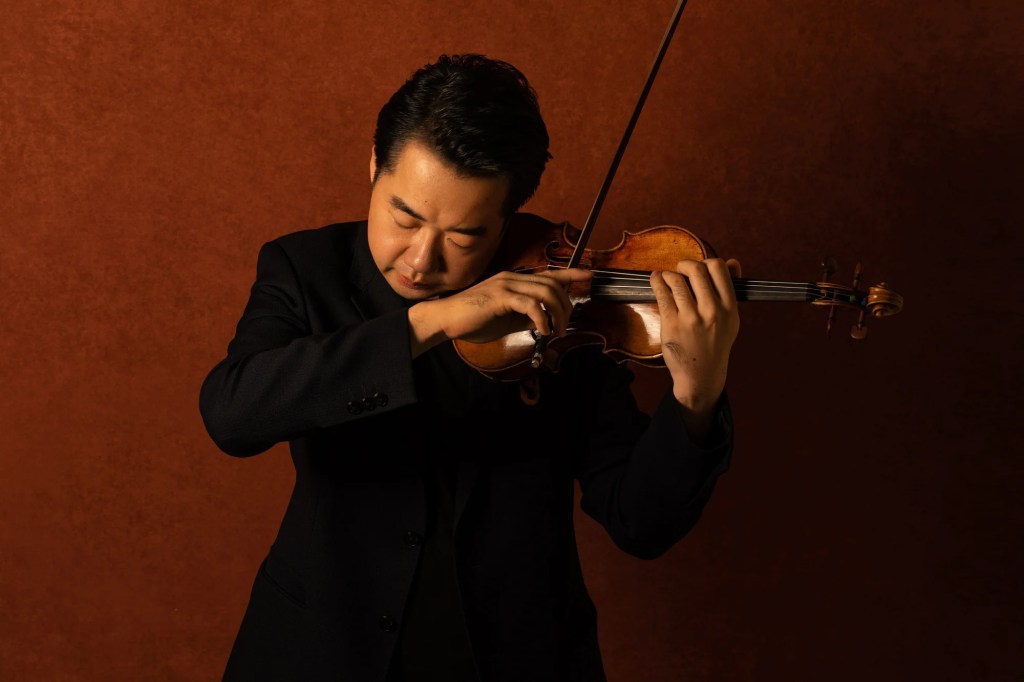
The opening piece, Paganini’s ‘Sonata concertata’, was new to me. Yang explained from the stage that Paganini – famous as a fiendishly-skilled violinist – was also an accomplished guitarist, and composed a substantial number of works for guitar/violin duo. Understandably then, this sonata felt free-flowing, everything in its right place, with dazzling moments for both performers.
It also provided a thought-provoking starting point for the rest of the programme, which moved away from guitar and violin ‘originals’ altogether, instead presenting a series of special arrangements – all in successful pursuit of creating atmospheres and images far beyond the confines of the Hall.
Introducing Schubert’s ‘Arpeggione Sonata’ (a piece she has some history with, recording it with cellist Johannes Moser on their excellent 2024 album ‘Songs of Joy and Sorrow’), Yang told us that, with this particular version for guitar with violin, the duo aimed to recreate as far as possible the intimacy of the ‘salon’ environment where Schubert so excelled. The rapport during this rendition was so fluid and natural that it was one of those occasions where you felt the music must have been written for these instruments all along.
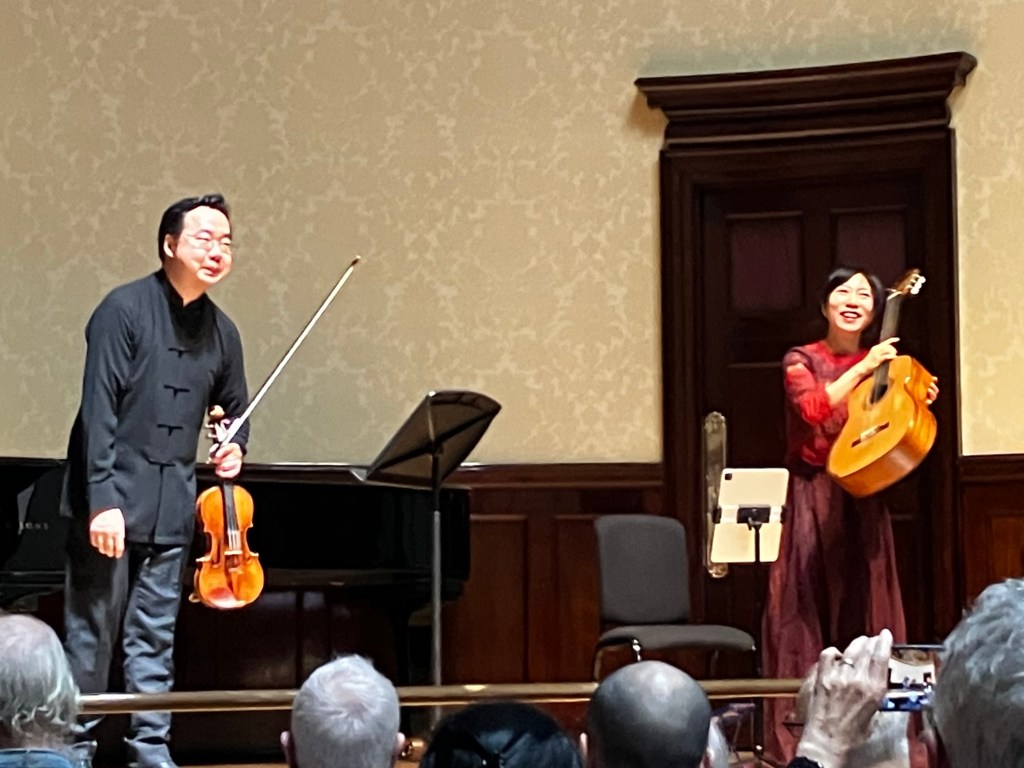
Next came perhaps the highlight of the concert for me, the traditional Chinese ‘Fisherman’s Song at Eventide’. This time, the violin assumed the role of the voice, while the guitar doubled for the guzheng (Chinese zither). The sonic picture conjured up during the performance was vivid enough to send me – along with, it felt, many of my fellow listeners – into a blissful reverie, easily able to replace the Hall’s decor in my mind’s eye with boats returning to shore. That gentle friction between hull and water was beautifully captured by Feng’s keening tone dovetailing with Yang’s sparkling brightness. (A surprising reference point that leapt into my mind was Michael Chapman’s ‘Caddo Lake’, not because of any musical similarity as such – Chapman’s guitar is firmly in the American Primitive folk idiom, its ripples more rangy and robust – but because of its success in creating the image of locale from sound alone.)
The recital closed with Bartók’s ‘6 Romanian Folk Dances’. The intent here was to coax the pieces out of their piano origins and perform them in a style closer to the traditional tunes that inspired Bartók in the first place. An engaging idea, brilliantly realised, with a greater sense of abandon starting to infuse the music, Feng’s violin assuming an earthy burr over Yang’s rhythmic fire. A thrilling climax, with the encore of another traditional Chinese (Inner Mongolian) tune ‘Pastoral’ letting us return calmly to reality.
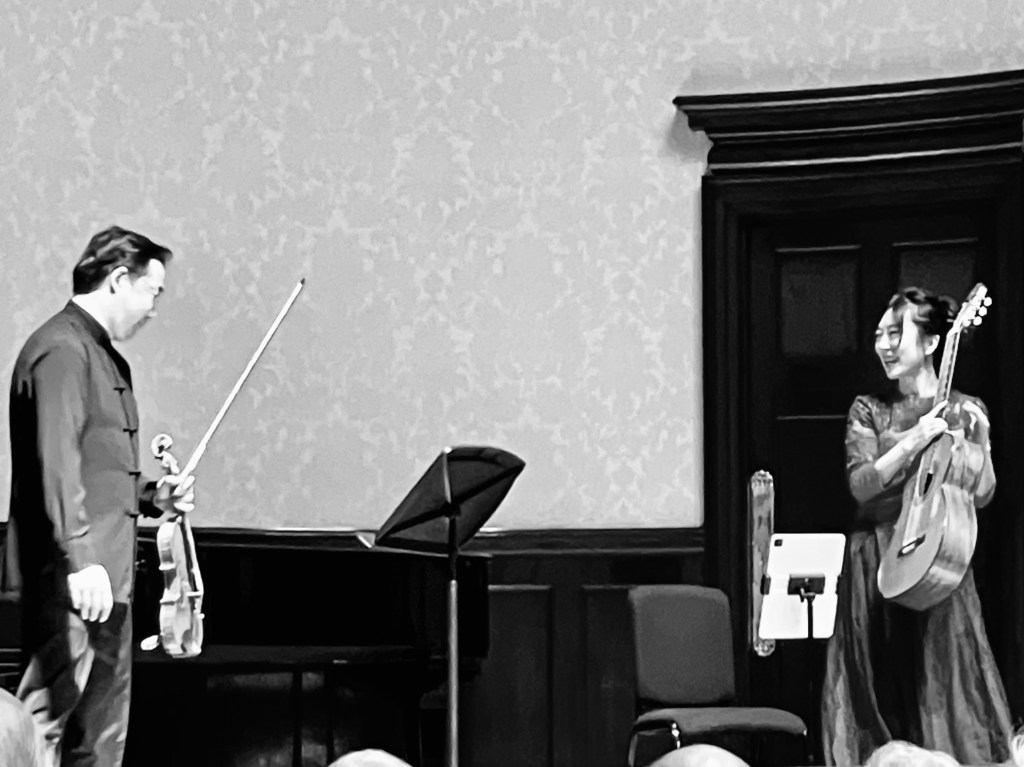
The variety of moods and colours throughout Yang and Feng’s musical travels made me reflect that we had also been on a voyage around their instruments, a delightful display of their possibilities in the hands of two masters. I very much hope this duo record together, allowing their fine arrangements to reach a wider audience.
*
Xuefei Yang has recorded a significant amount of music from her homeland. Her solo arrangement of ‘Fisherman’s Song at Eventide’ appeared on an album called ‘Heartstrings’: I believe this is now generally unavailable on CD/download, but you can find it on Spotify or Apple Music.

However, for a deeper dive into Chinese repertoire (old and new), I would recommend her double album ‘Sketches of China’. To my knowledge, there was no physical CD release in the UK but you can buy a high-quality download from Presto Music, alongside her album with Johannes Moser.
Presto also stocks Ning Feng’s extensive back catalogue, featuring recordings of Bartók and Paganini, among many others.
AA
Discover more from ARTMUSELONDON
Subscribe to get the latest posts sent to your email.


She is an astonishing musician, one of the reasons i persist with the classical guitar. Sadly, although she often tours in Australia it’s unlikely this duo will; like you, i hope for a recording…
LikeLike