I confess: initially I was in two minds about even attending this exhibition. The hook, for the record, is that 2026 marks Marilyn Monroe’s centenary year. Even so, i was a little sceptical about why – outside its being a surefire hot ticket – the gallery would shine a spotlight on surely one of the most ‘seen’ individuals in history. Photographs, stills or paintings of Monroe must run into the millions, and it can feel like we have all seen most of them.
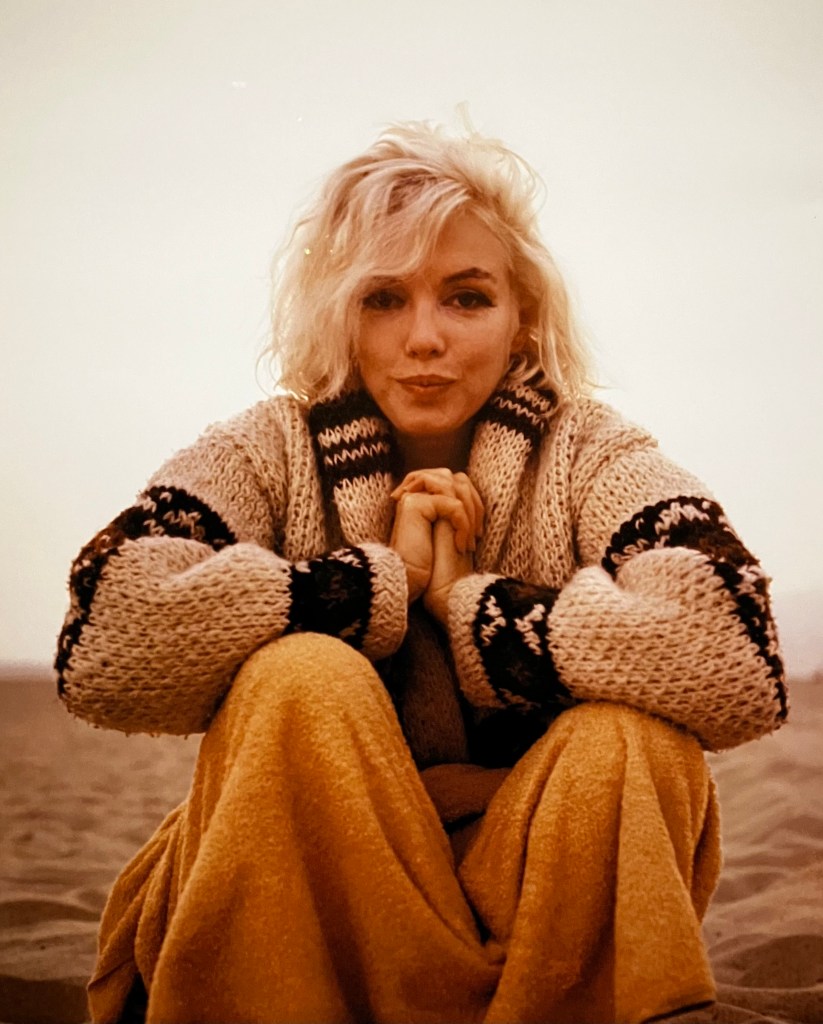
(Speaking of which, I documented the images below: each carries the original photo credit. The main photo accompanying the post is by Sam Shaw.)
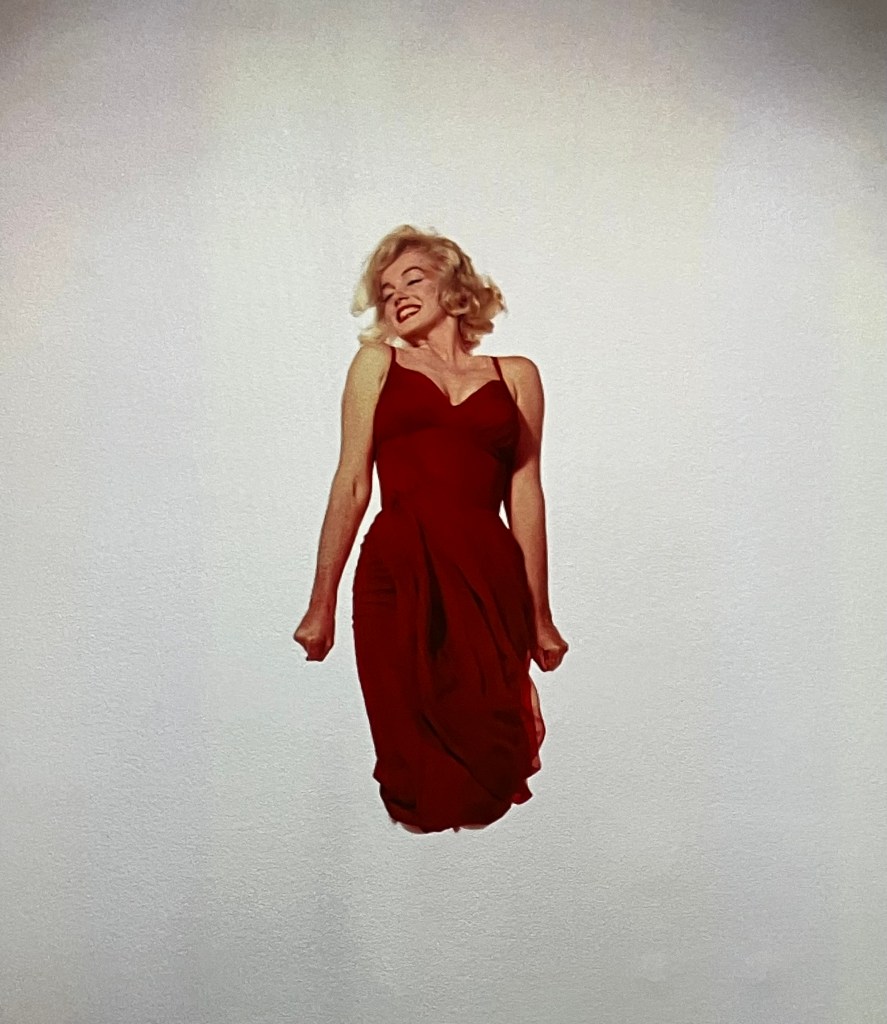
So, I had two key questions. Would the exhibition present anything unseen, unfamiliar or even unexpected? And would it offer a different ‘hangle’, so to speak – a new way of looking at the subject, or a new approach to her legacy? The answer to both is a resounding ‘yes’.
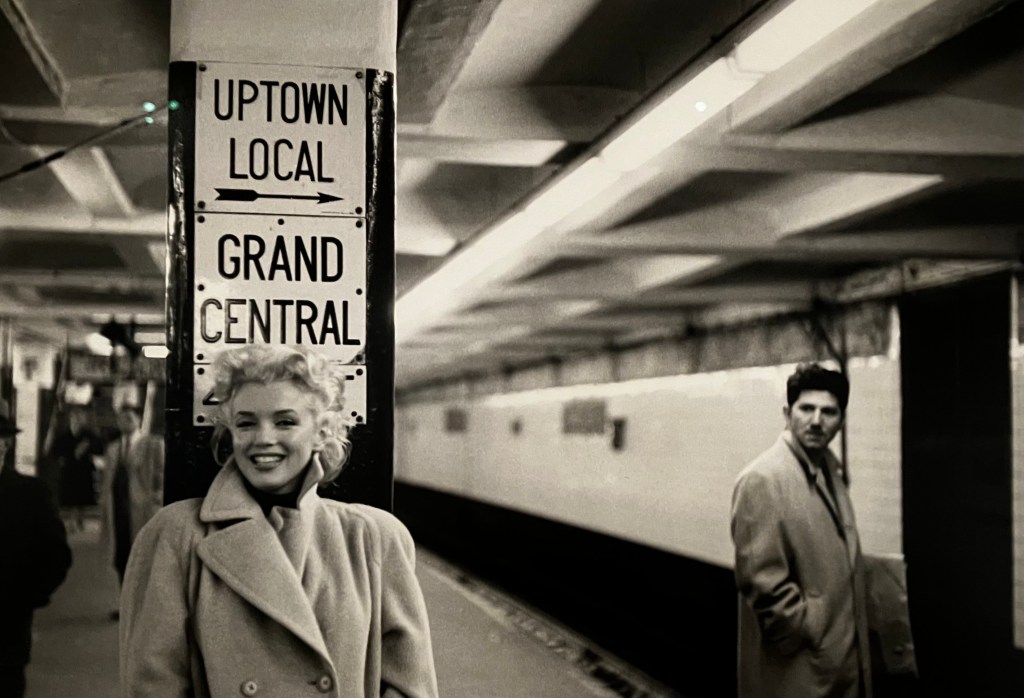
The exhibition is vast, featuring nearly 300 images (allow yourself a good couple of hours to take it all in). Some are previously unpublished – from fascinating candid captures on movie sets to poignant outtakes from magazine shoots – but only the most supernaturally-dedicated student of Monroe’s career will have come close to seeing the rest.
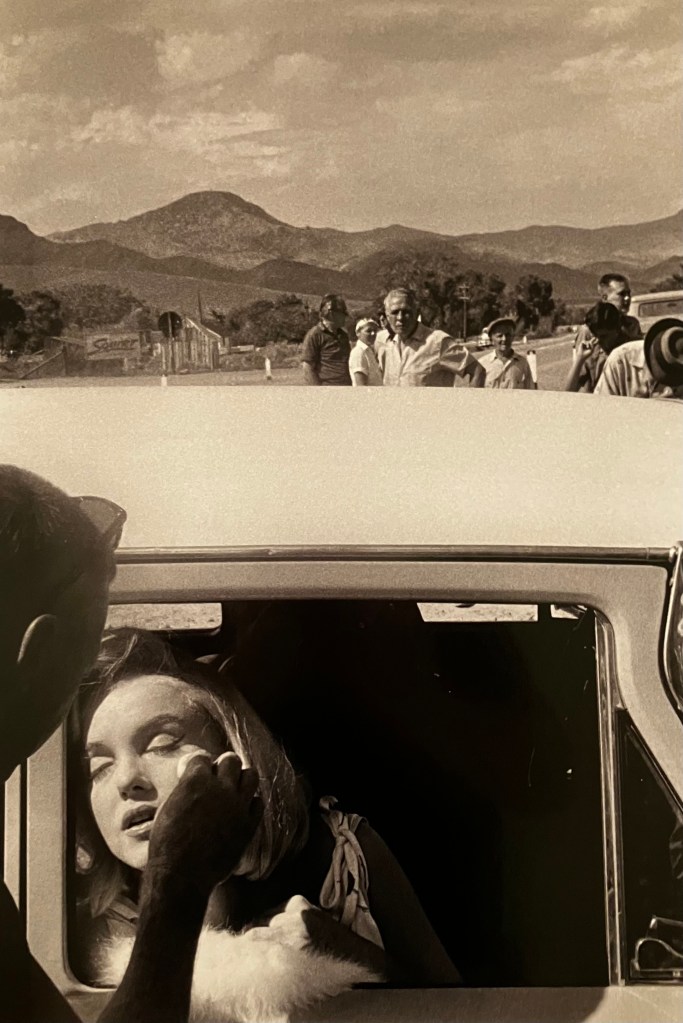
Somehow, the almost overwhelming presence of the star in one picture after another does not result in viewer fatigue: in fact, quite the opposite. i suggest there are two main reasons for this that both reflect well on the exhibition’s success in its aims.
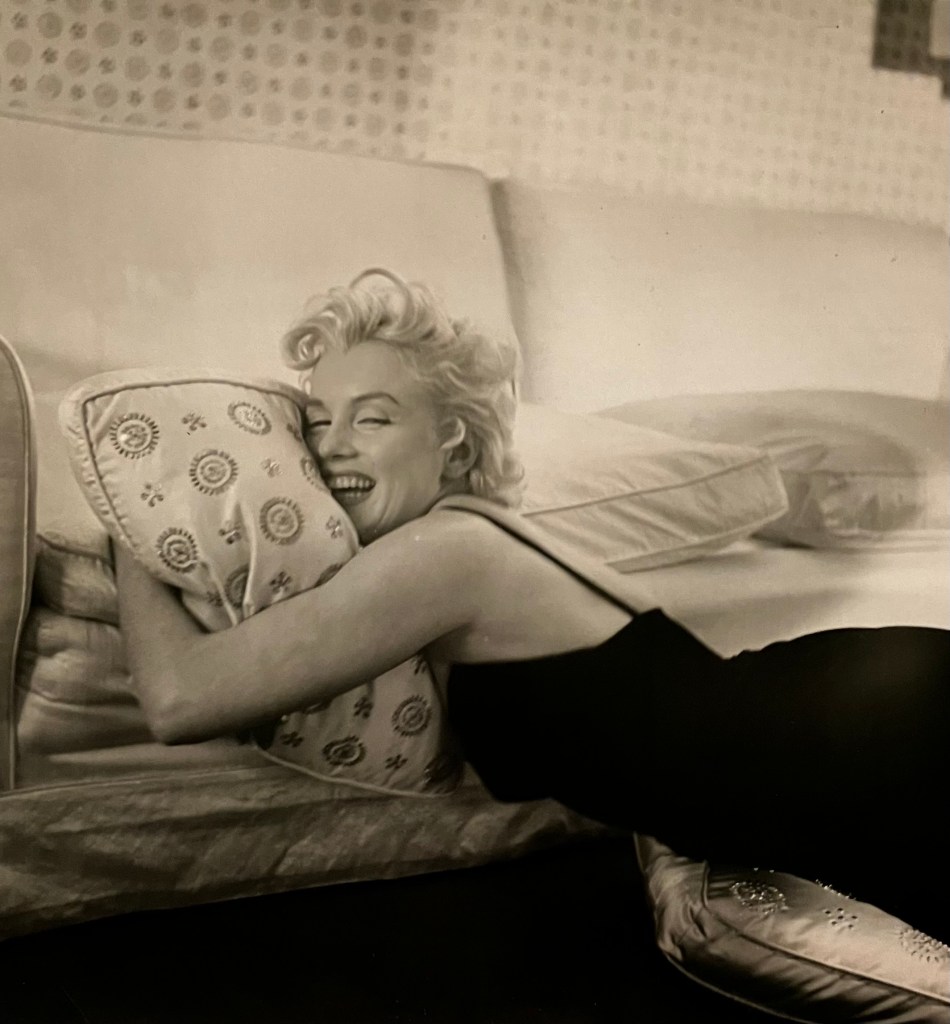
First, it is careful to give Monroe the agency she merits in controlling her own ‘brand’. She developed those textbook ‘Marilyn’ features (the platinum-blonde hair, the full red lips, the beauty spot) into almost a new persona away from the inner Norma Jeane, and had major input into which photos were used from any given session.
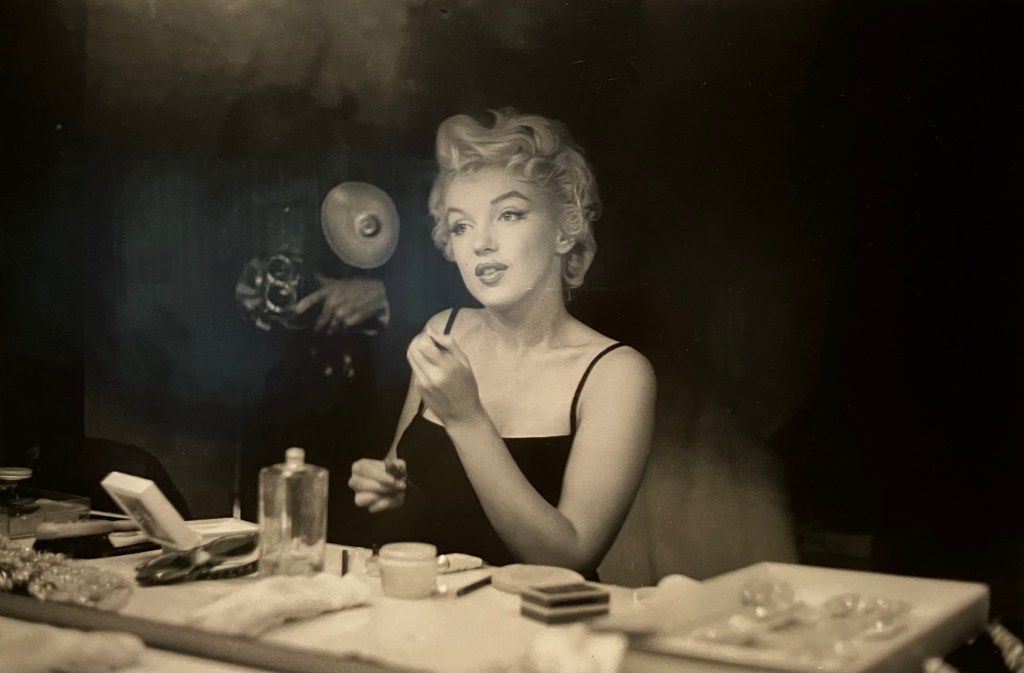
As a result, these characteristics come to represent less the kind of passive, object-of-desire cliché often associated with Monroe, but more a mark of visual consistency, creativity and resilience, each shoot a new riff or evolution on those (seemingly) indestructible elements.
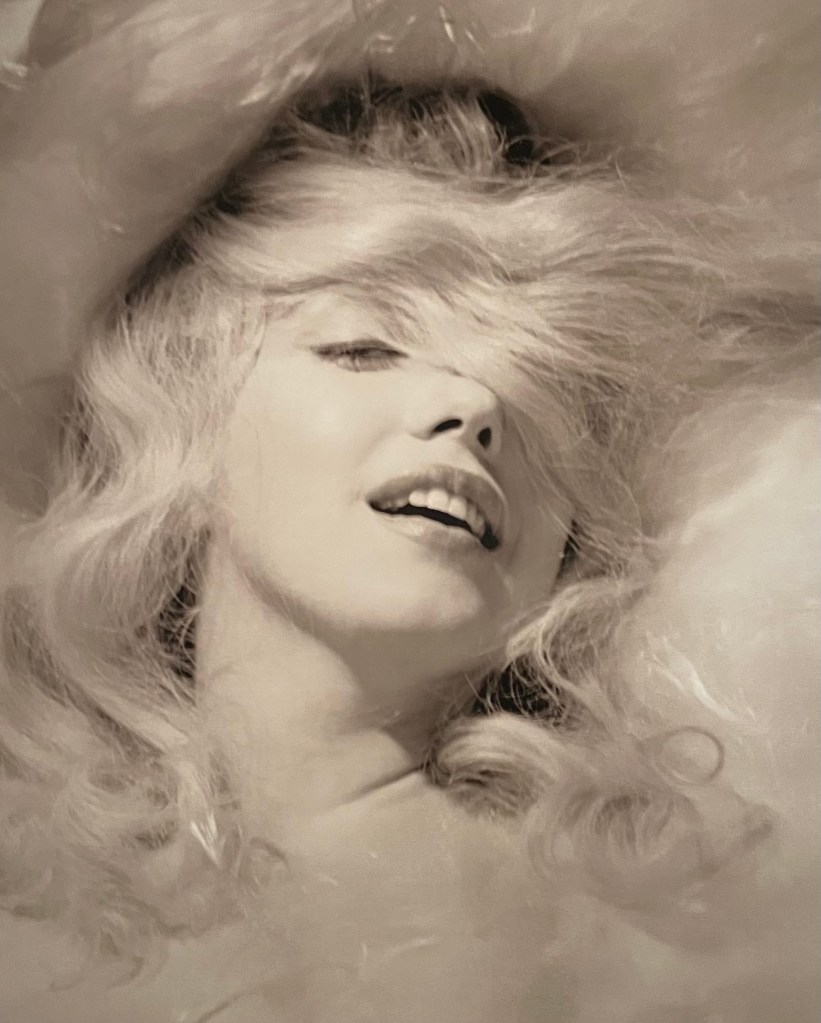
This means that one of the most illuminating, yet heartbreaking aspect of the exhibition is how this most recognisable of faces – while these trademark features endure – eventually changes over time. Monroe never got to truly age. However, even while trying desperately hard not to project one’s background knowledge onto the later photos, it’s impossible not to see flashes of heavy-lidded world-weariness in the eyes, a certain haunted quality. By contrast, I was particularly struck by the final Life magazine shoot, where the photos seem to fight against this, full of implied movement, animated, somehow hopeful of some future that was not to be.
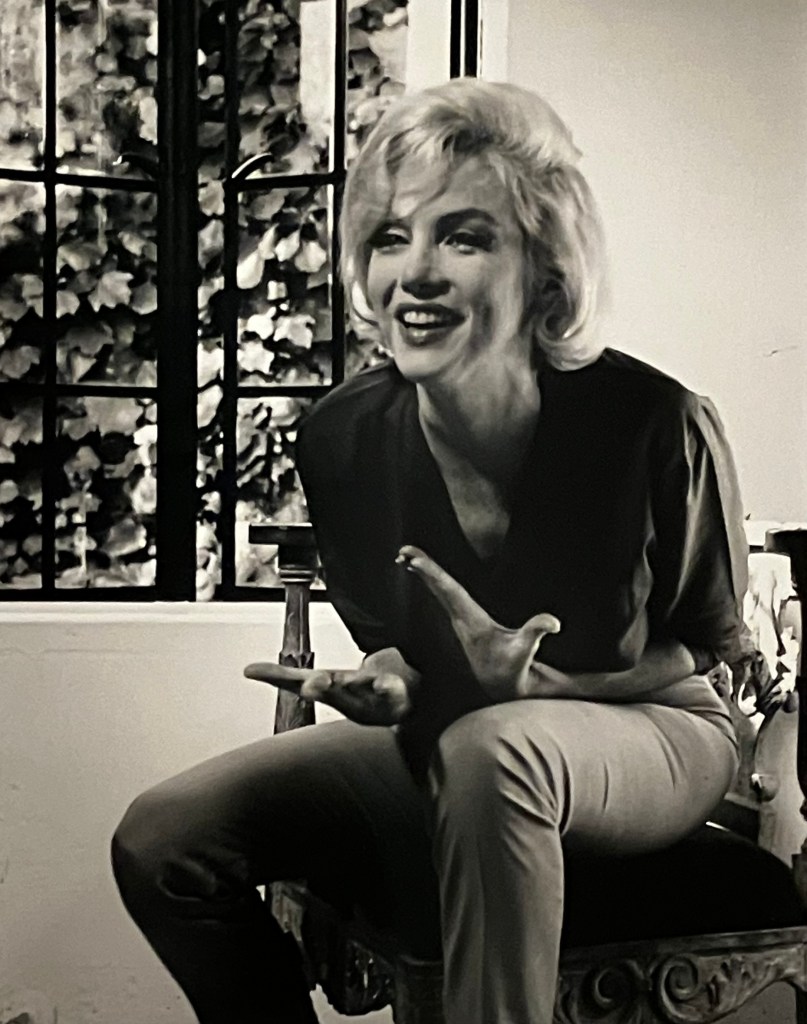
The second reason touches on craft and technique. Through its unwavering focus on a single subject, one theme of the exhibition presents Monroe as almost a control experiment, essentially the perfect model. She gives us the opportunity to reverse the lens and examine the different approaches of the extraordinary range of photographers who got to shoot her. Each one gets a display in isolation, emphasising their particular riff on their subject, from the casual but carefully constructed work of Alfred Eisenstaedt…
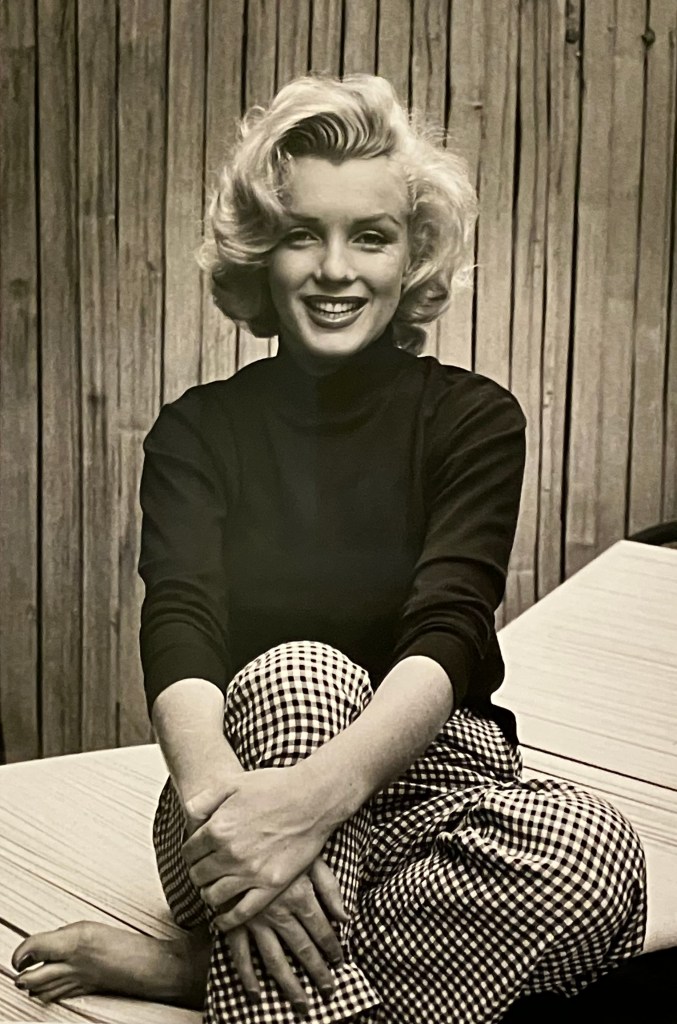
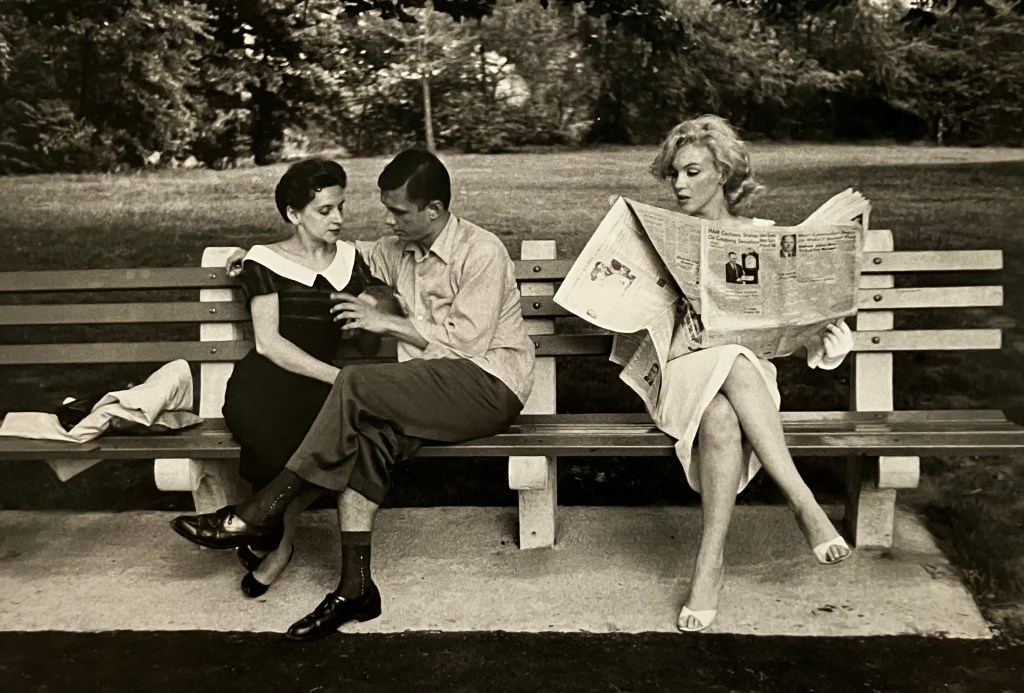
…to the looser, more spontaneous vibe of Sam Shaw’s New York City set.
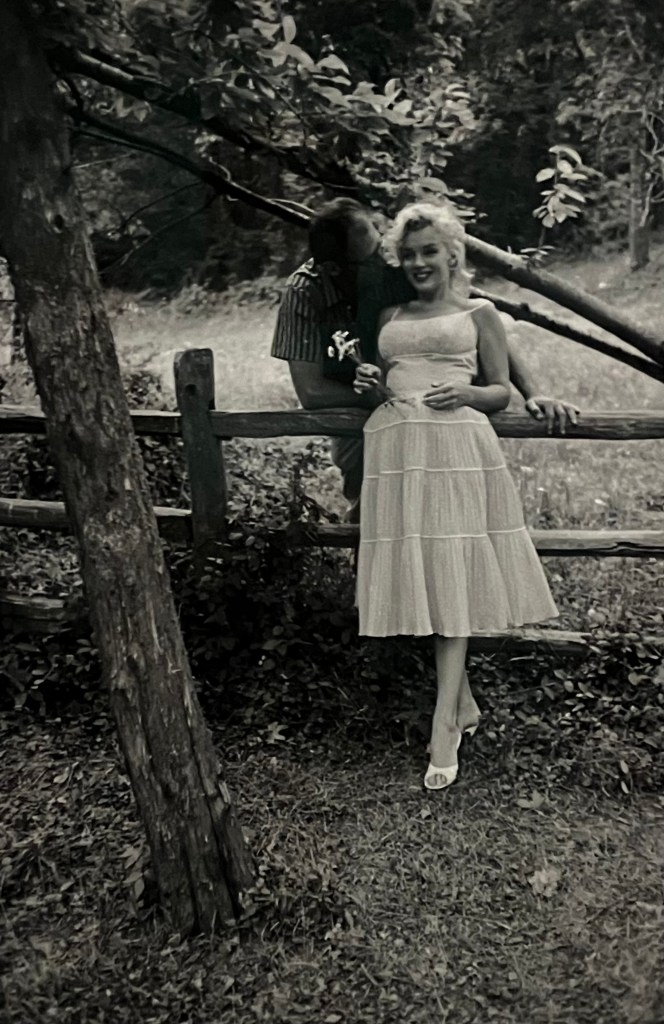
As a Classics & English student back in the dark ages, I was already fascinated by Arthur Miller’s modern tragedies before becoming properly aware or appreciative of Monroe’s film career. Not the mismatch one might lazily assume – both were intense and intelligent, with weapons-grade charisma – the cameras suggest a sorrier narrative. By all accounts, the early years of their marriage were happy, yet one senses the lens fight against this: it’s remarkable how often, when they are both photographed together, Miller seems to be sidelined, in shadow.
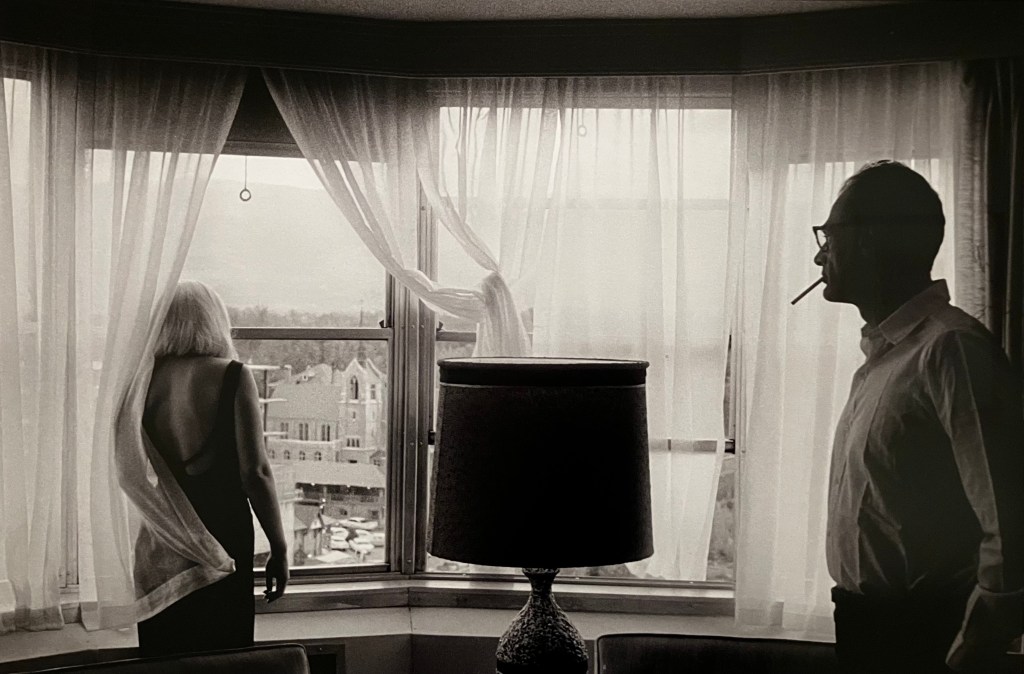
By the time they collaborated on ‘The.Misfits’, the relationship was fracturing beyond repair, the space between them like an invisible, impenetrable barrier.
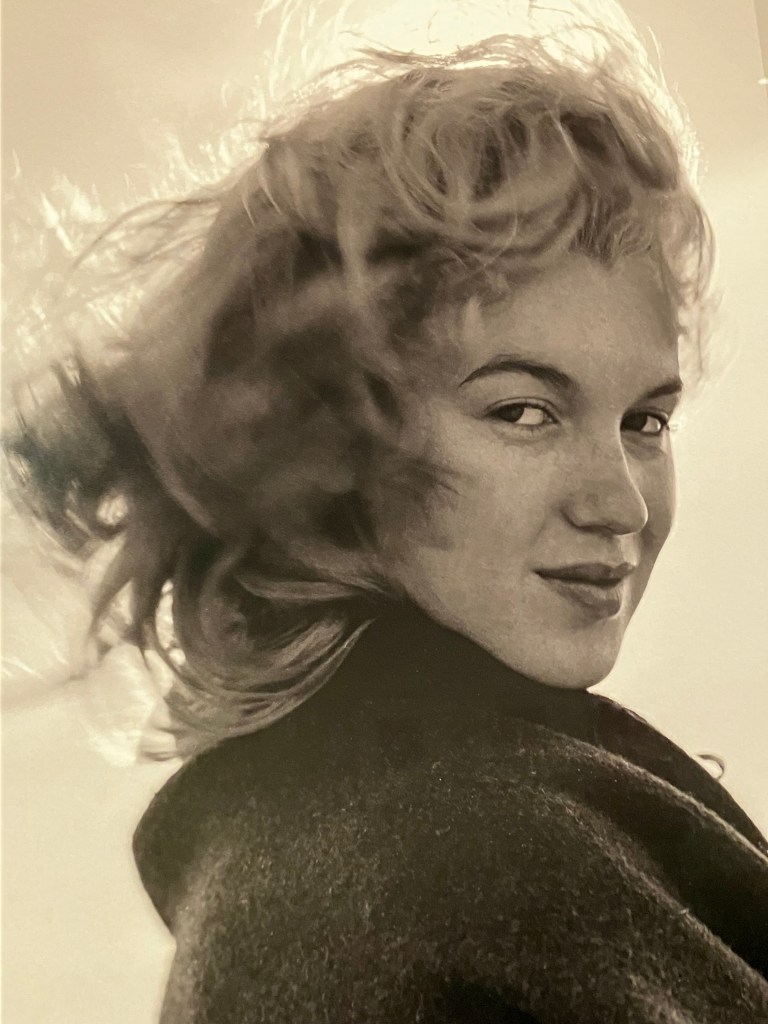
Moving back and forth through the exhibition, it’s impossible not to return to the remarkable 1949 beach sessions by André de Dienes: a series of black and white shots with a kind of raw, confrontational freshness which almost anticipates the likes of Bergman and Truffaut.
A road not taken, and yet the journey ends back on Monroe’s beloved coast in 1962, in those final, haunting images.
AA
Discover more from ARTMUSELONDON
Subscribe to get the latest posts sent to your email.

