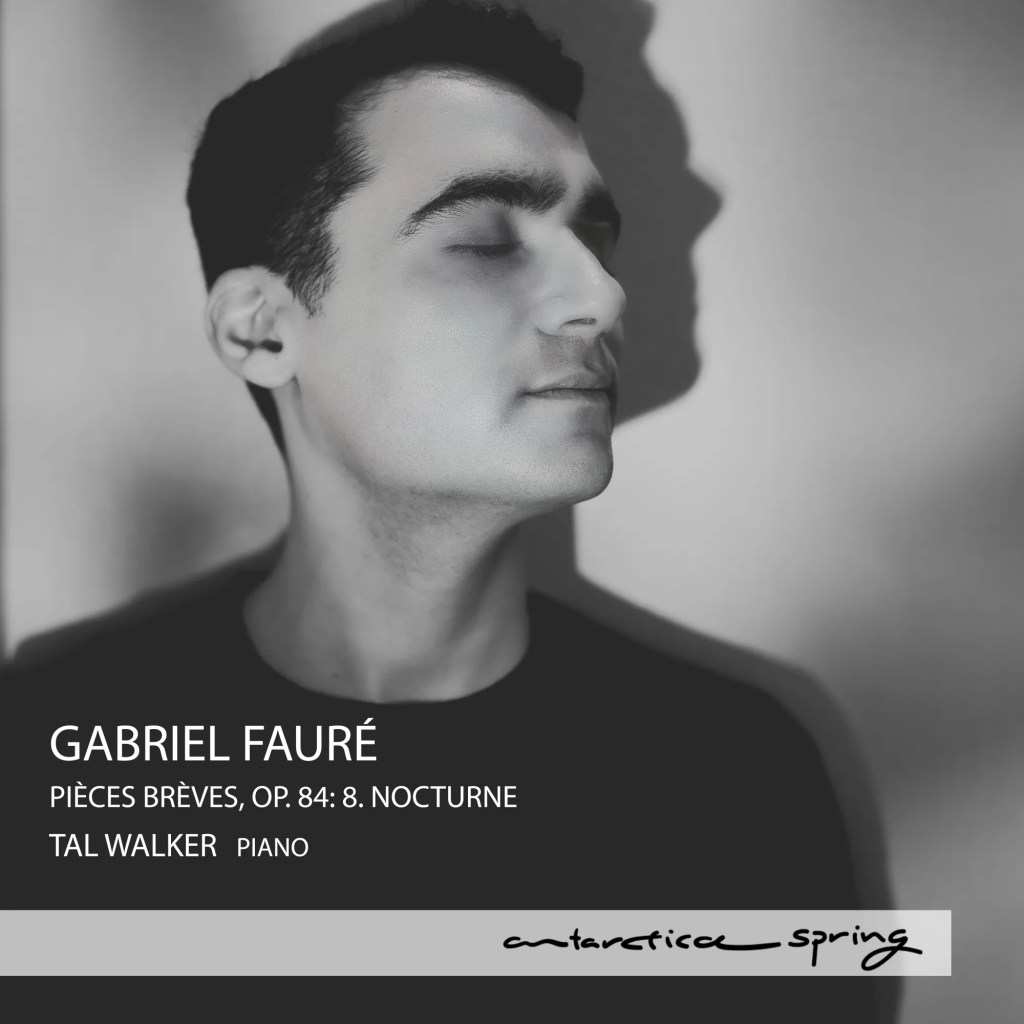
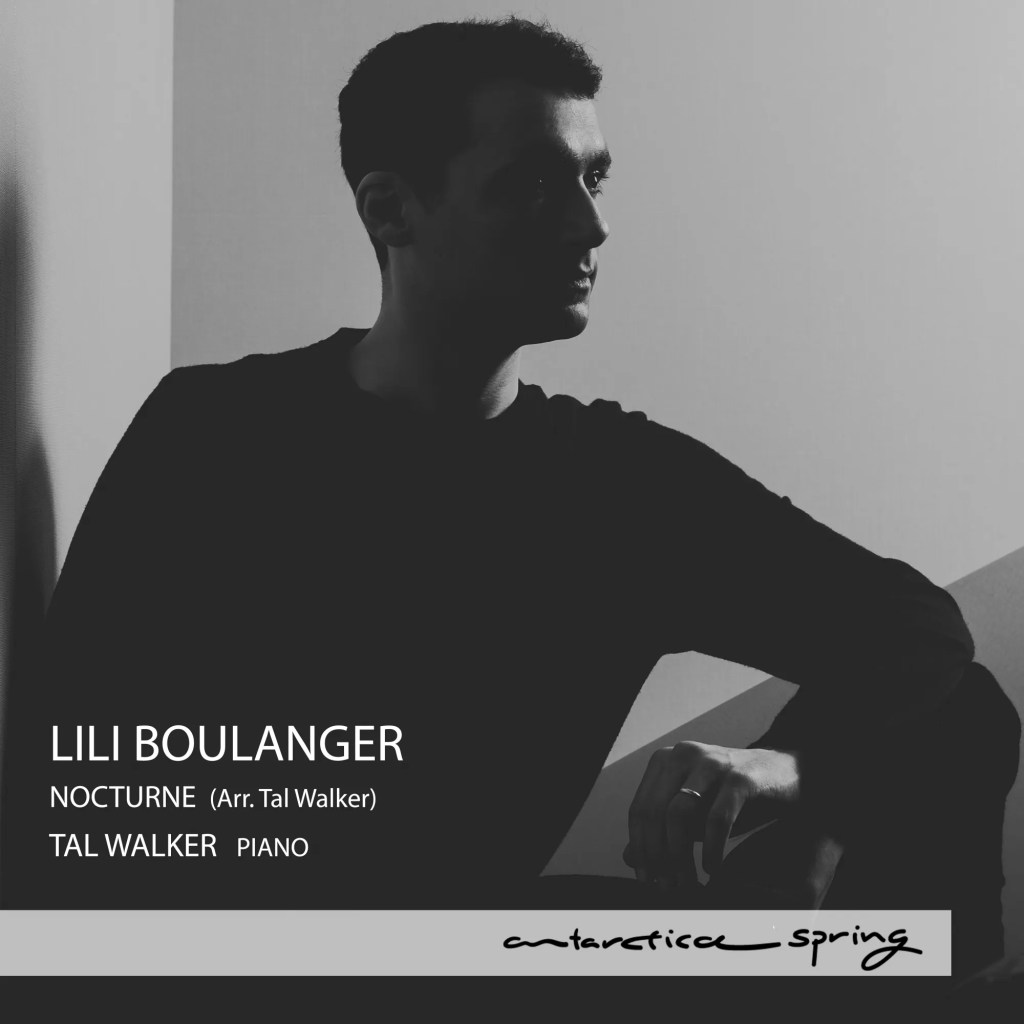
Tal Walker was at Steinway Hall this week to launch “Clair Obscur” his tribute to Lili Boulanger (younger sister of Nadia Boulanger) and Gabriel Fauré. Karine Hetherington from ArtMuseLondon, caught up with Walker after the recital.
Your debut album, ‘Fauré, Poulenc, Messiaen : Préludes & Nocturnes’ received much praise from international music community. With ‘Clair Obscur’ you are staying with French repertoire at the turn of the twentieth century. What continues to fascinate you about this compositional period?
It was a fascinating time when French composers were searching for their own musical identity, stepping away from German influence (particularly that of Wagner). The French tradition is rooted in the organ polyphony and harpsichord lightness of the fingers, combined with Chopin’s melodic lines and the connection to ancient or exotic modes which create mystical harmonies. This, combined with a sense of extra-musical inspiration, creates absolute magic. Imagining Ravel meeting at the Société des Apaches, or Fauré mingling in the Parisian salons with the likes of Marcel Proust, is so inspiring. Debussy’s inspirations from literature, art and nature all give the music a colourful visual dimension. My connection with French music grew stronger through my teachers at the École Normale de musique de Paris Alfred Cortot and other institutions. My teacher, Madame Françoise Thinat, was a pupil of legendary teachers such as Marguerite Long and Yvonne Léfebure. Avi Schönfeld studied with Vlado Perlemuter and Nadia Boulanger. And the many teachers I’ve received masterclasses from, such as Michel Béroff, Jean-Philippe Collard, Anne Queffelec, Philippe Entremont and Bertrand Chamayou, taught me their ways of interpreting Fauré, César Franck, Debussy, Ravel, Poulenc and Messiaen.
You have chosen to perform Fauré opposite Lili Boulanger – a very interesting choice. Composer ,Lili Boulanger, was full of promise, but only lived to 24 years of age. What do her works bring to your recording – after all – you have placed her alongside heavy-weight Fauré?
Lili Boulanger could have been one of the greatest composers of the 20th century if it hadn’t been for her early passing. The first woman to win the Prix de Rome, and a young woman who showed a rapid development in taste and compositional techniques. But unfortunately indeed we will never know how she would have composed in her 30s or her 50s. Even though very young, her music contains such a maturity. She was a lively young woman, with ambition and promise, but also a woman who experienced chronic illness, lost her father at a young age, and whose last years were overshadowed by World War I and her worsening health. All this seems to reflect in her music – sometimes light and flowery, with Debussy-like layers of sound, and sometimes melancholic and dark, using the lower register of the piano. The relationship between Boulanger and Fauré is a very human one. Boulanger knew Fauré from a young age, as he was a friend of the family and the teacher of her sister Nadia. At the age of 6, she would sight-sing his melodies while he accompanied her at the piano. She occasionally accompanied her sister Nadia to classes at the Conservatoire and won the Prix de Rome during the time Fauré was director. She dedicated to him her first song from the cycle Clairières dans le ciel, “à Maître Gabriel Fauré”, and we feel his influence in her music. They both have these expressive melodies, counterpoint, and usage of the full spectrum of piano registers as well as emotions, from melancholic to uplifting. We see similarities between their Thème et variations and short pieces, but also a very distinct compositional voice.
Why did you decide to perform the concert at Steinway Hall without music?
I always find performing by heart very rewarding. For me personally, when I look at the keys, or even sometimes close my eyes, I feel the connections of the lines and phrases, the relationship between the harmonies, and feel freer technically. Of course, this comes with a great risk of forgetting some nuances, having memory slips, and more anxiety before performing, but I find it worth it. When I perform with the score, I might be more accurate, but less spontaneous. When reading, I visually see the bar lines and the meter, and when playing by heart, there are no bar lines, only longer lines, phrases and the music or silence in between the notes. The process of memorising a piece brings you closer to the music. This is a long process, especially with harmonically complicated pieces, with polyphonic passages and very little repetition. Through it, one discovers many details that might be overlooked when sight-reading. The piece becomes yours, and you are able to play it anywhere, any time.
Fauré’s ‘Thèmes et variations’ really explore the keyboard, both hands independently going off in their different directions but the harmonic line stays. What are the challenges playing these variations?
From the first variation by Fauré, you feel a beautiful independence between the voices, as if the pianist has three hands – the bass line sings the theme, the middle voice with pizzicato harmonies, and a flute melodic line floating on top. The same three voices ensemble comes back in the melancholic variation no. 6, but this time spreads over the full range of the keyboard. Indeed, similarly to Beethoven’s Op. 109’s last movement or Schumann’s Symphonic Études, the pianist needs to constantly think of the score as orchestral, or for an ensemble, or a choir. The various layers make it interesting but also challenging – keeping all the lines, making sure none is blurred too much by the pedal, and choosing the hierarchy between them: bringing out certain voices more than the others. This also proves difficult for the memory, especially in the last choral-like variation, which is written throughout in four voices, and brings the piece to a serene, prayer-like ending.
Do you sometimes forget you are performing?
Sometimes during a performance, a phrase or a chord progression could really touch you so much that you indeed forget about the audience. On the one hand, I hear the audience and feel their presence, which could help the excitement and give amazing energy, but it could also disturb the concentration. While I perform, I always go back to focusing on the music. The phrase, the harmony, the pedal and resonance, and dynamic build-ups or contrasts, all keep you anchored to the music.
Do you enjoy the recording process? And what about live performance?
I enjoy both recording and performing live. The recording allows you to try again and again, perfect and refine the smallest details. I could go on for hours in the studio with little breaks, and I appreciate the patience and professionalism of the team around me. Specifically for this new album, I was grateful for the warm welcome of the Motormusic Recording Studio team and the Antarctica Records team, who made the recording sessions of Clair-obscur feel like home. I would like to particularly thank Hans Bellens, Steven Maes, Mario Morese, Helena Gaudeus, and Hans Vercauteren for believing in the concept and directing it artistically and technically in the best way possible.
Live performances are a completely different experience, they are ephemeral – a fleeting moment – and so during these, I might sometimes produce the most beautiful sound, connect the phrases in new ways and take risk in term of tempo and rubato. The downside, is that a live performance might also be less accurate and include some mistakes. However, in the age of recordings, videos and generally high standards of perfection, I find mistakes and emotions charming and makes the concert experience human and unique.
How many hours do you practice when preparing a project?
This is perhaps the most asked question to pianists, and its answer always depends on the project. Clair-obscur is currently a rather new repertoire to be played by heart in front of the public, so many hours were put into preparing it every day. A practice day could last between 5 and 7 hours a day if my schedule allows. During holidays when learning a new repertoire, this might be even longer. Some projects throughout the year, while I teach and have other obligations, might take less practice time, perhaps 2-3 hours a day, especially if I know the repertoire well, if it’s an easier repertoire or if I perform it with the score (mainly chamber music or new repertoire).
What do you do to relax?
I find that keeping a routine helps me relax before a concert. Eating healthy the day of the concert and the day before, and having a good night’s sleep the night before a concert are helpful. During the day, I practice, but not too much. I find mindfulness or NSDR (non-sleep deep rest) helpful to connect with my breathing and calm the nervous system. A fruit before going on stage helps my concentration. And of course, in the days leading to the concert, playing to friends or family is helpful to simulate a performance.
Any up and coming concerts or projects we should know about?
The Clair-obscur album launch tour is taking place until January 2027. With the release concert that took place at Steinway Hall UK on 30 September, and a concert on 8 October at the Piano Salon Christophori in Berlin. The next concerts will take place in Belgium at the Jardin Musical in Brussels and Antwerp’s Fine Art Museum, the KMSKA on 5 December, followed by a performance in Studio Annette in Tel Aviv, and finally two performances in Paris in Steinway & Sons Paris and the Bibliothèque musicale La Grange Fleuret on 13 and 14 January, supported by the Endowment fund Galaxie-Y, to whom I’m very thankful. Besides my solo concerts, my trio, Ortus Piano Trio, has some exciting concerts in the pipeline.
KH
Clair-Obscur Lili Boulanger. Gabriel Fauré. Tal Walker Piano
Discover more from ARTMUSELONDON
Subscribe to get the latest posts sent to your email.

